Transmitter

A transmitter is an electronic device that converts measurements (such as pressure, temperature, level, or flow) from sensors into standardized electrical signals for monitoring and control. These signals are then sent to control systems or display units for data analysis. Transmitters are widely used in industries like oil and gas, chemical processing, water treatment, and HVAC systems, ensuring accurate and real-time data for optimizing processes and maintaining system efficiency.

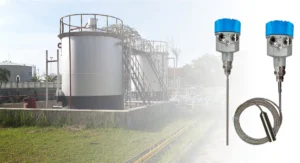
Instrava guided wave radar level transmitter for storage tank level monitoring

Why Guided Wave Radar Is Still Chosen in High-Risk Applications

In industrial measurement, technology adoption often follows trends. Non-contact solutions, digital diagnostics, and advanced signal processing dominate marketing narratives. Yet when it comes to high-risk applications—where measurement failure directly impacts safety, compliance, or production continuity—guided wave radar remains a preferred choice. This persistence is not accidental. It reflects a deeper alignment between guided wave radar…

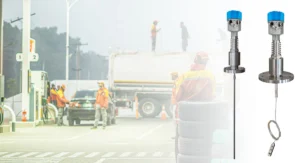
Guided wave radar level transmitter for industrial tank level measurement

Guided Wave Radar Level Transmitter vs FMCW Radar Level Transmitter: Choosing Measurement Certainty Over Convenience

When industrial users compare level measurement technologies, the discussion often starts with specifications and ends with price. However, in real process environments, the decisive factor is rarely accuracy on paper. Instead, it is measurement certainty—the confidence that the reading reflects reality under all operating conditions. This is where the comparison between guided wave radar level…

Guided wave radar level transmitter for fuel tank and oil storage monitoring

Guided Wave Radar Level Transmitter: Engineering Certainty in Unpredictable Process Conditions

Measurement Accuracy Is Not the Real Challenge In industrial level measurement, accuracy is often treated as the ultimate benchmark. In reality, measurement certainty matters far more. Operators and engineers rarely struggle with knowing how precise a measurement is; they struggle with knowing whether the measurement can be trusted when conditions change. This is where the…

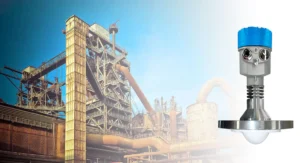
Radar level transmitter application image showing a non-contact radar level transmitter used for level measurement in a large industrial plant.

Why Many Radar Level Transmitter Fail in Harsh Process Conditions

In harsh industrial environments, radar level transmitter technology is often selected with high expectations. On paper, radar instruments promise non-contact measurement, resistance to pressure, and suitability for extreme temperatures. Yet in real-world applications—especially in oil & gas, petrochemical, and large-scale storage facilities—measurement failures still occur. Understanding why radar level transmitter systems fail under harsh conditions…

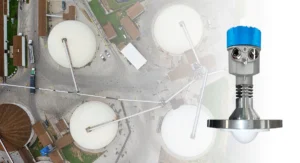
Tank level transmitter application image showing a non-contact radar level transmitter installed on large spherical and circular storage tanks for continuous industrial level measurement.

FMCW vs Pulse Radar: What Datasheets Don’t Tell You About Radar Level Transmitter Performance

In industrial level measurement, radar technology is often presented as a single category. Datasheets list ranges, accuracy figures, beam angles, and operating temperatures, giving the impression that all radar instruments behave similarly. In reality, the internal measurement philosophy of a radar level transmitter fundamentally determines how it performs in real process environments. The most debated…

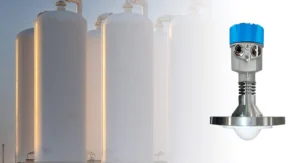
FMCW radar level transmitter installation image showing a non-contact radar level transmitter applied on large vertical storage tanks, using frequency modulated continuous wave technology for accurate level measurement.

Why FMCW Radar Measures Frequency Instead of Time

In industrial level measurement, radar technology has become a dominant solution for applications involving extreme temperatures, pressure, vapor, or challenging process conditions. At the center of this technology is the radar level transmitter, and more specifically, the widespread adoption of FMCW radar rather than time-based pulse radar. A common question arises during technical evaluations: why…

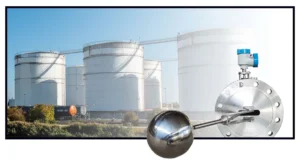
Float type level transmitter installed on large industrial storage tanks for continuous liquid level measurement

Float Level Transmitter: Reliable Liquid Level Measurement for Industrial Applications

Accurate and stable level measurement is essential for maintaining safety, efficiency, and process continuity in industrial systems. Among various level sensing technologies, the float level transmitter remains one of the most widely adopted solutions due to its mechanical reliability, simple structure, and long-term performance in demanding environments. A float level transmitter provides continuous level measurement…

Float type level transmitter for liquid level measurement in industrial tanks

Float Level Transmitter in Boiler Systems: Signal Reliability, Failure Risk, and Control Stability

Why Signal Reliability Matters More Than Accuracy in Boiler Level Measurement In boiler systems, level measurement is not only about precision—it is about signal reliability under stress. Compared with laboratory or clean-process environments, boilers operate under high temperature, pressure fluctuation, vibration, and water quality variation. Under these conditions, the float level transmitter is widely adopted…

This image shows differential pressure transmitters used in the oil industry, designed to monitor pressure changes in oil and gas pipelines, ensuring the accuracy of flow measurements.

Differential Pressure Transmitters: Selection, Applications, and Industrial Guide

Differential Pressure Transmitters | Selection Guide & Industrial Applications Differential pressure (DP) transmitters are essential instruments in modern industrial processes, providing precise measurement of pressure differences across systems. They play a critical role in applications such as flow measurement, level monitoring in pressurized tanks, and process control in oil & gas, chemical, and water treatment…

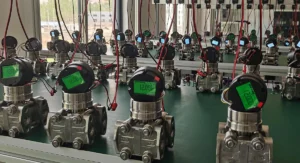
This image shows a pressure transmitter production line, where multiple devices are tested and assembled on the assembly table, displaying digital readings. These transmitters are used in industrial pressure measurement applications.

Pressure Transmitter vs Pressure Sensor: Key Differences, Applications, and Selection Guide

Pressure Transmitter vs Pressure Sensor | Key Differences & Industrial Applications In modern industrial processes, accurate pressure measurement is essential for safe and efficient operation. Two commonly discussed instruments are pressure transmitters and pressure sensors. While they are often mentioned together, they serve different purposes in industrial systems. Understanding the distinction between these two devices…

Home
Products
Whatsapp
Contact
CONTACT INSTRAVA

Send Inquiry Message

Submit your manufacturing requirements, and our team will get back to you with professional solutions within 24 hours.

💡 Our Quality Guarantee: When your cumulative order value reaches $50,000, you pay the remaining 10% only after receiving and verifying the product quality. We let our quality do the talking.