
Deliver the appropriate power transformer to each purchasing customer
Accueil » Transformateur de puissance
When searching for power transformer in the vast Chinese market, do you find yourself spending endless hours vetting suppliers?
Vous vous demandez qui dispose réellement de solides compétences techniques, quels fabricants proposent des produits d’une qualité irréprochable et lesquels sont titulaires des certifications requises ? Avez-vous du mal à déterminer quelles usines offrent le meilleur rapport qualité-prix, lesquelles disposent de véritables capacités de personnalisation ou sont capables de prendre en charge la conception complète de vos projets ? Et face à d'énormes écarts de prix pour des spécifications identiques, par où commencer pour faire votre choix ?
Instrava est le partenaire d'approvisionnement spécialisé qui vous aide à relever tous ces défis.
Que vous soyez un EPC contractor, substation integrator, switchgear manufacturer, or industrial distributor—or a procurement and electrical engineer in demanding sectors like Power Utilities, Renewable Energy (Solar & Wind), Heavy Industries, Data Centers, or Petrochemicals— nous nous mettons pleinement à votre place. Nous gérons pour vous la chaîne d'approvisionnement chinoise, souvent complexe, en veillant à ce que vous source le plus adapté power transformers et sécurisé l'idéal power conversion and distribution solutions adapté à vos besoins précis.

Product quality is fundamental to our long-term development.
Every factory evaluation is a rigorous and meticulous process. Those that stand out from numerous competitors possess 10-30 years of manufacturing experience and the ability to handle complex operating conditions.
| Catégorie d'évaluation | Critères d'évaluation clés | Statut |
|---|---|---|
| Évaluation des capacités de production | Capacité de production, équipements de fabrication, processus d'assemblage, capacités d'usinage | ✓ |
| Capacités d'ingénierie et de personnalisation | Équipe de R&D, assistance OEM/ODM, conception sur mesure, réponse technique | ✓ |
| Vérification du système de gestion de la qualité | ISO 9001, procédures qualité, contrôle à la réception, contrôle des processus, contrôle final | ✓ |
| Inspection des installations de production et d'essai | Équipements d'étalonnage, essais de pression, essais fonctionnels, environnement de production | ✓ |
| Bilan des certifications internationales | CE, ATEX, IECEx, SIL, RoHS et autres certifications applicables | ✓ |
| Évaluation de l'expérience en matière d'exportation et de gestion de projets | Projets internationaux, marchés d'exportation, références de projets, expérience en matière de documentation | ✓ |
| Bilan des performances en matière de livraison | Planification de la production, stabilité des délais de fabrication, taux de respect des délais de livraison | ✓ |
| Capacité en matière de documentation technique | Fiches techniques, manuels, plans, certificats, rapports d'étalonnage | ✓ |
| Évaluation du service après-vente | Assistance technique, pièces de rechange, garantie, aide à la mise en œuvre | ✓ |
L'engagement d'Instrava à votre égard
Chaque partenaire industriel est évalué selon notre processus standardisé de qualification des fournisseurs avant d'être intégré au réseau d'approvisionnement d'Instrava. L'évaluation porte principalement sur les capacités de fabrication, l'expertise technique, le contrôle qualité, la fiabilité des livraisons et le service après-vente à long terme. (Voir le tableau à gauche.)
Dès que le montant cumulé de notre collaboration atteindra 50 000 USD, nous serons ravis de vous proposer une clause de garantie de qualité 10%. Vous ne devrez verser le solde final correspondant à la clause 10% qu’après la réception des produits et une fois que ceux-ci auront passé avec succès votre contrôle qualité. C’est là notre engagement envers la qualité haut de gamme des produits Instrava.
Contactez Instrava dès aujourd'hui pour vous lancer dans votre parcours d'approvisionnement sans risque.
Power Transformers Solutions
Power transformers are critical heavy equipment used to convert voltage, ensure power continuity, and optimize grid transmission efficiency within distribution networks and industrial power systems. Different voltage classes, capacity requirements, environmental harshness (such as corrosion, explosion-proof, or ambient temperature extremes), and stringent international electrical standards demand the application of diverse transformer technologies and structural designs.
One Distribution Need, Multiple Technological Choices
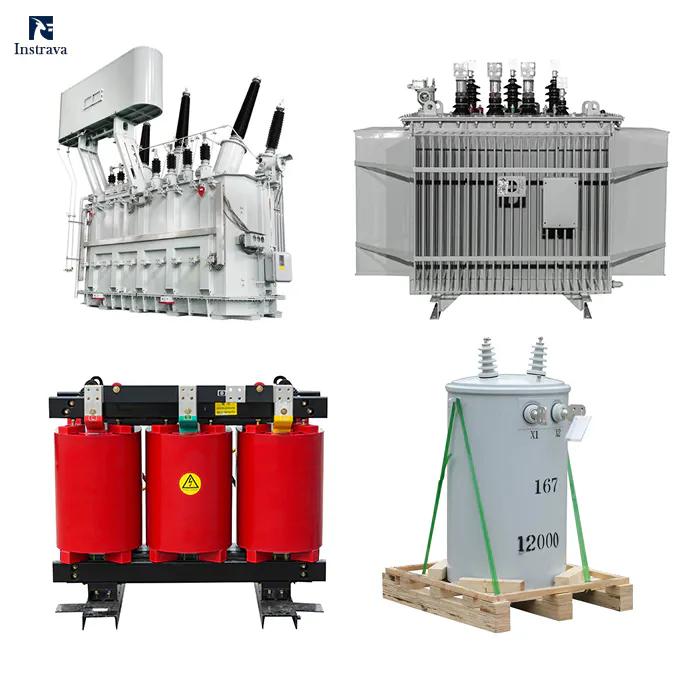
Different application scenarios and installation footprints require distinct engineering principles. That is why our comprehensive portfolio covers a wide range of advanced configurations—including oil-immersed distribution transformers, cast resin dry-type transformers, amorphous alloy transformers, and prefabricated compact substations. This diversity empowers electrical engineers, substation integrators, and project decision-makers to select the most optimal power conversion and distribution solution, rather than being restricted to a single product line.
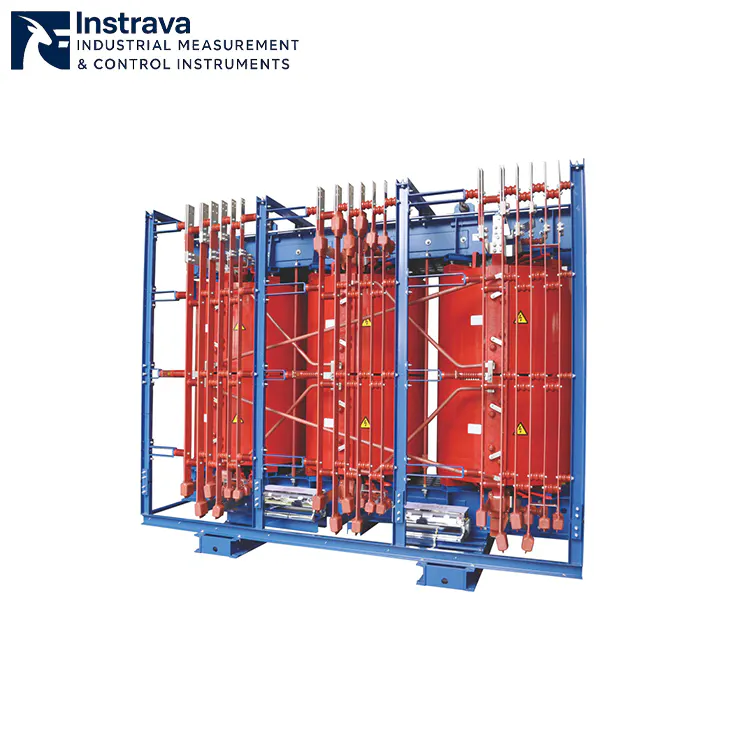
Primary Voltage-Up to 72.5 kV
Secondary Voltage-Up to 15 kV
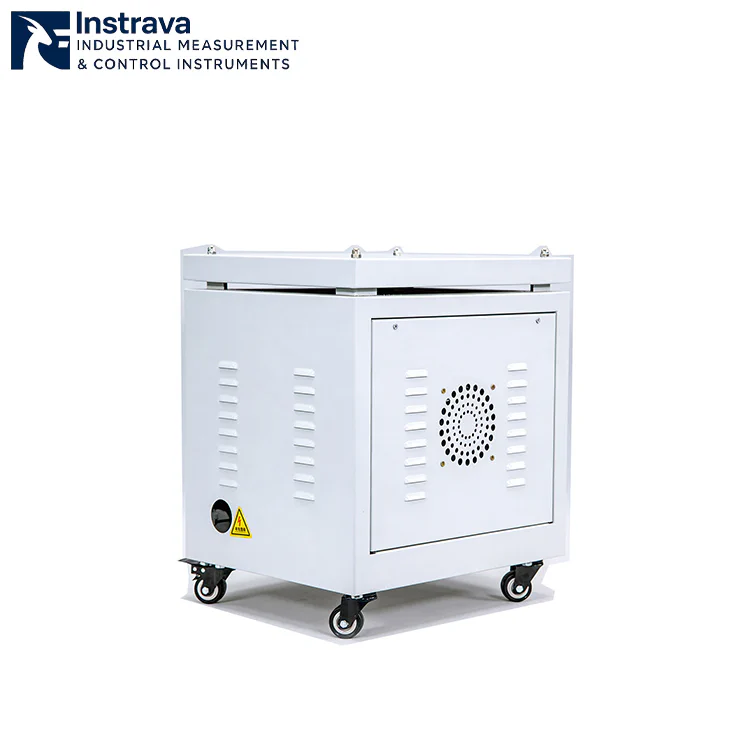
Voltage Configurations-600V / 480V / 400V / 240V / 208V
Encapsulation-Fully Resin Encapsulated (Up to 15 kVA)
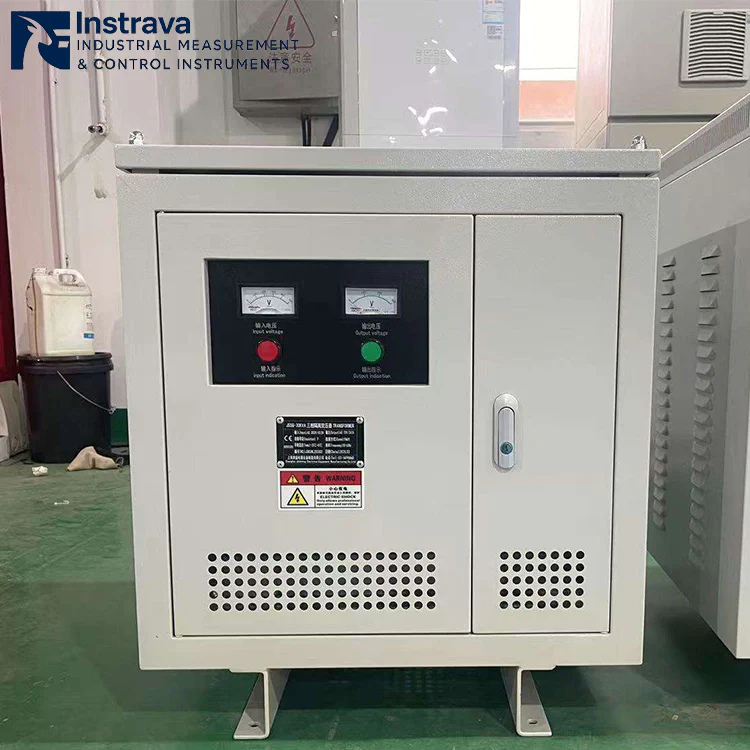
Rated Power-75 KVA (Custom Capacities Available)
Connection Type-Dyn11 or Customized
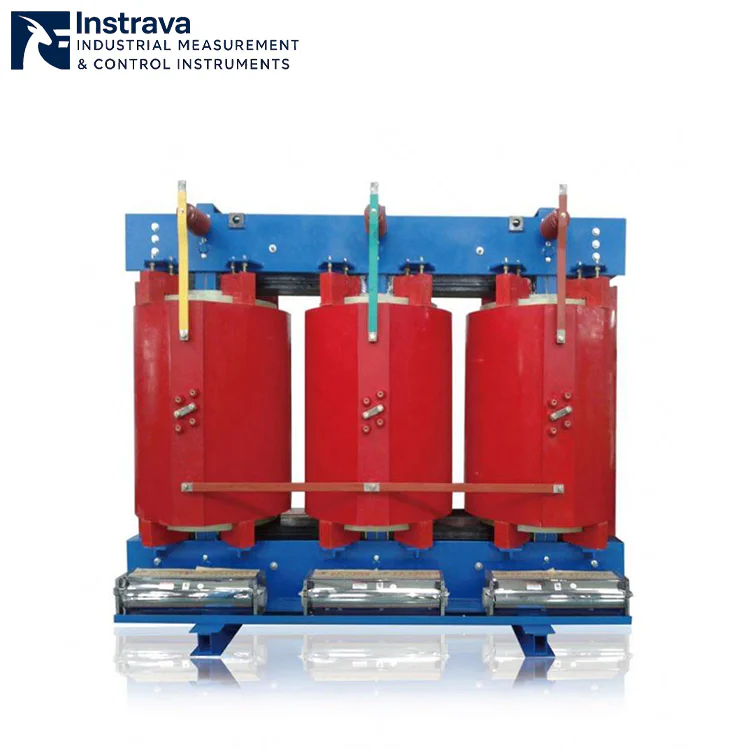
Thermal Insulation Classes-Class F ($155^\circ\text{C}$) / Class H ($180^\circ\text{C}$) High-Performance Ratings
Rated Capacity(kVA) – 30kVA-2500kVA
Operating Temperature Range-Minus 40°C to Plus 180°C Thermal Rating
Winding Matrix Options-High-Purity Copper / Premium Grade Aluminum
High Voltage (H.V.) Tap Range-±2 × 2.5% via Manual De-energized Tap Changer (Customizable)
Vector Connection Groups-Dyn11 / YNyn0 (Other Configurations Available Upon Request)
Power Transformers: Reliable Energy Distribution for Global Industries
In modern industrial and grid infrastructure, absolute power reliability is non-negotiable. Power transformers serve as the critical backbone of electrical grids, stepping voltage up or down to ensure efficient, low-loss energy transmission across long distances and safe distribution within industrial facilities.
À Instrava, we curate supply heavy-duty, high-performance power transformers designed to withstand harsh operating conditions, optimize energy efficiency, and guarantee continuous operational uptime for power plants, substations, and heavy industrial complexes.
Our Power Transformer Portfolio
To meet diverse grid topologies and industrial demands, our collection focuses on specialized, high-capacity thermal and electrical management solutions:
Oil-Immersed Power Transformers: Engineered for high-voltage transmission and heavy industrial loading. These units utilize premium-grade dielectric oil for exceptional heat dissipation, superior insulation, and an extended operational lifespan in demanding outdoor environments.
Step-Up & Step-Down Transformers: Designed to seamlessly bridge the gap between power generation sources (including renewable energy plants) and localized distribution networks, minimizing energy variance.
Industrial Distribution Transformers: Compact yet robust units optimized for factory floors, mining operations, and large-scale commercial infrastructures, ensuring clean and stable power delivery.
Engineered for Extreme Reliability and Efficiency
Instrava’s power transformers are built utilizing advanced electromagnetic simulations and premium materials to deliver world-class technical benchmarking:
High-Grade Core Material: Built with high-permeability, grain-oriented silicon steel to drastically reduce eddy current losses and no-load losses.
Advanced Thermal Management: Optimized cooling systems (ONAN/ONAF) ensure the transformer maintains peak performance even under continuous full-load or fluctuating environmental temperatures.
Ruggedized Structural Integrity: Featuring reinforced, leak-proof tank enclosures and secure internal coil bracing to endure high short-circuit mechanical stresses and rigorous international transit conditions.
International Compliance: Every unit is manufactured and tested in strict accordance with global standards, including IEC 60076 et IEEE/ANSI specifications, ensuring seamless grid integration worldwide.
110kV~220kV Oil-immersed Power Transformer FAQ
What are the standard capacity ranges and primary applications for Instrava’s 110kV~220kV power transformers?
Our 110kV to 220kV oil-immersed power transformers typically range from 10,000 kVA to 240,000 kVA (or higher upon custom request). These high-voltage (HV) units are engineered as step-up transformers for large-scale power plants (including solar and wind farms) and step-down substation transformers for regional grids, heavy metallurgical plants, petrochemical complexes, and mining infrastructures.
What cooling methods are available for these high-voltage transformers?
To ensure optimal thermal management under continuous full-load operations, we offer multiple cooling configurations based on your site conditions:
ONAN (Oil Natural Air Natural): Ideal for base loads and environments with stable ambient temperatures.
ONAF (Oil Natural Air Forced): Utilizes automated cooling fans to boost heat dissipation efficiency during peak loading periods.
OFAF (Oil Forced Air Forced) / OD-AF: Available for ultra-high-capacity units requiring accelerated internal oil circulation to handle extreme thermal stress.
What is the difference between OLTC and NLTC options in your 110kV/220kV units?
We provide both voltage regulation mechanisms depending on your grid stability requirements:
OLTC (On-Load Tap Changer): Allows seamless voltage adjustment while the transformer is energized and under load. This is critical for grids with frequent load fluctuations to maintain a stable output voltage without interrupting the downstream power supply.
NLTC (No-Load / Off-Circuit Tap Changer): Requires the transformer to be completely de-energized before altering the tap position. This option is more cost-effective and suitable for grids with stable, predictable voltage inputs.
How does Instrava minimize no-load and load losses in these large-scale transformers?
Efficiency is a core focus of our engineering. We minimize electrical and magnetic losses through three primary methods:
Core Material: We exclusively use high-permeability, multi-layer, grain-oriented silicon steel sheets (CRGO) with low specific iron loss.
Step-Lap Mitred Joint Technology: The core structure utilizes an advanced step-lap joints design to optimize the magnetic path, drastically reducing no-load current and audible noise levels.
Windings Optimization: Continuously transposed conductors (CTC) are implemented to minimize eddy current losses within the copper windings.
What international quality and safety standards do your transformers comply with?
Every 110kV~220kV unit is designed, manufactured, and routine-tested in strict compliance with the latest global standards, including:
IEC 60076 Series: (International Electrotechnical Commission for power transformers)
IEEE C57 / ANSI Standards: (For North American grid integrations)
ISO 9001 / 14001 / 45001: For quality, environmental, and occupational health management. Complete Factory Acceptance Testing (FAT) reports, including impulse voltage tests and partial discharge checks, are provided prior to shipment.
How are these heavy-duty 110kV~220kV transformers packaged and transported internationally?
Due to the massive weight and dimensional constraints of high-voltage transformers, we implement a specialized, multi-step heavy-logistics protocol:
Main Body Transit: The transformer main tank is drained of its insulating oil to reduce transit weight and prevent leakage. The tank is then filled with dry nitrogen gas ($N_2$) and pressurized to maintain a moisture-free internal environment during maritime or rail transit.
Component Disassembly: High-voltage bushings, conservator tanks, radiators, and control cabinets are disassembled and securely packed in customized, ruggedized sea-worthy wooden cases or specialized iron frames.
Suivi des effets : Electronic impact recorders are mounted on the main chassis to monitor and log any mechanical shocks or G-forces experienced during loading and ocean freight, ensuring the unit arrives with verified structural integrity.
Below 35kV Oil-immersed Power Transformer FAQ
What are the primary capacity ranges and deployment scenarios for Instrava’s below 35kV transformers?
Our distribution-class oil-immersed transformers generally operate within voltage ratings of 6kV, 10kV, 11kV, 20kV, 22kV, 33kV, up to 35kV. Standard capacities range from 30 kVA to 2,500 kVA (and up to 5,000 kVA for specialized industrial applications). They are widely deployed in:
Industrial manufacturing plants and industrial parks.
Residential communities and commercial high-rises.
Rural electrification and municipal power grids.
Renewable energy step-up stations (distributed solar arrays and wind power generation).
What is the advantage of choosing a "Hermetically Sealed" design for transformers under 35kV?
Instrava specializes in hermetically sealed corrugated tank transformers ($S11, S13, S20, S22$ series equivalents). Unlike traditional transformers with oil conservators, a hermetically sealed unit completely isolates the transformer oil from the atmosphere.
This configuration delivers substantial operational benefits:
Zero Maintenance: Because oxygen and moisture cannot enter the tank, the oil does not oxidize or sludge, eliminating the need for regular oil filtration or desiccant replacement.
Compact Footprint: The corrugated fins act as both the cooling mechanism and an expansion tank, saving precious installation space in urban or indoor vaults.
Extended Service Life: Internal insulation degradation is heavily minimized, offering a hassle-free operational lifespan exceeding 30 years.
Do you offer Amorphous Alloy core options alongside Silicon Steel (CRGO)?
Yes, we offer both core configurations to match your specific upfront budget and long-term energy-saving goals:
Grain-Oriented Silicon Steel (CRGO): Our standard units utilize premium, cold-rolled grain-oriented silicon steel. They offer a highly reliable, cost-effective initial investment with excellent short-circuit resistance.
Amorphous Alloy Cores: For projects requiring maximum energy compliance or green building certifications, our amorphous alloy series reduces no-load losses (core losses) by up to 70% to 80% compared to traditional steel cores. This drastically lowers ongoing operational costs for utilities and 24/7 industrial plants.
How does Instrava guarantee leak prevention and structural safety?
Oil leakage is the most common failure point in distribution transformers. We eliminate this risk through strict manufacturing and testing protocols:
Robotic Precision Welding: All corrugated cooling walls and tank seams undergo automated welding to ensure uniform, high-penetration joints.
Premium Gasket Materials: We utilize high-grade fluororubber or specialized nitrile gaskets that maintain elasticity and resist oil degradation across extreme temperature swings.
Pressure Testing: Every assembled tank undergoes strict positive-pressure leak detection before oil filling, followed by a vacuum oil-filling process to completely eliminate air pockets.
What safety protection and monitoring accessories are integrated into these units?
Depending on the requested capacity and installation site requirements, our transformers can be equipped with a comprehensive suite of protection devices:
Pressure Relief Valve (PRV): Standard on all sealed units to safely discharge internal pressure in the rare event of an internal fault.
Oil Temperature Indicator (OTI): Provides real-time thermal monitoring, equipped with adjustable alarm and trip contacts.
Integrated Safety Device (such as a R.I.S.2 valve): Combines overpressure, gas accumulation, and low oil level protection into a single, compact monitoring block.
Can these transformers be customized for localized grid specifications?
Absolutely. Global grid standards vary significantly, and Instrava builds each batch to order. We routinely customize:
Voltage Ratios & Vector Groups: E.g., Dyn11, Yyn0, or other localized configurations.
Tap Changer Positioning: Standard off-circuit tap switch ($+/- 2 \times 2.5\%$) or customized configurations.
Cable Box Terminations: Side-mounted or top-mounted cable termination boxes to meet your existing switchgear layouts.
Dry-Type Cast Resin Transformer FAQ
What are the primary applications and advantages of Instrava's dry-type cast resin transformers?
Our below 35kV dry-type cast resin transformers (CRT) range in voltage from 6kV to 35kV, with standard capacities from 100 kVA up to 3,150 kVA (and larger custom ratings). Unlike oil-filled units, dry-type transformers use epoxy resin to encapsulate the windings. This eliminates the risk of oil leaks and fire hazards, making them the industry standard for indoor or high-density environments such as:
Data centers and server farms.
Hospitals, airports, and commercial shopping complexes.
Underground subway networks and marine/offshore platforms.
High-rise residential buildings and eco-industrial parks.
What is the technical difference between Cast Resin (CRT) and Vacuum Pressure Impregnated (VPI) transformers?
While both are dry-type technologies, Cast Resin Transformers (CRT) offer superior protection and performance compared to Vacuum Pressure Impregnated (VPI) alternatives:
Moisture & Dust Protection: CRT windings are completely encapsulated in a thick, solid layer of epoxy resin under a pure vacuum. This renders the coils 100% moisture-proof, dust-proof, and suitable for highly polluted or humid environments. VPI units only feature a thin varnish coat, which can absorb moisture over time during shutdowns.
Mechanical & Short-Circuit Strength: The fiberglass-reinforced solid resin block in a CRT provides immense mechanical rigidity, offering unparalleled resistance to electromagnetic forces during short-circuit faults.
Maintenance Requirement: CRT units are virtually maintenance-free, requiring only periodic visual inspections and basic dusting.
What insulation and environmental safety classifications do your dry-type transformers meet?
Instrava’s cast resin transformers are designed to meet the most stringent international safety codes, conforming to IEC 60076-11 standards:
Insulation Class: We offer both Class F ($155^\circ\text{C}$) et Class H ($180^\circ\text{C}$) insulation systems, utilizing premium epoxy resins that retain excellent dielectric properties under continuous high-temperature stress.
Environmental Class (E2): Certified for operation in condensation-heavy or intensely polluted environments.
Climatic Class (C2): Resilient to thermal shock, capable of operation and storage in extreme ambient temperatures down to $-25^\circ\text{C}$.
Fire Behavior Class (F1): Certified as self-extinguishing. In the event of an external fire, the epoxy resin will not ignite or sustain combustion, and toxic gas emission is minimized to zero.
How does the cooling system work, and what is the temporary overload capability?
Our transformers rely on two primary cooling configurations:
AN (Air Natural): The transformer dissipates heat via natural air convection. Under AN mode, the unit operates at 100% of its rated continuous capacity.
AF (Air Forced): Cross-flow cooling fans are mounted at the base of the coils. Activating the AF system improves heat dissipation efficiency, allowing the transformer to handle a temporary overload of up to 40% to 50% without damaging the insulation core. This is ideal for handling peak utility demands or industrial startup spikes.
What type of enclosures and protective monitoring do you provide?
To protect personnel from live electrical components and shield the transformer from external impact, we supply customizable protective enclosures:
IP20 Enclosures: Designed for standard indoor installations, preventing the entry of solid objects larger than 12mm.
IP23 Enclosures: Features specialized louvers to provide IP20 protection plus defense against water spraying at an angle up to $60^\circ$ from vertical (ideal for indoor environments with potential condensation or overhead piping).
Smart Thermal Monitoring: Every unit is embedded with PT100 temperature sensors within the low-voltage windings. These sensors connect to an intelligent digital temperature controller that automates fan activation, provides real-time digital readouts, and triggers automatic alarm/trip relays during critical thermal overruns.
How does Instrava ensure a low partial discharge (PD) rate in its cast resin coils?
High partial discharge is the leading cause of premature insulation breakdown in dry-type transformers. Instrava mitigates this by utilizing a state-of-the-art thin-bed vacuum casting process. By mixing and pouring the resin matrix under strict vacuum conditions, we completely eliminate microscopic air bubbles and voids inside the windings. Our routine factory testing guarantees a partial discharge rate of $\le$ 10 pC (pico-coulombs), ensuring ultra-low electrical stress and extending the operating lifespan of the equipment well beyond 30 years.
Pad-Mounted Compact Substation Transformer FAQ
What is a pad-mounted compact substation transformer, and where is it typically deployed?
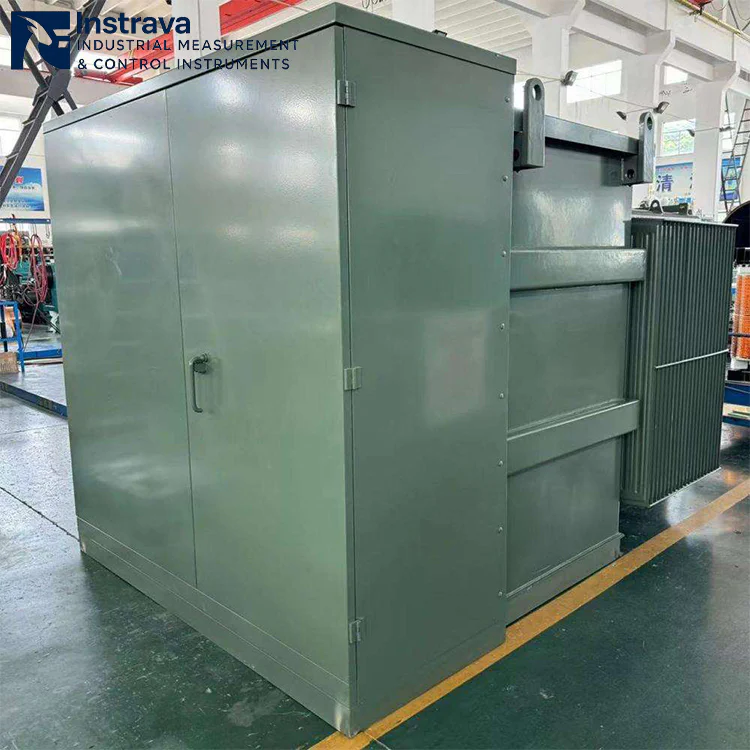
A pad-mounted transformer is a compartmentalized, self-contained industrial distribution unit designed specifically for outdoor, ground-level installations on a concrete pad. Because all energized parts are completely enclosed within a locked, tamper-resistant steel cabinet, they eliminate the need for protective fencing. They are the preferred solution for underground electrical distribution systems serving:
Commercial shopping centers and suburban office parks.
Utility-scale renewable energy projects (solar arrays and wind farms).
Residential neighborhoods with underground power lines.
Industrial facilities requiring space-optimized outdoor power distribution.
What is the difference between Loop Feed and Radial Feed configurations in pad-mounted units?
Instrava engineers both layouts to align with your specific underground network topology:
Radial Feed: The transformer is connected to a single high-voltage incoming line. It is a straightforward, cost-effective configuration typically used for standalone buildings or isolated industrial loads where a brief interruption for maintenance is acceptable.
Loop Feed: The transformer is configured to be part of a continuous primary loop. It features two high-voltage bush arrangements (incoming and outgoing), allowing power to flow from either direction. Loop feed offers significantly higher grid reliability because if a cable fault occurs elsewhere on the loop, the transformer can be isolated and re-energized from the alternative side, minimizing downtime.
Should I select a "Dead-Front" or "Live-Front" design for my project?
The choice depends heavily on your localized electrical safety regulations and operational preferences:
Dead-Front (Highly Recommended): The high-voltage connections are completely insulated and shielded using elbow connectors. There are no exposed energized components when the cabinet door is open, making it exceptionally safe for utility operators and eliminating the risk of accidental flashovers.
Live-Front: Features exposed, bare-metal high-voltage terminals (typically spade or porcelain bushings) inside the high-voltage compartment. Live-front units require strict safety protocols during operation but are sometimes requested for retrofitting legacy systems or matching specific existing industrial infrastructure.
How does Instrava guarantee the outdoor durability and tamper resistance of these cabinets?
Since pad-mounted transformers operate in public spaces and endure harsh outdoor weathering, structural integrity is paramount. Our cabinets comply rigorously with ANSI/IEEE C57.12.28 standards for tamper resistance:
Anti-Corrosion Coating: The steel enclosure undergoes an advanced multi-stage zinc-phosphate pre-treatment, followed by a durable, baked-on polyurethane powder-coat finish (typically Munsell Green or ANSI 61 Gray). This provides superior resistance to salt spray, UV fading, and coastal humidity.
Tamper-Proof Design: The doors feature a heavy-duty three-point latching mechanism with a captive penta-head bolt and padlock provisions. The cabinet is specifically designed with recessed hinges and overlapping door flanges to prevent the insertion of wires, screwdrivers, or crowbars by unauthorized personnel.
What advanced overcurrent and overvoltage protection options are integrated?
To safeguard the transformer core and downstream equipment from transient grid faults, we integrate a comprehensive, multi-tiered protection system within the high-voltage compartment:
Bay-O-Net Fuses: Sized for overload protection and sensitive to fluid temperature rises, easily replaceable in the field.
ELSP Back-up Current-Limiting Fuses: Working in series with the Bay-O-Net fuse, these handle high-fault currents to protect the system against internal transformer faults.
Loadbreak Switches: Integrated oil-immersed rotary switches (2-position or 4-position sectionalizing switches) allow seamless manual switching of the primary circuit under load.
Lightning Arresters: Under-oil or dead-front elbow surge arresters are installed to suppress high-voltage lightning strikes and switching surges.
Can these pad-mounted transformers be filled with eco-friendly biodegradable fluids?
Yes. While premium mineral oil is our standard dielectric fluid, Instrava offers natural ester vegetable oil fluid (such as Envirotemp™ FR3™) as an upgrade.
Opting for natural ester fluid provides key advantages for modern projects:
High Fire Point: Natural ester fluid has a fire point exceeding $360^\circ\text{C}$ (compared to $160^\circ\text{C}$ for mineral oil), classifying it as a less-flammable fluid. This is critical for units installed immediately adjacent to commercial buildings or schools.
Environmental Sustainability: The fluid is 100% biodegradable and non-toxic, mitigating soil and groundwater remediation costs in the rare event of an accidental spill.
Extended Insulation Life: Ester fluid actively absorbs moisture released by the winding insulation paper, slowing down its thermal degradation and extending the transformer’s operational lifespan.
Pole-Mounted Transformer FAQ
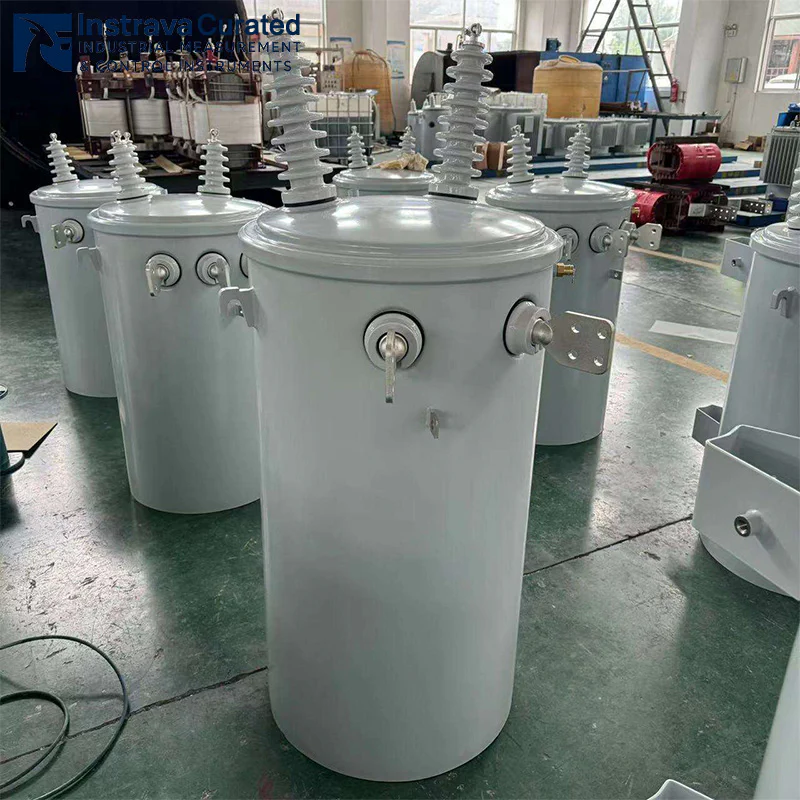
What are the capacity ranges and configurations available for Instrava's pole-mounted transformers?
We design and supply both single-phase and three-phase overhead pole-mounted transformers to accommodate global utility requirements:
Single-Phase Overhead Units: Available from 5 kVA to 333 kVA with primary voltage ratings up to 34.5 kV. These are highly utilized in rural electrification projects, residential neighborhoods, and light commercial applications.
Three-Phase Overhead Units: Available from 30 kVA to 500 kVA, engineered for small industrial clusters, agricultural pumping stations, and commercial zones fed by overhead lines.
What international standards do your pole-mounted transformers adhere to?
Every overhead transformer manufactured by Instrava is rigorously built and tested to meet or exceed regional utility benchmarks:
ANSI / IEEE C57.12.20: The definitive standard for overhead type distribution transformers.
IEC 60076: For international and European-style overhead distribution networks.
NEMA Standards: Ensuring hardware uniformity, dimensions, and testing protocols match global procurement specifications. Full routine factory test data, including insulation resistance, polarity, and loss measurements, accompanies every batch shipment.
How does Instrava optimize these transformers for harsh outdoor weathering and coastal environments?
Because pole-mounted units are exposed to continuous UV radiation, rain, wind, and potentially corrosive marine air, we employ heavy-duty surface protection:
High-Durability Finish: Tanks undergo an automated sandblasting pre-treatment followed by an electrostatically applied, baked-on powder coating system that exceeds IEEE C57.12.31 coastal paint specifications. Standard colors include ANSI 70 Light Gray and ANSI 61 Gray.
Corrosion-Resistant Hardware: Cover bands, bolts, and mounting brackets are manufactured from high-tensile stainless steel or hot-dip galvanized steel to prevent rust streaks and structural degradation over decades of service.
What type of mounting and lifting hardware is integrated into the tank design?
To ensure safe, rapid field installation by utility linemen, our tanks feature standardized structural hardware:
Hanger Brackets: Heavy-gauge steel brackets matching standard NEMA configurations for direct, secure bolting to utility poles.
Lifting Lugs: Balanced, heavy-duty lifting eyes engineered to distribute weight evenly during crane or boom-truck hoisting.
Grounding Terminals: Readily accessible tank grounding lugs provided near the base to ensure secure system grounding.
Automatic Pressure Relief Device: Automatically vent internal tank pressure caused by severe thermal loading, resetting securely once nominal pressure returns.
How do your pole-mounted transformers protect against wildlife interference and lightning surges?
Overhead grids are highly susceptible to lightning strikes and animal-induced short circuits. Instrava minimizes these operational outages with integrated defense mechanisms:
Surge Arrester Mounts: Direct-mounted porcelain or polymer metal-oxide varistor (MOV) lightning arresters can be pre-installed on the tank shell to intercept high-voltage atmospheric surges before they reach the internal windings.
Wildlife Protection Guards: High-dielectric polymer boot covers are available for the high-voltage bushings. These prevent accidental bridging faults caused by birds, squirrels, or debris, significantly reducing transient line trips.
Do you offer dual-voltage or customized tapping configurations?
Yes. To assist utilities in seamlessly upgrading legacy grid networks or consolidating inventory, we offer highly customizable winding configurations:
Dual-Voltage Primary Windings: Equipped with an external, de-energized voltage selection switch, allowing a single transformer to operate on two distinct distribution system voltages (e.g., 7.2 kV and 14.4 kV).
Off-Circuit Tap Changers: Typically configured with 5-position tap switch adjustments (+/- 2 x 2.5%) to fine-tune voltage regulation based on the unit’s distance from the regional substation.
UPS Isolation Transformer FAQ
What is the primary purpose of integrating an isolation transformer with a UPS system?
A UPS provides backup power and basic voltage regulation, but it does not completely isolate sensitive downstream loads from structural electrical anomalies. An Instrava UPS isolation transformer provides true galvanic isolation—meaning there is no direct electrical path between the input source and the output load. This configuration delivers three critical benefits:
Total Noise Barrier: It blocks high-frequency transients, voltage spikes, and electrical noise from traveling from the utility grid to sensitive microprocessors.
Localized Neutral-Ground Bond: It allows operators to establish a newly bonded, clean neutral-to-ground reference point immediately adjacent to the critical load, effectively resetting electrical baseline drift.
Fault Isolation: If a catastrophic short circuit occurs on the load side, the transformer prevents the fault current from reflecting back and destroying the expensive solid-state inverter components inside the UPS.
What is an Electrostatic (Faraday) Shield, and why is it essential for these units?
All Instrava UPS isolation transformers come standard with a grounded electrostatic Faraday shield positioned between the primary and secondary copper windings. This copper barrier is vital for protecting sensitive IT and medical hardware because it drastically reduces capacitive coupling between the windings. This shield shunts high-frequency common-mode noise, switching transients, and lightning surges directly to the ground, providing an impressive noise attenuation ratio of up to 60 dB (or a 1000-to-1 reduction in voltage transient amplitude).
How do Instrava’s transformers handle harmonic distortion from non-linear UPS loads?
Modern IT servers, variable frequency drives (VFDs), and switching power supplies are non-linear loads that generate high levels of harmonic currents ($3\text{rd}, 5\text{th}, 7\text{th}$ order harmonics). These harmonics cause standard transformers to rapidly overheat due to increased eddy current losses.
To mitigate this, our UPS isolation transformers are engineered with specific K-Factor ratings (typically K-4, K-13, or K-20):
Optimized Conductor Geometry: We utilize continuously transposed or parallel foil windings to minimize high-frequency skin effects.
Heavy-Duty Neutral Conductor: The neutral busbar and wiring are upsized to 200% of the phase current rating to safely handle the additive triplen harmonic currents running through the neutral circuit without overheating.
Should an isolation transformer be installed on the UPS Input side or the Output side?
The installation location depends entirely on your specific power quality objectives:
UPS Input Side (Pre-UPS): Placing the transformer on the primary incoming utility line or the static bypass line protects the UPS itself from external grid surges, lightning strikes, and severe phase voltage imbalances. It also prevents the UPS rectifier from reflecting harmonic noise back into the main building grid.
UPS Output Side (Post-UPS): Placing the transformer between the UPS output and the critical load is the ideal choice for creating a perfectly clean, localized neutral-ground reference. It eliminates the DC bias voltage and common-mode noise generated by the UPS internal inverter switching, ensuring absolute “clean power” reaches sensitive data servers or diagnostic imaging equipment.
Can a UPS isolation transformer resolve high neutral-to-ground voltage errors?
Yes. High neutral-to-ground voltage (often exceeding 2V to 5V) is a primary cause of mysterious data corruption errors, server network drops, and medical equipment faults. This issue usually stems from long cable runs, unbalanced building loads, or shared neutral conductors upstream. By installing an isolation transformer on the output side of the UPS and bonding the secondary neutral terminal directly to the local equipment ground, you break the upstream ground loop. This instantly drops the neutral-to-ground voltage at the critical load to near 0V, stabilizing equipment performance.
What thermal and insulation ratings do you specify for continuous data center operations?
Given that data center and facility power infrastructures run continuously under heavy load profiles, we construct our dry-type isolation transformers utilizing premium Class H ($180^\circ\text{C}$) ou Class R ($220^\circ\text{C}$) insulation systems. Furthermore, we design our units for a low temperature rise—typically a $115^\circ\text{C}$ ou $80^\circ\text{C}$ rise over a $40^\circ\text{C}$ ambient baseline. This conservative thermal engineering ensures the transformer runs cooler, handles unexpected harmonic spikes with ease, minimizes localized HVAC cooling loads, and extends the operational lifespan of the unit well beyond 25 years.
Auto Transformer FAQ
What is the fundamental difference between an auto transformer and a standard isolation transformer?
The primary difference lies in the internal winding configuration:
Isolation Transformers: Feature separate, physically isolated primary and secondary windings. Power is transferred entirely via magnetic coupling, providing total galvanic isolation.
Auto Transformers: Utilize a single, continuous copper winding that serves as both the primary and secondary sides, using targeted electrical taps to step the voltage up or down. Because part of the electrical current flows directly through the winding via conduction rather than induction, auto transformers are substantially smaller, lighter, and more efficient than isolation transformers of the exact same kVA rating, provided the voltage ratio is relatively close (e.g., 380V to 480V or 110kV to 220kV).
What are the main economic and operational benefits of using an Instrava auto transformer?
When galvanic isolation is not required by local electrical codes, specifying an auto transformer yields significant procurement advantages:
Lower Initial Capital Cost: Requiring significantly less copper wiring and silicon steel core material, auto transformers are much more cost-effective to manufacture.
Superior Efficiency: Because a portion of the power is transferred conductively, internal copper and core losses are minimized, resulting in operational efficiencies often exceeding 98.5% to 99%.
Reduced Footprint and Weight: Their compact frame size drastically lowers shipping fees, optimizes space inside cramped industrial control cabinets, and reduces structural stress when mounted on factory platforms or substations.
What are the critical safety limitations of an auto transformer?
While highly efficient, auto transformers introduce specific engineering trade-offs that must be mitigated by proper system design:
No Galvanic Isolation: Because the primary and secondary circuits share a physical electrical path, an auto transformer cannot block high-frequency common-mode noise, DC offsets, or transient surges from passing from the input source to the downstream load.
Risk of Open Neutral: If the common portion of the winding experiences an open-circuit fault or a broken neutral connection, the full primary input voltage can appear across the secondary terminals, potentially damaging sensitive downstream equipment.
Lower Internal Impedance: Auto transformers inherently possess lower percentage impedance ($%Z$) than standard transformers. This means that during an external short-circuit fault, they let through a higher fault current, necessitating robust upstream circuit breaker coordination.
In what industrial and grid utility applications are auto transformers most effectively deployed?
Auto transformers are the global industry standard for three primary scenarios:
Industrial Machinery Voltage Matching: Exporters and importers frequently use them to adapt imported machinery to local factory grids (e.g., stepping 380V down to 220V for international automated assembly lines, or stepping 380V up to 415V/480V).
Reduced-Voltage Motor Starting (RVAT): They are widely integrated into industrial motor control centers to safely start large induction motors, reducing the massive inrush current draw on the factory grid during startup.
High-Voltage Grid Interconnection: In large power utility networks, auto transformers are used to tie together transmission grids operating at close high-voltage ratios, such as 110kV to 220kV or 230kV to 500kV.
How does Instrava protect its auto transformers against short-circuit mechanical stresses?
Due to the inherently lower impedance of auto transformers, the mechanical forces generated inside the coils during an external short circuit can be immense. Instrava offsets this risk through premium manufacturing enhancements:
Reinforced Radial Bracing: We utilize high-density pressboard insulation blocks and robust mechanical tie-rods to securely lock the shared winding in place, preventing shifting or deformation under electromagnetic stress.
Varnish Impregnation: Coils undergo a comprehensive vacuum-pressure impregnation (VPI) cycle with high-grade thermal resin, creating a solid, moisture-resistant matrix that elevates both dielectric strength and physical rigidity.
Can Instrava auto transformers be configured with automatic tap changers for grid voltage regulation?
Yes. For large-scale substation and grid-tying applications, our three-phase high-voltage auto transformers can be equipped with either an On-Load Tap Changer (OLTC) ou un No-Load Tap Changer (NLTC). This allows network operators to dynamically adjust the turns-ratio in response to transmission line fluctuations, maintaining a steady, regulated output voltage despite shifting regional power demands.
Pourquoi faire confiance à Instrava ?
Nous sélectionnons les fabricants en adoptant une approche neutre et impartiale, en gardant toujours à l'esprit vos intérêts.
Notre raison d'être consiste à vous aider à trouver les produits qui répondent parfaitement à vos besoins.
Étant implantés en Chine, nous sommes en mesure de mener des inspections sur place afin d'évaluer directement les conditions de production et la qualité des produits.
Nous vous aidons à éviter les intermédiaires qui se font passer pour des usines.
Nous facilitons un service après-vente plus fluide, en éliminant les problèmes liés aux décalages horaires et les retards souvent associés aux relations directes avec les usines.
Notre équipe multilingue garantit une communication efficace.
Pour une start-up spécialisée dans le trading, chaque interaction avec un client est une occasion précieuse : c’est le signe que vous êtes prêt à nous accorder votre confiance et à nous donner la chance de faire nos preuves.
À l'ère du numérique, alors que l'information est facilement accessible, les idées fausses viennent souvent entacher la confiance entre les gens.
Instrava repose entièrement sur la confiance ; c'est notre philosophie fondamentale et le fondement même de notre existence au sein de la société. C'est le pilier essentiel de notre croissance à long terme et de notre engagement au service de la communauté.
Nous vous prions de nous accorder votre confiance.