
Accueil » Technologie » Jauge de niveau magnétostrictive : principe de fonctionnement, technologies clés, défis industriels et perspectives d'évolution dans le cadre de l'Industrie 4.0
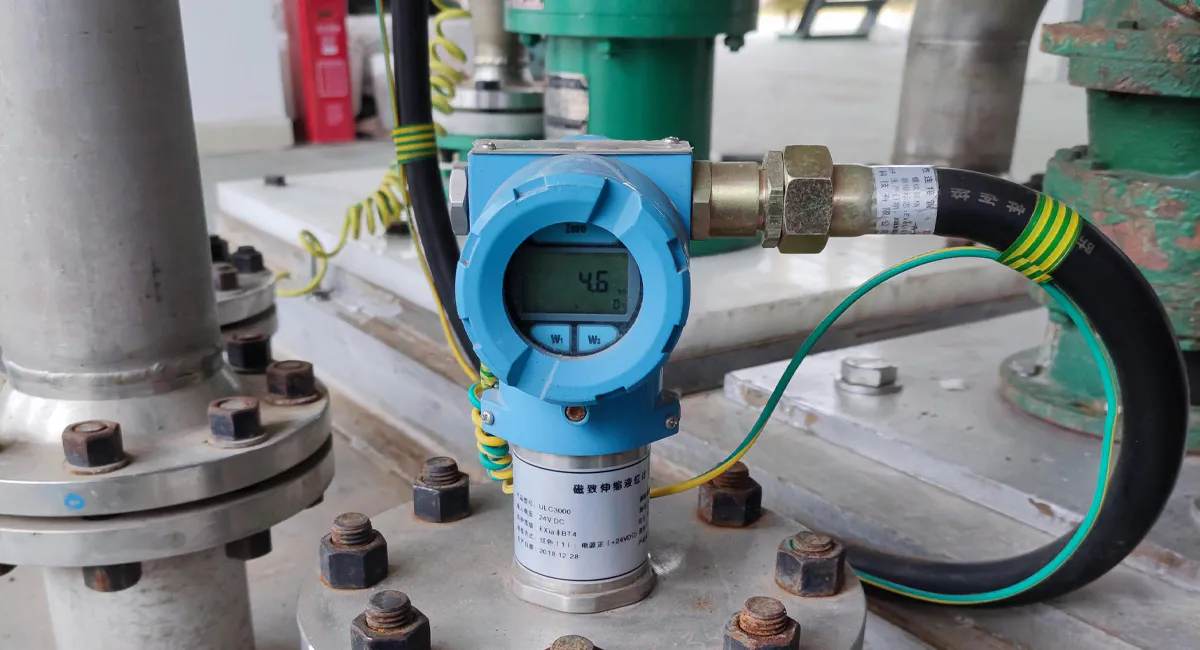
Jauge de niveau magnétostrictive : principe de fonctionnement, technologies clés, défis industriels et perspectives d'évolution dans le cadre de l'Industrie 4.0
Introduction
Accurate liquid level measurement is essential for safe and efficient industrial operations. Industries such as oil & gas, petrochemicals, power generation, pharmaceuticals, LNG storage, and water treatment all rely on precise level monitoring to ensure process stability, inventory accuracy, and regulatory compliance.
Over the past century, level measurement technologies have evolved from mechanical float systems to differential pressure transmitters, ultrasonic sensors, radar level transmitters, and magnetostrictive level gauges.
Among these technologies, Magnetostrictive Level Gauges are widely recognized as one of the most accurate continuous level measurement solutions available today. With typical accuracies reaching ±0.5 mm and repeatability measured in microns, they have become the preferred choice for custody transfer tanks, interface measurement applications, and mission-critical industrial processes.
But why was magnetostrictive technology developed? What engineering problems does it solve? And how will it evolve in the era of Industrial IoT, Artificial Intelligence, and Digital Twins?
Why Did Magnetostrictive Level Measurement Evolve?
The development of magnetostrictive level measurement was driven by the limitations of earlier technologies.
Mechanical Float Gauges
Traditional float-and-cable systems were simple but suffered from:
- Usure mécanique
- Cable stretching
- Pulley degradation
- Entretien régulier
- Précision limitée
These shortcomings became increasingly problematic as industrial processes demanded higher precision.
Transmetteurs de pression différentielle
Differential pressure (DP) transmitters improved reliability but introduced indirect measurement errors because level is calculated from pressure rather than measured directly.
Common issues include:
- Density variations
- Fluctuations de température
- Variations de pression
- Dérive d'étalonnage
- Foam and emulsion interference
In large storage tanks, even a small measurement error can represent significant inventory losses.
As industries pursued greater accuracy and reliability, engineers sought a direct level measurement technology that could eliminate many of these limitations. This demand led to the widespread adoption of magnetostrictive sensing technology.
How Does a Magnetostrictive Level Gauge Work?
The Magnetostriction Effect
The operating principle is based on a physical phenomenon known as magnetostriction.
Certain ferromagnetic materials undergo microscopic dimensional changes when exposed to magnetic fields. Conversely, mechanical stress can alter their magnetic properties.
This interaction between magnetic energy and mechanical strain forms the basis of magnetostrictive sensing.
Measurement Process
A typical magnetostrictive level gauge consists of:
- A waveguide wire
- A float containing a permanent magnet
- Pulse generation electronics
- Signal processing circuitry
The transmitter periodically sends an electrical current pulse through the waveguide.
The current pulse generates a circular magnetic field around the waveguide.
When this magnetic field intersects with the magnetic field generated by the float magnet, a torsional strain pulse is created through the Wiedemann Effect.
The torsional pulse travels back to the sensor head at a known speed.
By precisely measuring the travel time, the system calculates the float position and therefore the liquid level.
Because the measurement is based on time-of-flight rather than analog signal magnitude, extremely high accuracy and repeatability can be achieved.
Core Technologies of Magnetostrictive Level Gauges
1. Magnetostrictive Waveguide Technology
The waveguide serves as the sensing element and transmission medium.
It converts magnetic interactions into measurable torsional pulses.
Avantages
- Absolute position measurement
- No cumulative errors
- Excellente répétabilité
- Longue durée de vie
- Minimal mechanical wear
Industry Problems Solved
Storage terminals and refineries require highly accurate inventory management.
Conventional technologies often struggle to achieve millimeter-level precision.
Magnetostrictive waveguide technology provides direct level measurement with significantly reduced uncertainty.
2. High-Resolution Time-of-Flight Measurement
Modern electronics measure pulse travel times at nanosecond-level resolution.
Avantages
- Ultra-high accuracy
- Stabilité à long terme
- Minimal calibration drift
- Consistent performance over time
Industry Problems Solved
In custody transfer applications, inventory discrepancies can result in substantial financial losses.
High-resolution timing technology enables reliable and auditable measurements.
3. Multi-Float Interface Detection
Advanced magnetostrictive systems can simultaneously detect multiple float positions.
This allows measurement of:
- Total liquid level
- Interface level
- Oil-water separation layer
- Multiple product layers
Industry Problems Solved
Oil production facilities, separators, and wastewater treatment plants often require interface monitoring.
Traditional systems may require multiple instruments, increasing installation and maintenance costs.
A single magnetostrictive probe can perform multiple measurements simultaneously.
4. Digital Signal Processing (DSP)
Modern instruments incorporate advanced digital filtering algorithms.
DSP technology compensates for:
- Vibrations mécaniques
- Bruit électrique
- Pump-induced disturbances
- Turbulent process conditions
Industry Problems Solved
Industrial environments are rarely static.
Rotating equipment, process turbulence, and electromagnetic interference can affect measurement quality.
DSP significantly improves signal stability and measurement reliability.
Which Industrial Challenges Can Magnetostrictive Technology Solve?
Industrie du pétrole et du gaz
The Problem
Large storage tanks require highly accurate inventory measurement.
A level error of only a few millimeters can represent thousands of dollars in product discrepancy.
The Solution
Magnetostrictive level gauges provide:
- Custody-transfer-grade accuracy
- Continuous measurement
- Reliable inventory accounting
- Exigences minimales en matière d'entretien
LNG and Cryogenic Applications
The Problem
Liquefied natural gas is stored at temperatures approaching -196°C.
Many conventional sensing technologies experience performance degradation under such conditions.
The Solution
Specialized cryogenic magnetostrictive probes maintain measurement stability under extreme temperatures.
Traitement chimique
The Problem
Corrosive chemicals can damage sensors and reduce operational life.
The Solution
Magnetostrictive probes can be manufactured using:
- Acier inoxydable 316L
- Hastelloy
- PTFE coatings
- Specialized corrosion-resistant alloys
Industrie pharmaceutique
The Problem
Hygienic production requires contamination-free measurement systems.
The Solution
Sanitary magnetostrictive level gauges support:
- CIP cleaning
- SIP sterilization
- FDA-compliant materials
- High-purity process requirements
Traitement de l'eau et des eaux usées
The Problem
Oil-water interface monitoring is often difficult using conventional technologies.
The Solution
Dual-float magnetostrictive systems can accurately measure both total level and interface level simultaneously.
Nuclear Power Plants
The Problem
Steam generators in nuclear power plants require highly accurate water level measurement to ensure safe and stable operation.
Measurement conditions are extremely challenging due to:
- Haute température
- Haute pression
- Rapid pressure changes
- Density variations
- Strict safety requirements
Traditional differential pressure instruments may experience errors during transient operating conditions.
The Solution
A study titled Research on Magnetostrictive Liquid Level Gauge for Water Level Measurement of Steam Generator evaluated the feasibility of applying magnetostrictive technology to steam generator level monitoring.
Researchers compared magnetostrictive measurements with traditional differential pressure measurements under:
- Cold steady-state conditions
- Thermal steady-state conditions
- Pressurization transients
- Depressurization transients
The results demonstrated that magnetostrictive level gauges maintained excellent measurement accuracy during steady-state and transient pressurization conditions.
The study concluded that magnetostrictive technology has strong potential for steam generator water level measurement in nuclear power plants, provided that float design parameters and process conditions are properly compensated.
This research highlights the capability of magnetostrictive technology in some of the world’s most demanding industrial environments.
Reference:
Research on Magnetostrictive Liquid Level Gauge for Water Level Measurement of Steam Generator.
Current Technical Bottlenecks
Despite their advantages, magnetostrictive level gauges still face several technical challenges.
Dynamic Fluid Movement
Rapid depressurization, turbulence, and fluid sloshing can cause float oscillation.
The nuclear power study mentioned earlier showed that transient depressurization conditions may reduce measurement accuracy due to fluid movement within the vessel.
Manufacturing Cost
High-precision waveguides and timing electronics increase manufacturing complexity and cost.
Probe Length Limitations
Very large storage tanks may require special probe designs to maintain accuracy over extended distances.
Electromagnetic Interference
Although highly resistant to noise, strong magnetic environments can still affect measurement performance.
Future Development of Magnetostrictive Level Gauges
Emerging research and industrial trends suggest several future directions.
Fiber-Optic Magnetostrictive Sensors
Researchers are exploring hybrid systems combining magnetostrictive sensing with fiber-optic technologies.
Potential benefits include:
- Longer measurement ranges
- Improved EMI immunity
- Enhanced reliability
Wireless Smart Instruments
Future level gauges may incorporate:
- WirelessHART
- ISA100
- 5G Industrial Communication
- LPWAN technologies
This reduces installation costs and enables remote monitoring.
Self-Diagnostic Sensors
Future systems are expected to continuously monitor:
- Float health
- Waveguide integrity
- Electronic component status
- Measurement quality indicators
This enables predictive maintenance strategies.
Intégration du jumeau numérique
A Digital Twin continuously mirrors the physical behavior of industrial assets.
Future magnetostrictive gauges will become critical data sources for:
- Tank farm digital twins
- Process simulations
- Asset performance monitoring
- Operational optimization
Rather than simply reporting level measurements, sensors will contribute to real-time virtual representations of industrial processes.
Artificial Intelligence and Adaptive Compensation
The next generation of level instruments is expected to incorporate machine learning algorithms.
AI can help:
- Identify abnormal process behavior
- Filter turbulence-induced measurement noise
- Predict sensor degradation
- Optimize calibration parameters automatically
The challenge identified in steam generator applications—measurement uncertainty caused by fluid movement—may eventually be addressed through AI-assisted compensation models.
Recommended Magnetostrictive Level Gauge Selection by Industry
| L'industrie | Primary Challenge | Recommended Product Type | Précision typique | Exigences particulières |
|---|---|---|---|---|
| Oil & Gas Storage | Inventory accounting | High-precision magnetostrictive gauge | ±0.5 mm | Custody transfer certification |
| LNG | Cryogenic operation | Cryogenic magnetostrictive gauge | ±1 mm | Operation down to -196°C |
| Traitement chimique | Corrosion | PTFE or Hastelloy probe | ±1 mm | Résistance à la corrosion |
| Pharmaceutique | Hygiene compliance | Sanitary design | ±1 mm | CIP/SIP compatible |
| Traitement de l'eau | Mesure d'interface | Dual-float interface gauge | ±1 mm | Oil-water separation |
| Nuclear Power | Haute fiabilité | Nuclear-grade magnetostrictive gauge | ±0.5 mm | High-temperature stability |
Magnetostrictive Level Gauges in Industry 4.0 and the AI Era
The future role of magnetostrictive level gauges extends far beyond simple measurement.
As Industry 4.0 continues to transform industrial operations, these devices will become intelligent sensing nodes connected to broader digital ecosystems.
Future instruments will increasingly support:
- OPC UA
- MQTT
- Ethernet-APL
- Informatique de pointe
- Cloud Analytics
- Digital Twins
- AI-Based Diagnostics
In tomorrow’s smart factories, a jauge de niveau will not simply indicate tank level.
Instead, it will continuously provide operational intelligence, predict maintenance needs, detect process anomalies, and support autonomous decision-making systems.
The sensor itself becomes an active participant in plant optimization.
Conclusion
Magnetostrictive Level Gauges represent one of the most advanced and accurate liquid level measurement technologies available today.
Their evolution was driven by the need to overcome the limitations of mechanical and pressure-based measurement systems. Through the combination of magnetostrictive waveguide sensing, high-resolution time-of-flight measurement, multi-float interface detection, and advanced digital signal processing, these instruments provide exceptional accuracy and reliability across a wide range of industries.
Research conducted in demanding applications such as nuclear power steam generators further demonstrates their capability and future potential.
As Industrial IoT, Digital Twins, and Artificial Intelligence continue reshaping industrial automation, magnetostrictive level gauges will evolve from precision instruments into intelligent sensing platforms capable of supporting predictive maintenance, autonomous operations, and data-driven industrial decision making.
What factors affect the accuracy of liquid level measurements taken with a magnetostrictive level gauge?
While magnetostrictive level gauges are celebrated for their micron-level precision, certain external and operational factors can still degrade their measurement fidelity:
1.Temperature Swings (Waveguide Drift): Even though premium waveguides use low-expansion alloys (like Ni-Span-C), extreme temperature fluctuations can slightly alter the speed of the torsional wave ($v_{sound}$). Without built-in temperature compensation (such as an RTD mapping the probe length), this introduces thermal calibration drift.
2.Magnetic Interference: High-power nearby industrial equipment (e.g., large motors, heavy-duty transformers, or high-current power cables) can generate strong external electromagnetic fields. These fields can distort the localized magnetic intersection on the waveguide, leading to jitter or lost return pulses.
3.Process Pressure and Flash Boiling: Rapid pressure drops (transient depressurization) cause saturated liquids to flash or boil violently. The resulting hydrodynamic turbulence violently shakes the float, causing axial tracking instability.
4.Mechanical Misalignment: If the probe is bent during installation or sways significantly due to high fluid velocity, the float may experience uneven friction against the outer pipe, distorting the precise vertical linearity of the Time-of-Flight (ToF) calculation.
What are the installation environment requirements for a magnetostrictive level gauge?
To guarantee long-term, high-accuracy operation, the installation environment must adhere to strict structural and physical parameters:
1.Perpendicular Alignment: The probe must be installed perfectly vertical (typically within $\pm 5^\circ$ from true vertical). Any significant tilt increases mechanical friction between the float’s inner core and the probe tube, leading to measurement lag or sticking.
2.Magnetic Standoff Clearances: The gauge must be kept clear of ferromagnetic structures. Carbon steel vessel walls, mounting brackets, or nearby piping must maintain a minimum clearance (usually $\ge 100\,\text{mm}$) to prevent distorting the float’s permanent magnetic field.
3.Vibration and Turbulence Isolation: In vessels featuring heavy agitation or high-velocity inflows, the gauge should be isolated using a dedicated stilling well or bypass chamber. This prevents the probe from flexing and protects the float from lateral hydrodynamic impact.
4.Thermal Protection for Electronics: While the probe can handle high process temperatures via thermal isolation extensions, the electronics housing (enclosure cavity) must remain within its rated ambient limits (typically $-40^\circ\text{C}$ to $+80^\circ\text{C}$) to avoid clock-counter component failure.
What common issues are prone to occur with the float of a magnetostrictive level gauge, and how should they be resolved?
The float is the only dynamic mechanical element in a magnetostrictive system, making it vulnerable to process media disruptions:
| Common Float Issue | Root Cause | Engineering Solution |
| Float Jamming / Binding | Process media crystallization, polymerization, or high particulate sediment buildup locking the float to the stem. | Install a heavy-duty or oversized float; add an outer flushing port to regularly inject solvent; apply a non-stick coating (like PTFE) to the outer stem. |
| Sinking Float | Float shell puncture due to pressure spikes, chemical corrosion, or mechanical impact, leading to liquid filling the cavity. | Replace with a high-thickness titanium or Hastelloy-C float matching the maximum process design pressure. Check chemical compatibility charts. |
| Inverse Float Inversion | Incorrect orientation during maintenance reassembly, causing the internal asymmetric magnetic ring to sit upside down. | Ensure the side stamped “TOP” faces upward toward the electronics enclosure. Run an onsite hardware echo check to confirm signal polarity. |
| Magnetic De-coupling | Process temperatures exceeding the magnet’s Curie Point, resulting in permanent loss of float magnetism. | Replace with an ultra-high-temperature rated float using Alnico or Samarium-Cobalt magnets. Ensure process spikes do not overshoot limits. |
Which industrial sectors are suitable for the application of magnetostrictive level gauges?
Thanks to its immune-to-vapor design and absolute positioning, this technology excels across several high-precision verticals:
-
Oil & Gas (Custody Transfer & Tank Farms): Ideal for commercial oil depots, retail fuel station underground tanks, and oil-water interface monitoring. It concurrently tracks total volume, water bottoms, and multi-point temperature profiles for precise thermal volume correction.
-
Pharmaceuticals & Fine Chemicals (Reactors): Perfect for batch reactors running aggressive agitations where heavy foaming, flashing, condensation, or sweeping changes in dielectric constants ($\varepsilon$) completely blind standard radar and ultrasonic units.
-
Power Generation (Boiler Steam Drums & HP Heaters): Deployed inside bypass chambers to track critical boiling levels. It circumvents the severe density-induced “false water levels” that routinely plague traditional differential pressure (DP) impulse lines during startup pressure transients.
-
Food & Beverage (Sanitary Storage): Utilizing mirror-polished stainless steel probes with crevice-free floats, it supports Clean-in-Place (CIP) and Sterilize-in-Place (SIP) systems for high-accuracy inventory control of dairy, beverages, and pure water.
What are the differences between the following terms: magnetostrictive level gauges, magnetostrictive level measurement, magnetostrictive level sensors, and magnetostrictive level transmitters?
While often used interchangeably in casual conversation, these terms represent distinct layers within instrumentation taxonomy:
-
Magnetostrictive Level Measurement: This refers broadly to the technological methodology or physical principle itself (the underlying physics of using the Wiedemann and Villari effects to calculate fluid boundaries).
-
Magnetostrictive Level Sensor: This is the primary sensing element. It includes the raw physical hardware responsible for transducing the physical level into an unconditioned electrical variant (i.e., the waveguide wire, the magnetic float, and the raw pickup coil).
-
Magnetostrictive Level Transmitter: This represents the complete smart assembly, integrating the sensor with advanced electronic processing circuitry. It scales, normalizes, and transmits the raw sensor signal into standard industrial control protocols (such as 4-20mA, HART, Modbus, or Profibus) for DCS/PLC consumption.
-
Magnetostrictive Level Gauge: Historically, a “gauge” implied a direct local visual indicator (like a dial or glass sight). Today, it is used as a comprehensive industry-wide term for the entire device, bridging the gap between a standalone transmitter and a fully packaged engineering solution.
How should a magnetostrictive level gauge be maintained?
Magnetostrictive gauges require minimal intervention due to their solid-state design, but a structured preventive maintenance protocol protects long-term accuracy:
-
Routine Float & Stem Inspections: For sticky, scaling, or crystalline media, pull the probe assembly during scheduled shutdowns to inspect for coating buildup. Clean the outer probe pipe and the float’s inner lumen using a non-abrasive solvent and a soft cloth to ensure unimpeded travel.
-
Electronic Diagnostics (Waveform Verification): Connect a specialized field communicator or asset management tool via the HART protocol to view the instrument’s return pulse envelope. Check if the echo amplitude has degraded over time, which could indicate waveguide aging or a weakening float magnet.
-
Seal and Cable Entry Verification: Periodically inspect the cable glands and the electronics enclosure O-rings. Ensure they are tightly sealed to prevent the ingress of ambient humidity or corrosive vapors, which can oxidize the high-frequency Time-to-Digital Converter (TDC) circuits.
-
Annual Reference Calibration Verification: Verify the instrument’s accuracy by driving the float to known mechanical benchmarks on the probe rod. Compare the digital loop output against physical measurements to confirm that no minor wave velocity calculation shifts have developed over the preceding operational year.
Pourquoi faire confiance à Instrava ?
Nous sélectionnons les fabricants en adoptant une approche neutre et impartiale, en gardant toujours à l'esprit vos intérêts.
Notre raison d'être consiste à vous aider à trouver les produits qui répondent parfaitement à vos besoins.
Étant implantés en Chine, nous sommes en mesure de mener des inspections sur place afin d'évaluer directement les conditions de production et la qualité des produits.
Nous vous aidons à éviter les intermédiaires qui se font passer pour des usines.
Nous facilitons un service après-vente plus fluide, en éliminant les problèmes liés aux décalages horaires et les retards souvent associés aux relations directes avec les usines.
Notre équipe multilingue garantit une communication efficace.
Pour une start-up spécialisée dans le trading, chaque interaction avec un client est une occasion précieuse : c’est le signe que vous êtes prêt à nous accorder votre confiance et à nous donner la chance de faire nos preuves.
À l'ère du numérique, alors que l'information est facilement accessible, les idées fausses viennent souvent entacher la confiance entre les gens.
Instrava repose entièrement sur la confiance ; c'est notre philosophie fondamentale et le fondement même de notre existence au sein de la société. C'est le pilier essentiel de notre croissance à long terme et de notre engagement au service de la communauté.
Nous vous prions de nous accorder votre confiance.

Envoyer un message de demande de renseignements
Envoyez-nous vos besoins en matière de fabrication, et notre équipe vous proposera des solutions professionnelles dans les 24 heures.