
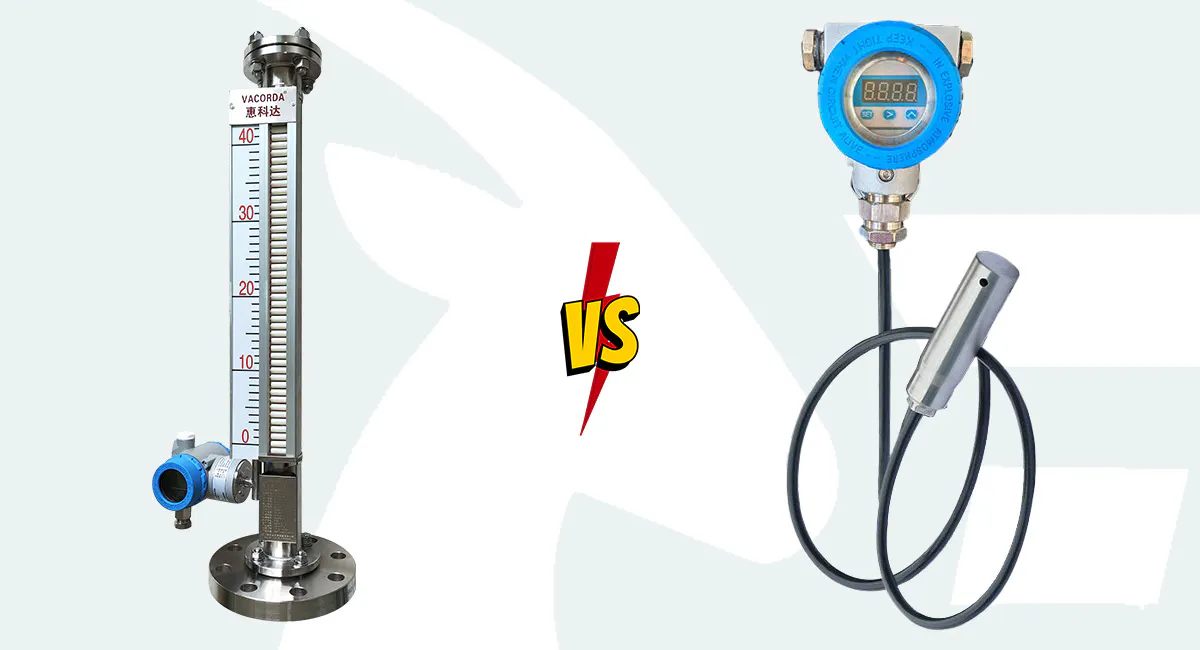
Pengukur Level Magnetik vs Pengukur Level Hidrostatik: Panduan Teknologi dan Pemilihan
Pendahuluan
Pengukur level magnetik dan pengukur level hidrostatis adalah dua instrumen yang banyak digunakan untuk pemantauan level cairan industri. Kedua teknologi ini sudah matang dan dapat diandalkan, tetapi keduanya memiliki tujuan yang berbeda dan cocok untuk kondisi proses yang berbeda.
Dari sudut pandang produsen OEM, memahami perbedaan antara pengukur level magnetik dan pengukur level hidrostatik sangat penting untuk memilih solusi pengukuran level yang tepat. Artikel ini membandingkan kedua jenis tersebut dalam hal prinsip kerja, kinerja, pemasangan, dan kesesuaian aplikasi.
Prinsip Kerja
Pengukur Level Magnetik
A pengukur level magnetik adalah instrumen tipe kontak visual. Alat ini terdiri dari pelampung yang berisi magnet permanen yang bergerak naik dan turun di dalam ruang tertutup saat level cairan berubah. Penutup indikator eksternal atau layar magnetik melacak posisi pelampung untuk menunjukkan level waktu nyata.
Pengukur level magnetik memberikan indikasi level secara langsung dan intuitif tanpa memerlukan catu daya atau sinyal elektronik.
Pengukur Tingkat Hidrostatik
Pengukur level hidrostatis mengukur level cairan berdasarkan tekanan. Perangkat mendeteksi tekanan hidrostatik yang dihasilkan oleh ketinggian kolom cairan dan mengubahnya menjadi sinyal output standar seperti 4-20 mA.
Pengukur level jenis ini adalah instrumen pengukuran elektronik dan memerlukan kepadatan cairan yang stabil untuk memastikan pembacaan yang akurat.
Perbandingan Kinerja
| Item | Pengukur Level Magnetik | Pengukur Tingkat Hidrostatik |
|---|---|---|
| Metode Pengukuran | Indikasi visual langsung | Elektronik berbasis tekanan |
| Catu Daya | Tidak diperlukan | Diperlukan |
| Akurasi | Tinggi untuk indikasi lokal | Tinggi dengan kepadatan yang stabil |
| Sinyal Keluaran | Output pemancar opsional | Output listrik standar |
| Pemeliharaan | Rendah | Rendah |
| Pengaruh Kepadatan | Tidak. | Ya. |
| Toleransi Suhu | Bagus. | Terbatas pada suhu tinggi |
| Kesesuaian Tekanan | Bagus. | Terbatas |
| Risiko Kegagalan | Sangat rendah | Rendah |
Perbandingan Instalasi
| Faktor Instalasi | Pengukur Level Magnetik | Pengukur Tingkat Hidrostatik |
|---|---|---|
| Posisi Pemasangan | Sisi dipasang pada tangki | Bawah atau terendam |
| Koneksi Proses | Membutuhkan ruang eksternal | Berulir atau flensa |
| Kontak Sedang | Mengapung dalam kontak langsung | Sensor dalam kontak langsung |
| Pengkabelan | Tidak diperlukan | Dibutuhkan |
| Pengaruh Obstruksi | Tidak ada | Tidak ada |
| Akses Pemeliharaan | Akses samping yang mudah | Akses bawah diperlukan |
Aplikasi Khas
Aplikasi Pengukur Level Magnetik
Pengukur level magnetik sangat ideal untuk:
-
Ketel suhu tinggi
-
Kapal bertekanan
-
Tangki bahan kimia korosif
-
Situasi yang membutuhkan tampilan tingkat visual lokal
-
Proses yang sangat penting bagi keselamatan tanpa ketersediaan daya
Mereka biasanya digunakan di pabrik petrokimia, tangki penyimpanan, dan kapal proses di mana operator membutuhkan pemantauan level yang intuitif.
Aplikasi Pengukur Level Hidrostatik
Pengukur level hidrostatis cocok untuk:
-
Tangki atmosfer
-
Sistem pengolahan air
-
Waduk bawah tanah
-
Tangki penyimpanan bahan bakar dan minyak
-
Pemantauan jarak jauh melalui sistem kontrol
Teknologi ini sering dipilih apabila diperlukan output elektronik yang terus menerus.
Panduan Pemilihan dari Perspektif Produsen
Ketika memilih di antara kedua pengukur level ini, produsen biasanya mempertimbangkan:
-
Apakah indikasi lokal visual diperlukan
-
Suhu dan tekanan proses
-
Kebutuhan untuk transmisi sinyal jarak jauh
-
Stabilitas kepadatan cairan
-
Ruang instalasi dan anggaran
Pengukur level magnetik lebih disukai untuk lingkungan yang keras dan indikasi langsung, sedangkan pengukur level hidrostatis dipilih untuk proyek pemantauan jarak jauh yang ekonomis.
Kesimpulan
Pengukur level magnetik dan pengukur level hidrostatik masing-masing memiliki keunggulan unik dalam pengukuran level industri. Pengukur level magnetik menawarkan indikasi visual yang sederhana, aman, dan sangat andal. Pengukur level hidrostatis memberikan output elektronik yang akurat dan hemat biaya untuk aplikasi konvensional.
Dengan memahami perbedaannya dan berkonsultasi dengan produsen pengukur level OEM yang berpengalaman, pengguna dapat memilih solusi pengukuran level yang paling sesuai untuk tangki dan bejana mereka.