
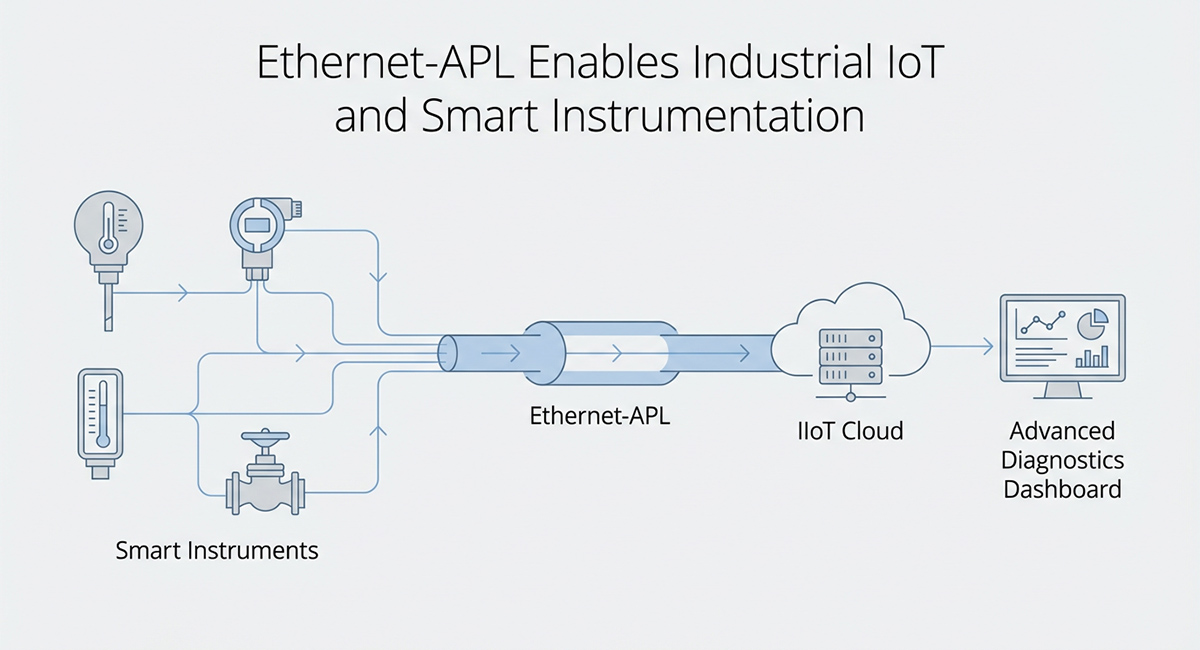
Bagaimana Ethernet-APL Memungkinkan IoT Industri dan Instrumentasi Cerdas
Sistem industri berkembang pesat dari lingkungan kontrol yang terisolasi menjadi ekosistem yang sepenuhnya terhubung dan digerakkan oleh data. Pusat dari transformasi ini adalah Industrial IoT (IIoT), yang bergantung pada komunikasi tanpa batas antara perangkat lapangan, sistem kontrol, dan platform perusahaan.
Namun, satu tantangan yang sudah berlangsung lama telah membatasi evolusi ini: ketidakmampuan untuk menghadirkan komunikasi Ethernet berkecepatan tinggi secara langsung ke perangkat tingkat lapangan dalam industri proses.
Ethernet-APL mengatasi tantangan ini dengan memungkinkan komunikasi Ethernet yang andal, jarak jauh, dan secara intrinsik aman-membuka potensi penuh IoT Industri dan instrumentasi pintar.
Kesenjangan Antara Perangkat Lapangan dan IoT Industri
Arsitektur industri tradisional berlapis-lapis:
- Tingkat lapangan (sensor, pemancar)
- Tingkat kontrol (PLC/DCS)
- Tingkat perusahaan (SCADA, sistem cloud)
Sementara lapisan atas telah mengadopsi teknologi Ethernet dan digital, perangkat lapangan masih terkendala:
- Komunikasi bandwidth rendah (4-20 mA, HART)
- Transmisi data terbatas
- Diagnostik terbatas
Penghakiman Sebelum Wawasan
Jika perangkat lapangan tidak dapat memberikan data yang kaya dan real-time, maka Industrial IoT tidak dapat memberikan nilai penuhnya.
Ethernet-APL sebagai Tautan yang Hilang
Ethernet-APL memperluas konektivitas Ethernet secara langsung ke instrumen lapangan, sehingga menghilangkan hambatan komunikasi tradisional.
Kemampuan Utama
- Komunikasi Ethernet 10 Mbps di tingkat lapangan
- Transmisi jarak jauh (hingga 1000 meter)
- Daya dan data melalui satu kabel
- Keamanan intrinsik untuk lingkungan berbahaya
Hal ini memungkinkan perangkat lapangan menjadi simpul yang terintegrasi penuh dalam jaringan IoT Industri.
Dari Sensor hingga Instrumentasi Cerdas
Transisi dari sensor tradisional ke instrumentasi cerdas bergantung pada ketersediaan bandwidth tinggi, komunikasi yang andal.
📊 Evolusi Kemampuan: Instrumen Tradisional vs Instrumen Cerdas
| Kemampuan | Instrumen Tradisional | Instrumen Cerdas (dengan Ethernet-APL) |
|---|---|---|
| Keluaran Data | Variabel tunggal | Multi-variabel, resolusi tinggi |
| Diagnostik | Minimal | Canggih, waktu nyata |
| Komunikasi | Analog / Kecepatan rendah | Ethernet Penuh |
| Konfigurasi | Manual / Lokal | Jarak Jauh / Digital |
| Pemeliharaan | Reaktif | Prediksi |
Ethernet-APL memungkinkan instrumen untuk mengirimkan tidak hanya nilai proses tetapi juga data diagnostik, informasi status, dan indikator kinerja. Hal ini mengubah sensor tradisional menjadi perangkat cerdas yang mampu mendukung pemeliharaan prediktif dan pengoperasian jarak jauh.
Instrava mendukung transisi ini dengan menyediakan solusi instrumentasi yang dirancang untuk integrasi dengan sistem komunikasi berbasis Ethernet modern, memungkinkan lingkungan industri yang lebih cerdas dan lebih terhubung.
Mengaktifkan Aliran Data Waktu Nyata untuk IoT Industri
IoT industri mengandalkan aliran data berkualitas tinggi yang terus menerus dari perangkat lapangan.
Tanpa komunikasi yang stabil dan bandwidth tinggi, sistem IoT tidak dapat memberikan analisis yang akurat atau wawasan yang dapat diandalkan.
📊 Perbandingan Aliran Data
| Fitur | Sistem Tradisional | Sistem Ethernet-APL |
|---|---|---|
| Frekuensi Data | Rendah | Tinggi (terus menerus) |
| Kedalaman Data | Terbatas | Kumpulan data yang kaya |
| Latensi | Tinggi | Rendah |
| Visibilitas Sistem | Sebagian | Penuh |
Ethernet-APL memungkinkan transmisi data secara real-time, sehingga operator dapat memantau proses secara terus menerus dan merespons perubahan secara instan. Tingkat visibilitas ini sangat penting untuk analisis tingkat lanjut, kembaran digital, dan pengoptimalan berbasis AI.
Mendukung Pemeliharaan Prediktif
Salah satu aplikasi IoT Industri yang paling berharga adalah pemeliharaan prediktif.
Strategi pemeliharaan bergeser dari reaktif menjadi prediktif hanya jika data kondisi yang dapat diandalkan terus tersedia.
Bagaimana Ethernet-APL Mengaktifkan Pemeliharaan Prediktif
- Pemantauan kesehatan perangkat secara terus-menerus
- Deteksi dini tren abnormal
- Diagnostik dan konfigurasi jarak jauh
- Mengurangi kebutuhan akan inspeksi manual
Dampak
- Mengurangi waktu henti
- Biaya perawatan yang lebih rendah
- Masa pakai peralatan yang lebih lama
Instrava bekerja sama dengan mitra industri untuk mengimplementasikan sistem instrumentasi yang mendukung strategi pemeliharaan prediktif, sehingga meningkatkan keandalan operasional jangka panjang.
Integrasi dengan Platform IoT Industri
Ethernet-APL memungkinkan integrasi langsung antara perangkat lapangan dan sistem tingkat yang lebih tinggi:
- Sistem SCADA
- Platform cloud
- Danau data industri
- Lingkungan kembar digital
Keuntungan Utama
Tidak perlu konversi protokol atau gateway-data mengalir secara native melalui Ethernet.
Hasil
- Arsitektur sistem yang disederhanakan
- Akses data yang lebih cepat
- Skalabilitas yang ditingkatkan
Memungkinkan Transformasi Digital dalam Industri Proses
Ethernet-APL adalah pendorong utama transformasi digital dalam industri seperti:
Minyak & Gas
- Pemantauan aset terdistribusi secara real-time
- Keamanan yang ditingkatkan melalui data yang berkelanjutan
Pengolahan Kimia
- Kontrol yang tepat untuk reaksi kompleks
- Optimalisasi proses yang lebih baik
Pembangkit Listrik
- Peningkatan efisiensi berbasis data
- Pemeliharaan prediktif peralatan penting
Air & Air Limbah
- Pemantauan jarak jauh dari sistem terdesentralisasi
- Mengurangi biaya operasional
Membangun Arsitektur Industri yang Siap untuk Masa Depan
Sistem industri masa depan akan ditentukan oleh konektivitas, kecerdasan, dan kemampuan beradaptasi.
Peran Ethernet-APL
- Menstandarkan komunikasi di semua tingkatan
- Memungkinkan penerapan IoT yang dapat diskalakan
- Mendukung AI dan pengambilan keputusan berbasis data
Dengan membawa Ethernet ke tingkat lapangan, Ethernet-APL menghilangkan penghalang terakhir untuk sistem industri yang terhubung sepenuhnya. Hal ini memungkinkan organisasi untuk membangun arsitektur yang fleksibel dan siap untuk masa depan yang dapat berevolusi dengan kemajuan teknologi.
Kesimpulan
Ethernet-APL lebih dari sekadar teknologi komunikasi-ini adalah pendorong dasar IoT Industri dan instrumentasi pintar.
Dengan menghadirkan konektivitas Ethernet berkecepatan tinggi, andal, dan secara intrinsik aman ke perangkat lapangan, konektivitas ini mengubah sistem industri tradisional menjadi ekosistem yang cerdas dan berbasis data. Pergeseran ini memungkinkan pemantauan waktu nyata, pemeliharaan prediktif, dan integrasi tanpa batas dengan platform digital.
Instrava mendukung transformasi industri dengan menyediakan solusi instrumentasi yang andal yang dirancang untuk bekerja dalam arsitektur komunikasi modern, membantu pelanggan membuka nilai penuh dari Industrial IoT.