
Bagaimana Ethernet-APL Memungkinkan IoT Industri dan Instrumentasi Cerdas
Sistem industri berkembang pesat dari lingkungan kontrol yang terisolasi menjadi ekosistem yang sepenuhnya terhubung dan digerakkan oleh data. Di tengah transformasi ini...


Reliable Contact Level Measurement for Complex Process Conditions
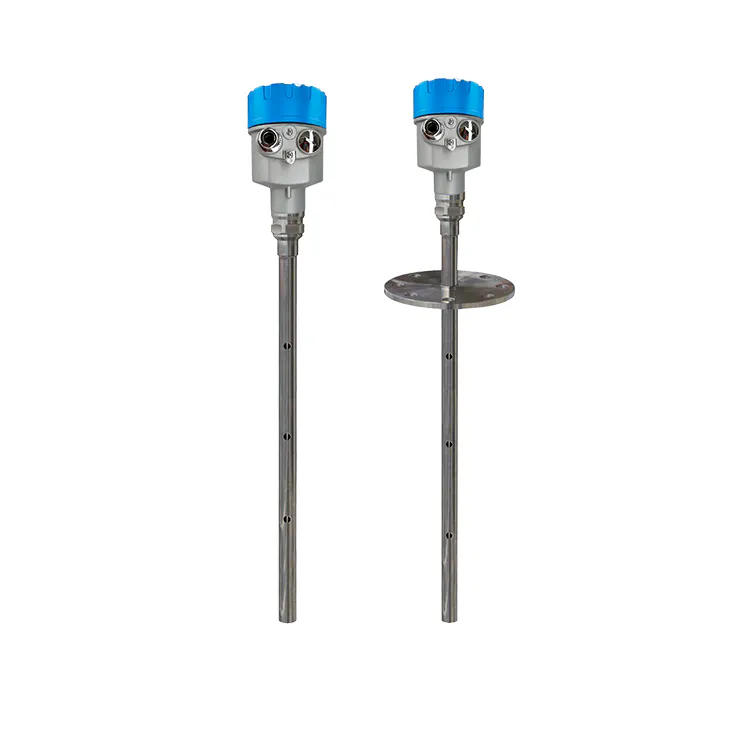
The guided wave radar level transmitter is a contact-type level measurement instrument based on time-domain reflectometry (TDR) technology. It transmits low-energy microwave pulses along a probe (rod or cable). When the signal encounters a change in dielectric constant at the material surface, part of the signal is reflected back to the transmitter and analyzed to determine the level.
Compared with non-contact radar, guided wave radar provides stronger signal coupling, making it especially suitable for applications involving narrow vessels, internal structures, turbulence, foam, or low dielectric media.
Instrava’s guided wave radar solutions are designed for stable, repeatable, and maintenance-friendly level measurement in demanding industrial process environments.
Deskripsi Pemancar & Sensor
Guided Wave Radar Level Transmitter Features
Thanks to an advanced microprocessor and proprietary echo processing technology, the guided wave radar level transmitter delivers stable and reliable measurement under a wide range of complex process conditions.
The flexible selection of process connections and probe designs enables the instrument to operate effectively in applications involving high temperature, high pressure, and low dielectric constant media.
Operating in pulsed mode with extremely low transmission power, the guided wave radar level transmitter can be safely installed in metal and non-metal vessels. The measurement process is harmless to personnel and the environment, making it suitable for safety-critical industrial applications.


Guided Wave Radar Level Transmitters Typical Applications
Tangki penyimpanan dan bejana proses
Industri kimia dan petrokimia
Power generation and boiler auxiliary systems
Oil, fuel, and condensate level measurement
Applications with foam, agitation, or internal obstructions
Situations where ultrasonic or non-contact radar is unstable
Guided Wave Level Transmitter Working Principle
The guided wave radar level transmitter operates by emitting high-frequency microwave pulses that propagate along a detection probe, such as a steel rod or steel cable.
When the microwave pulse reaches the surface of the measured medium, a sudden change in dielectric constant occurs. This discontinuity causes part of the pulse energy to be reflected back toward the transmitter.
The instrument measures the time interval between the transmitted pulse and the received echo. This time difference is directly proportional to the distance between the probe reference point and the material surface. Based on this relationship, the transmitter accurately calculates the level of the medium inside the vessel.Guided Wave Level Transmitter


Guided Wave Radar Type Level Transmitter Structure and Reliability Design
The transmitter consists of a robust electronic head and a mechanically stable probe structure. The probe guides the radar signal directly to the measurement point, minimizing interference from tank walls, nozzles, or internal components.
With no moving parts and a sealed industrial enclosure, the guided wave radar level transmitter offers long service life, low maintenance requirements, and high operational reliability in harsh environments.
Parameter Pemancar & Sensor
| Item | Spesifikasi |
|---|---|
| Suitable Measuring Medium | Liquid, solid powder |
| Aplikasi Khas | Liquid and solid level measurement under complex process conditions |
| Rentang Pengukuran | Up to 30 m |
| Measuring Principle | Guided Wave Radar (TDR) |
| Probe Type | Single cable probe / Single rod probe |
| Operating Frequency | 500 MHz – 1.8 GHz |
| Akurasi Pengukuran | ± 10 mm |
| Suhu Proses | -40 ~ 250 °C |
| Tekanan Proses | -0.1 ~ 4.0 MPa |
| Keluaran Sinyal | 4–20 mA + HART |
| Catu Daya | Two-wire: DC 24 V Four-wire: DC 24 V / AC 220 V |
| Local Display | 4-line LCD, programmable |
| Explosion Protection | Ex ia IIC T6 Ga Ex d IIC T6 Gb |
| Koneksi Proses | Flange (optional) / Thread |
| Bahan Perumahan | Aluminum / Plastic |
Instrava OEM / ODM
Instrava berfokus untuk memberikan solusi industri yang andal melalui produk yang dipilih dengan cermat, pengoptimalan berbasis aplikasi, dan penyesuaian yang fleksibel. Kami memilih instrumen yang telah terbukti dari produsen tepercaya untuk memastikan kualitas yang konsisten, mengoptimalkan solusi berdasarkan kondisi kerja nyata untuk memecahkan tantangan praktis, dan menyediakan konfigurasi yang disesuaikan untuk memenuhi kebutuhan aplikasi tertentu.
Dengan menggabungkan keahlian pemilihan dengan pemahaman aplikasi, Instrava membantu pelanggan mengurangi risiko, meningkatkan efisiensi, dan mencapai hasil yang dapat diandalkan dalam lingkungan industri yang kompleks.

Can the guided wave radar level transmitter measure level accurately with heavy foam present?
Yes. The guided wave radar level transmitter uses a probe-guided microwave signal that travels directly along the rod or cable. Unlike non-contact technologies, foam has limited influence on signal propagation, allowing the instrument to detect the true material surface beneath the foam layer.
How does INGWRLT115 perform in low dielectric constant media?
Guided wave radar provides stronger signal coupling compared to non-contact radar. By guiding the microwave energy along the probe, INGWRLT115 ensures reliable signal reflection even in media with low dielectric constants, where ultrasonic or non-contact radar may become unstable.
Is guided wave radar suitable for high-temperature applications?
Yes. INGWRLT115 is designed for process temperatures up to 250 °C. The probe-based measurement principle ensures stable signal transmission under elevated temperatures, making it suitable for demanding thermal process environments.
Can INGWRLT115 operate reliably under high process pressure?
INGWRLT115 supports process pressures up to 4.0 MPa. Its robust probe structure and sealed process connection maintain measurement stability under pressure fluctuations commonly found in chemical and industrial process vessels.
How does guided wave radar handle turbulence and agitation inside the vessel?
Since the radar signal is guided along the probe, turbulence and surface agitation have minimal impact on measurement accuracy. INGWRLT115 maintains a stable echo reference even in vessels with strong mixing or flow disturbance.
Is guided wave radar affected by vapor or process condensation?
Guided wave radar measurement is largely immune to vapor and condensation. The microwave signal is transmitted along the probe rather than through free space, reducing interference from vapor clouds or condensate buildup inside the vessel.
Dibangun di atas Konsistensi, Bukan Klaim
Kami mengkhususkan diri dalam analisis dan deteksi industri, dengan pemahaman yang jelas tentang lingkungan dan persyaratan operasi dunia nyata.
Setiap instrumen dievaluasi berdasarkan performa, stabilitas, dan kesesuaian aplikasi-bukan hanya spesifikasi atau harga.
Kami bekerja sama dengan produsen tepercaya untuk memastikan pasokan yang stabil, kualitas yang konsisten, dan pengiriman yang dapat diandalkan.
Rekomendasi kami didasarkan pada pemahaman aplikasi, membantu pelanggan menghindari masalah umum dan mencapai hasil yang dapat diandalkan.
Instrava dibuat untuk mengurangi ketidakpastian-sehingga setiap keputusan yang Anda buat menjadi lebih jelas, aman, dan dapat diandalkan.

Sistem industri berkembang pesat dari lingkungan kontrol yang terisolasi menjadi ekosistem yang sepenuhnya terhubung dan digerakkan oleh data. Di tengah transformasi ini...
Teknologi komunikasi industri telah berkembang secara signifikan selama beberapa dekade terakhir. Sistem fieldbus tradisional seperti PROFIBUS dan Modbus telah lama ...
Ketika sistem industri bergerak menuju digitalisasi dan otomatisasi cerdas, teknologi komunikasi lapangan tradisional semakin tidak dapat memenuhi tuntutan...