Home » Products » Transmitters » Guided Wave Radar Level Transmitter


Reliable Contact Level Measurement for Complex Process Conditions
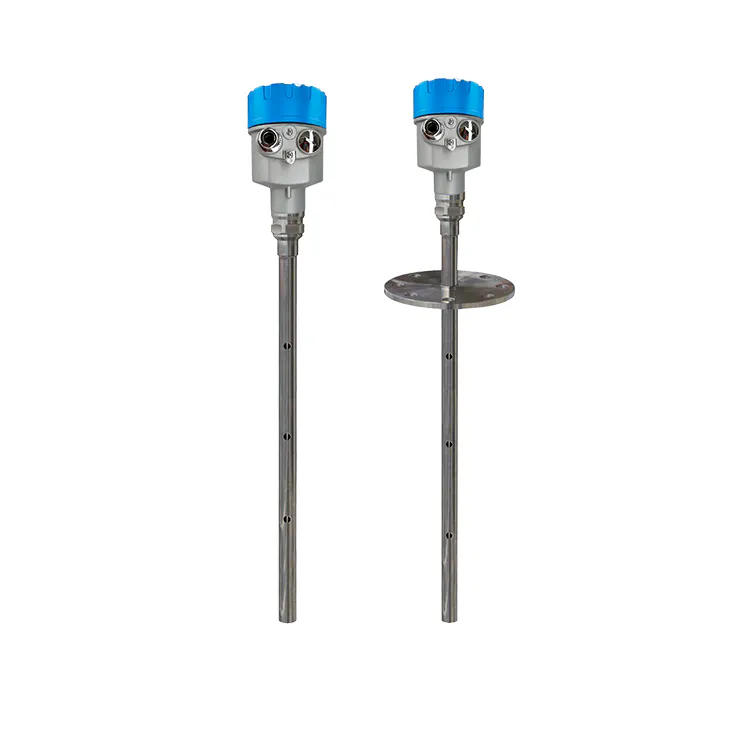
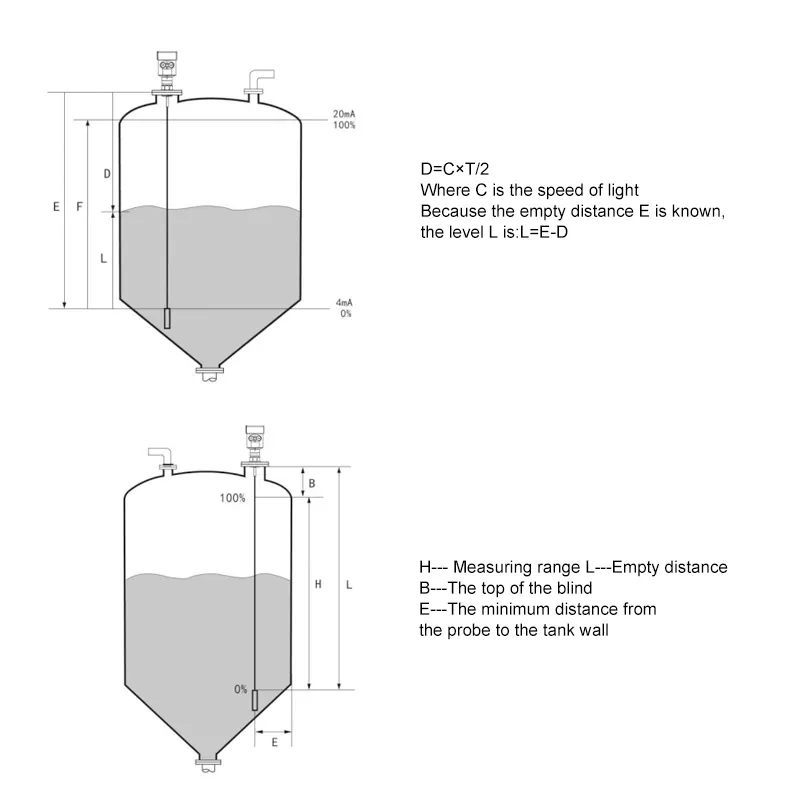
The guided wave radar level transmitter is a contact-type level measurement instrument based on time-domain reflectometry (TDR) technology. It transmits low-energy microwave pulses along a probe (rod or cable). When the signal encounters a change in dielectric constant at the material surface, part of the signal is reflected back to the transmitter and analyzed to determine the level.
Compared with non-contact radar, guided wave radar provides stronger signal coupling, making it especially suitable for applications involving narrow vessels, internal structures, turbulence, foam, or low dielectric media.
Instrava’s guided wave radar solutions are designed for stable, repeatable, and maintenance-friendly level measurement in demanding industrial process environments.
Transmitters & Sensors Description
Guided Wave Radar Level Transmitter Features
Thanks to an advanced microprocessor and proprietary echo processing technology, the guided wave radar level transmitter delivers stable and reliable measurement under a wide range of complex process conditions.
The flexible selection of process connections and probe designs enables the instrument to operate effectively in applications involving high temperature, high pressure, and low dielectric constant media.
Operating in pulsed mode with extremely low transmission power, the guided wave radar level transmitter can be safely installed in metal and non-metal vessels. The measurement process is harmless to personnel and the environment, making it suitable for safety-critical industrial applications.
Guided Wave Radar Level Transmitters Typical Applications
Storage tanks and process vessels
Chemical and petrochemical industries
Power generation and boiler auxiliary systems
Oil, fuel, and condensate level measurement
Applications with foam, agitation, or internal obstructions
Situations where ultrasonic or non-contact radar is unstable
Transmitters & Sensors Parameter
| Item | Specification |
|---|---|
| Suitable Measuring Medium | Liquid, solid powder |
| Typical Application | Liquid and solid level measurement under complex process conditions |
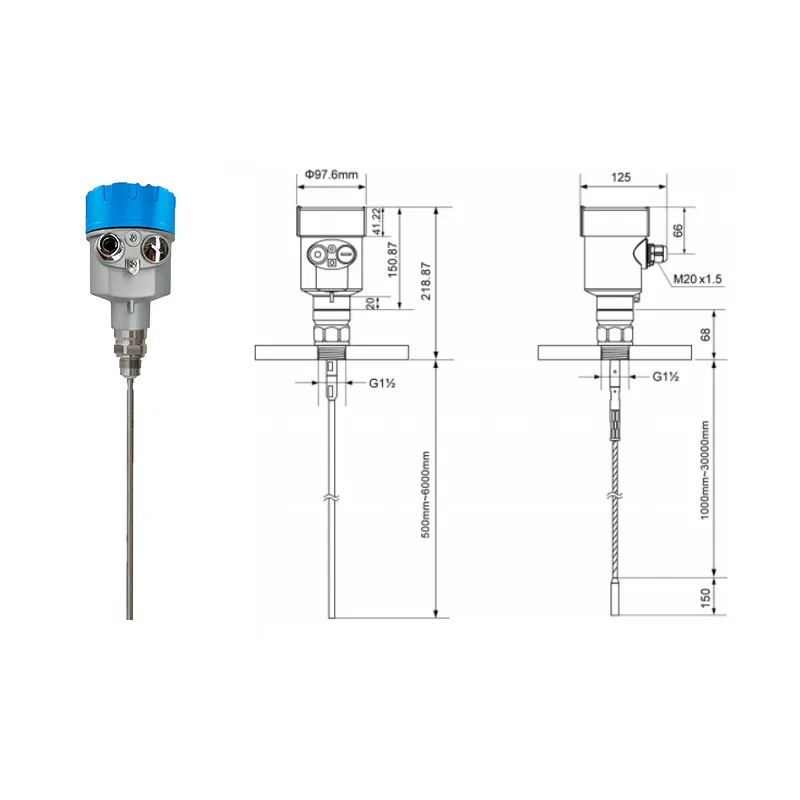
| Measuring Range | Up to 30 m |
| Measuring Principle | Guided Wave Radar (TDR) |
| Probe Type | Single cable probe / Single rod probe |
| Operating Frequency | 500 MHz – 1.8 GHz |
| Measurement Accuracy | ±10 mm |
| Process Temperature | -40 ~ 250 °C |
| Process Pressure | -0.1 ~ 4.0 MPa |
| Signal Output | 4–20 mA + HART |
| Power Supply | Two-wire: DC 24 V Four-wire: DC 24 V / AC 220 V |
| Local Display | 4-line LCD, programmable |
| Explosion Protection | Ex ia IIC T6 Ga Ex d IIC T6 Gb |
| Process Connection | Flange (optional) / Thread |
| Housing Material | Aluminum / Plastic |
Instrava OEM/ODM
As your trusted supplier and sourcing partner, we bridge the gap between your custom requirements and China’s vast manufacturing capabilities.
Finding the right product in a massive supply chain can be challenging. That is where we step in.
As a curated industrial supplier, our core value is simple: we stand in your shoes to help you procure the most optimal products. Whether you are an EPC contractor needing specialized technical compliance, an OEM equipment manufacturer looking for custom branding, or an industrial distributor/trader seeking competitive edge, we customize and tailor products to fit your exact procurement needs.
For EPC Contractors & Engineers: We custom-configure instruments and devices to match your precise datasheets—tailoring process connections, exotic materials, signal protocols, and managing third-party calibration and testing so you get project-ready solutions.
For OEM Equipment Manufacturers: We provide comprehensive OEM/ODM customization, including custom housing, labeling, branding (private labeling), and tailored technical specifications to seamlessly integrate with your machinery.
For Industrial Distributors & Traders: We offer flexible customization in packaging, product ranges, and technical parameters, helping you differentiate your portfolio and win more local bids.
One-Stop Engineering Alignment: You don’t have to deal with multiple factories. We translate your technical requirements into precise manufacturer blueprints.
Strict Quality & Compliance Safeguard: We oversee the entire customization and production process in China, ensuring the final customized product meets your local standards and certifications.
Our Ultimate Value: We don’t just sell what’s on the shelf. We find, customize, and deliver the most suitable and cost-effective product for your unique application.
Can the guided wave radar level transmitter measure level accurately with heavy foam present?
Yes. The guided wave radar level transmitter uses a probe-guided microwave signal that travels directly along the rod or cable. Unlike non-contact technologies, foam has limited influence on signal propagation, allowing the instrument to detect the true material surface beneath the foam layer.
How does INGWRLT115 perform in low dielectric constant media?
Guided wave radar provides stronger signal coupling compared to non-contact radar. By guiding the microwave energy along the probe, INGWRLT115 ensures reliable signal reflection even in media with low dielectric constants, where ultrasonic or non-contact radar may become unstable.
Is guided wave radar suitable for high-temperature applications?
Yes. INGWRLT115 is designed for process temperatures up to 250 °C. The probe-based measurement principle ensures stable signal transmission under elevated temperatures, making it suitable for demanding thermal process environments.
Can INGWRLT115 operate reliably under high process pressure?
INGWRLT115 supports process pressures up to 4.0 MPa. Its robust probe structure and sealed process connection maintain measurement stability under pressure fluctuations commonly found in chemical and industrial process vessels.
How does guided wave radar handle turbulence and agitation inside the vessel?
Since the radar signal is guided along the probe, turbulence and surface agitation have minimal impact on measurement accuracy. INGWRLT115 maintains a stable echo reference even in vessels with strong mixing or flow disturbance.
Is guided wave radar affected by vapor or process condensation?
Guided wave radar measurement is largely immune to vapor and condensation. The microwave signal is transmitted along the probe rather than through free space, reducing interference from vapor clouds or condensate buildup inside the vessel.
We select manufacturers from a neutral, impartial standpoint, always with your best interests in mind.
Our very existence depends on helping you source the products that are the perfect fit for your needs.
Based in China, we are able to conduct on-site inspections of production environments and product quality firsthand.
We help you avoid intermediaries posing as factories.
We facilitate smoother after-sales support, eliminating time zone issues and the delays often associated with dealing directly with factories.
Our multilingual team ensures effective communication.
For a trading startup, every interaction with a client is a precious opportunity—a sign that you are willing to place your trust in us and give us the chance to prove ourselves.
In the digital age, while information is easily accessible, misconceptions often cloud the trust between people.
Instrava relies entirely on trust; it is our core philosophy and the foundation of our existence in society. It is the fundamental basis for our long-term growth and our commitment to serving the community.
Please place your trust in us.
Submit your manufacturing requirements, and our team will get back to you with professional solutions within 24 hours.