
Home » Brownfield Digitalization: How to Enable Seamless Instrument to Cloud Integration Without Replacing Existing Assets
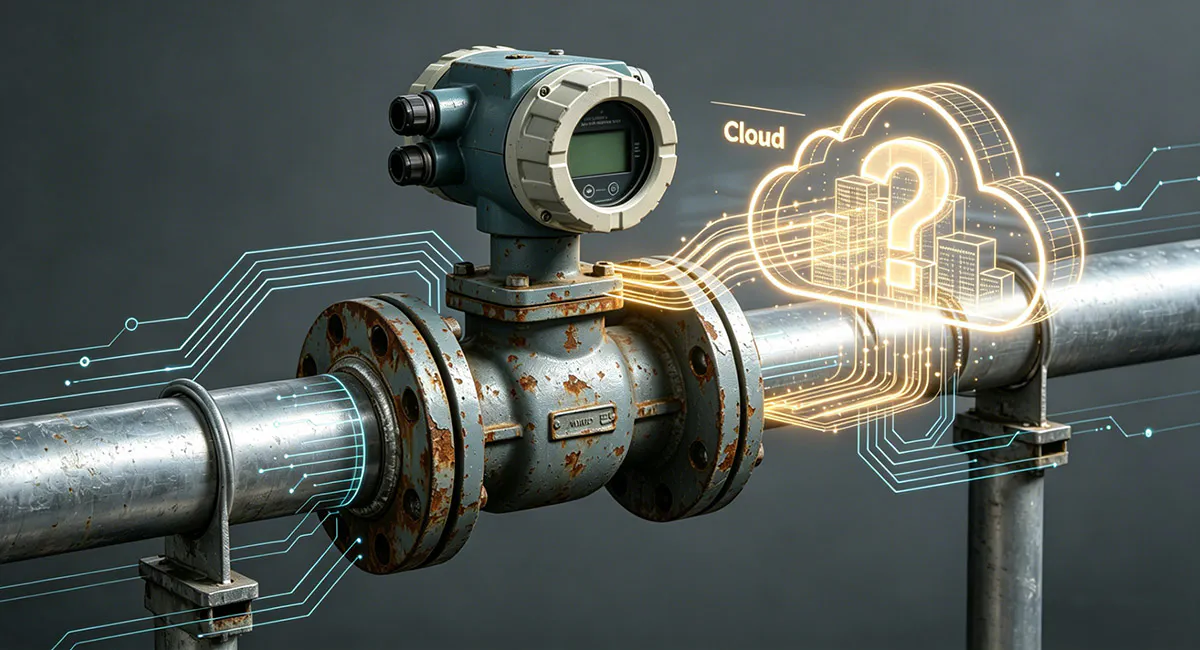
Brownfield Digitalization: How to Enable Seamless Instrument to Cloud Integration Without Replacing Existing Assets
Introduction: The Real Challenge of Industrial Digitalization
Industrial companies are under increasing pressure to digitize operations, improve efficiency, and enable data-driven decision-making. However, most facilities are not greenfield projects — they are brownfield environments filled with legacy instruments, analog signals, and multi-vendor systems.
Replacing all existing field instruments is costly, risky, and often unrealistic.
This is where Brownfield Digitalization becomes critical:
the ability to transform existing infrastructure into connected, intelligent assets.
At the core of this transformation lies a key question:
👉 How can legacy instruments achieve seamless Instrument to Cloud integration without redesigning the entire system?
What is Brownfield Digitalization?
Brownfield Digitalization refers to the process of upgrading existing industrial assets — such as transmitters, sensors, and control systems — into digitally connected systems without replacing them.
Key Characteristics:
- No device replacement required
- Minimal or zero production downtime
- Compatibility with multi-vendor environments
- Incremental and scalable deployment
Unlike greenfield projects, brownfield digitalization focuses on maximizing existing asset value while enabling modern IIoT capabilities.
The Gap: Why Legacy Instruments Cannot Directly Connect to the Cloud
Most traditional instruments were never designed for cloud connectivity.
Typical limitations include:
- Output only 4–20mA analog signals
- Limited digital protocols (e.g., HART, Modbus RTU)
- No native support for:
- MQTT
- OPC UA
- REST APIs
As a result:
👉 Legacy devices lack northbound communication capabilities, making direct cloud integration impossible.
To bridge this gap, a new architectural layer is required.
Instrument to Cloud Architecture for Brownfield Environments
A practical and scalable approach is a three-layer architecture:
1. Field Layer (Existing Instruments)
- 4–20mA transmitters
- HART-enabled devices
- Modbus RTU equipment
2. Edge Layer (Key Enabler)
- Protocol conversion
- Data modeling
- Edge computing
- Secure connectivity
3. Cloud Layer (IIoT Platform)
- AWS IoT / Azure IoT / Private Cloud
- Data storage and visualization
- Remote device management
👉 The edge layer is where true “seamless integration” happens.
Step-by-Step Upgrade Path: From Signal to Cloud Intelligence
A successful Instrument to Cloud strategy is not a one-step upgrade — it is a structured journey.
Stage 1: Signal Acquisition
Capture data from existing signals:
- 4–20mA
- Digital I/O
- RS485 / Modbus
Value:
Basic visibility into previously inaccessible data.
Stage 2: Smart Instrument Access
Unlock deeper device insights:
- HART communication
- Secondary variables
- Device diagnostics
Value:
Move from raw data to device-level intelligence.
Stage 3: Edge Integration
Introduce edge computing capabilities:
- Protocol conversion (Modbus → MQTT, HART → OPC UA)
- Data filtering and aggregation
- Store & forward (offline resilience)
Value:
Transform raw signals into structured, usable data.
Stage 4: Cloud Integration
Connect to IIoT platforms:
- MQTT / HTTPS / OPC UA
- Secure communication (TLS, certificates)
- Multi-site data aggregation
Value:
Centralized monitoring and remote operations.
Stage 5: Data Intelligence
Leverage advanced analytics:
- Predictive maintenance
- Energy optimization
- Process optimization
Value:
Turn connectivity into measurable ROI.
What Makes Integration Truly “Seamless”?
Not all “cloud-connected” solutions are equal.
True seamless integration requires more than connectivity:
1. Protocol Standardization
Avoid proprietary lock-in with open standards like MQTT and OPC UA.
2. Data Structuring
Deliver contextualized data (value + unit + status), not raw registers.
3. Semantic Mapping
Map field data into cloud asset models automatically.
4. Reliability
Ensure:
- Local buffering
- Time synchronization
- Data integrity
5. Security
Implement:
- TLS encryption
- Device identity (X.509 certificates)
- Secure firmware updates
👉 Without these, integration remains fragmented and costly.
Brownfield Constraints: What Must Be Solved
Any viable solution must address real-world industrial constraints:
- No downtime allowed
- No replacement of existing instruments
- Multi-vendor compatibility
- Limited IT/OT integration resources
This is why edge-based approaches are essential.
Instrava Approach: Enabling Seamless Instrument to Cloud Integration
Instrava focuses on bridging the gap between legacy field instruments and modern IIoT platforms through intelligent edge integration.
Key capabilities include:
- Non-intrusive connection to existing instruments
- Multi-protocol support (4–20mA, HART, Modbus)
- Built-in protocol conversion to MQTT / OPC UA
- Structured data modeling for cloud readiness
- Secure and scalable edge connectivity
The result:
Existing instruments are transformed into cloud-ready assets — without replacement, redesign, or disruption.
Benefits of Brownfield Digitalization
Implementing a structured Instrument to Cloud strategy delivers measurable value:
- Reduced CAPEX (no large-scale replacement)
- Faster deployment cycles
- Improved asset visibility
- Predictive maintenance capabilities
- Scalable digital transformation roadmap
Conclusion: From Legacy Systems to Cloud Intelligence
Brownfield Digitalization is not about replacing the past —
it is about unlocking its hidden value.
By adopting a phased Instrument to Cloud approach, industrial operators can:
- Preserve existing investments
- Minimize risk
- Accelerate digital transformation
👉 The future of industrial connectivity is not built from scratch —
it is built by intelligently connecting what already exists.
Why Trust Instrava?
We select manufacturers from a neutral, impartial standpoint, always with your best interests in mind.
Our very existence depends on helping you source the products that are the perfect fit for your needs.
Based in China, we are able to conduct on-site inspections of production environments and product quality firsthand.
We help you avoid intermediaries posing as factories.
We facilitate smoother after-sales support, eliminating time zone issues and the delays often associated with dealing directly with factories.
Our multilingual team ensures effective communication.
For a trading startup, every interaction with a client is a precious opportunity—a sign that you are willing to place your trust in us and give us the chance to prove ourselves.
In the digital age, while information is easily accessible, misconceptions often cloud the trust between people.
Instrava relies entirely on trust; it is our core philosophy and the foundation of our existence in society. It is the fundamental basis for our long-term growth and our commitment to serving the community.
Please place your trust in us.

Send Inquiry Message
Submit your manufacturing requirements, and our team will get back to you with professional solutions within 24 hours.