
Home » Engineering the Ultimate Distribution Transformer for High-Temperature and High-Humidity Environments: The Brazil Grid Solution
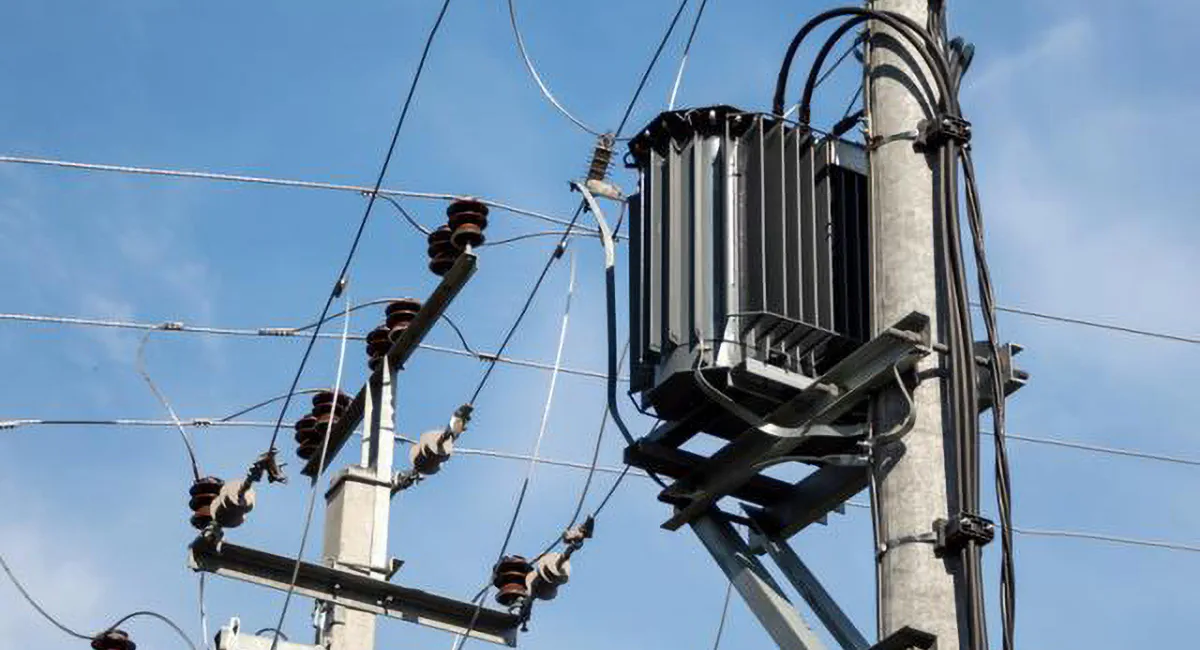
Engineering the Ultimate Distribution Transformer for High-Temperature and High-Humidity Environments: The Brazil Grid Solution
Operating a distribution transformer in extreme tropical environments presents significant engineering challenges. In countries like Brazil, where the climate is characterized by sustained high ambient temperatures, near-saturation relative humidity, intense ultraviolet (UV) radiation, and aggressive coastal salt spray, standard transformer designs inevitably suffer from accelerated insulation aging, premature oil leakage, severe corrosion, and thermal overloads.
To guarantee grid stability and maximize equipment lifespan, a distribution transformer deployed in these regions must undergo comprehensive, premium customization across four critical engineering dimensions: thermal management, advanced insulation media, hermetic sealing, and heavy-duty surface protection.
Below is the definitive technical solution framework designed to optimize distribution transformer performance for the Brazilian market and similar tropical climates.
1. Environmental Challenges Impacting Distribution Transformers
Before implementing technical remedies, it is crucial to analyze how the Brazilian environment accelerates the degradation of standard electrical equipment:
-
Accelerated Thermal Aging: High ambient summer temperatures combined with intense solar radiation restrict natural heat dissipation. According to Arrhenius’ law, every $6^\circ\text{C}$ increase in continuous operating temperature cuts the thermal life of standard cellulose insulation paper in half.
-
Moisture Ingress and Dielectric Breakdown: Prolonged high humidity leads to moisture absorption if the transformer sealing fails. Even ppm-level water contamination in transformer oil drastically reduces its dielectric strength, leading to catastrophic internal arc faults.
-
C5-M Marine Corrosion: Brazil boasts over 7,400 km of coastline. The combination of high heat, constant moisture, and airborne chlorides (salt fog) creates an extraordinarily corrosive environment (classified as ISO 12944 C5-M), which rapidly degrades standard industrial coatings.
2. Comprehensive Technical Solutions for Tropicalized Distribution Transformers
A. Optimized Thermal Design and Temperature Rise Control
To counteract extreme ambient heat, the internal thermal margins of the distribution transformer must be systematically redesigned.
-
Lowering Temperature Rise Limits: In strict accordance with Brazilian standards (ABNT NBR), the winding temperature rise must be limited to 55K (or lower), and the top oil temperature rise capped at 50K. This provides a much safer operating margin compared to standard 65K/60K designs.
-
Expanded Cooling Surfaces: Integrate wider and thicker corrugated fin walls or specialized panel radiators to increase the total heat dissipation area.
-
Optimized Internal Oil Channels: Redesign the internal winding geometry with enhanced axial and radial oil ducts. This minimizes local hot-spot temperatures and promotes rapid natural oil circulation (ONAN).
-
Solar Radiation Shielding (Optional): For ultra-exposed, high-solar-radiation regions, custom-engineered top-mounted sunshields can be installed to deflect direct thermal radiation without obstructing natural airflow.
B. Next-Generation Insulation Media: Transitioning to Natural Esters
Traditional mineral oil degrades rapidly under continuous thermal stress. Upgrading the liquid and solid insulation matrix is the most effective way to extend the service life of a tropical distribution transformer.
-
Natural Ester Fluid (e.g., FR3): Upgrading from mineral oil to eco-friendly natural ester insulation fluid (vegetable oil) is highly recommended.
-
Thermal Benefits: Natural esters have a remarkably high fire point ($\approx 360^\circ\text{C}$), eliminating fire risks under peak load overloads.
-
Moisture Management: Natural esters possess an inherent “moisture-eating” capability (chemically consuming water through hydrolysis). This keeps the insulation paper dry and extends the overall mechanical and electrical life of the insulation system by 3 to 4 times compared to mineral oil.
-
-
High-Thermal-Class Solid Insulation: Utilize Diamond Patterned Paper (DPP) or Nomex-based insulation for inter-turn and inter-layer winding insulation. These materials maintain their structural and dielectric integrity even during transient high-temperature events.
C. Advanced Hermetic Sealing and Moisture Prevention
Preventing the ingress of ambient moisture and oxygen is vital to mitigating oil oxidation and sludge formation.
-
Hermetically Sealed Corrugated Tank Design: Eliminate the traditional conservator (oil pillow) in favor of a fully sealed corrugated tank design. The thermal expansion and contraction of the oil are fully compensated by the elastic deformation of the corrugated fins, completely isolating the transformer fluid from the atmosphere.
-
Premium Fluororubber Seals: Replace standard Nitrile Butadiene Rubber (NBR) gaskets with Viton (FKM) or high-performance Acrylic Rubber (ACM). These materials offer superior resistance to high temperatures, UV degradation, and ester-oil chemical reactions, preventing premature hardening and micro-cracking.
-
Dual-Chamber Auto-Regenerative Breathers (If Conservator is Requested): If a customer explicitly specifies a conservator-type transformer, it must be equipped with an advanced maintenance-free, auto-regenerative silica gel breather with integrated heating elements to ensure only bone-dry air enters the system.
D. C5-M High-Durability Anti-Corrosion Coating
To withstand the relentless salt fog along the Brazilian coastline, the external surfaces of the distribution transformer must meet the ISO 12944 C5-M (Marine) corrosion standard.
-
Multi-Layer Protective Coating System:
-
Surface Pretreatment: A thorough blast cleaning to Sa 2.5 standard to achieve the perfect anchor profile.
-
Primer: Zinc-rich epoxy primer (Minimum Dry Film Thickness, $\text{DFT} \ge 60\,\mu\text{m}$).
-
Intermediate Coat: Epoxy micaceous iron oxide (MIO) barrier coat ($\text{DFT} \ge 100\,\mu\text{m}$).
-
Topcoat: High-durability aliphatic polyurethane or fluorocarbon topcoat ($\text{DFT} \ge 60\,\mu\text{m}$). This layer provides exceptional resistance to UV chalking and color fading.
-
-
Hot-Dip Galvanized & Stainless Steel Hardware: All external fasteners, bolts, nuts, radiator valves, and bushing flanges must be either Hot-Dip Galvanized (HDG) or manufactured from Grade 316L Stainless Steel to prevent galvanic corrosion at joint interfaces.
E. High-Creepage External Insulation (Anti-Pollution Flashover)
High relative humidity combined with salt deposition creates a conductive layer on external bushings, risking voltage flashovers.
-
High-Creepage Bushings: High-voltage and low-voltage bushings must feature an extended Creepage Distance ($\ge 31\text{ mm/kV}$). Utilizing Silicone Rubber Composite Bushings instead of traditional porcelain is highly effective, as silicone possesses hydrophobic properties that naturally repel moisture and contaminants.
3. Technical Comparison Matrix: Standard vs. Tropicalized Configuration
| Technical Parameter / Component | Standard Export Configuration | Brazil Tropicalized Configuration | Engineering Objective |
| Design Temperature Rise | Winding 65K / Oil 60K | Winding 55K / Oil 50K | Lowers baseline internal temperature to arrest thermal aging. |
| Insulation Liquid | Mineral Oil (Class I) | Natural Ester Fluid (Vegetable/FR3) | Elevates fire safety ($>360^\circ\text{C}$); chemically protects insulation paper from moisture degradation. |
| Tank & Sealing Structure | Standard Sealing / NBR Gaskets | Hermetically Sealed Tank + Viton Gaskets | Prevents atmospheric moisture and oxygen ingress; eliminates seal degradation. |
| Anti-Corrosion Rating | C3 to C4 Industrial Grade | C5-M Marine Grade Coating System | Long-term resistance against high-humidity and coastal salt spray corrosion. |
| External Fasteners | Electro-galvanized Steel | Hot-Dip Galvanized (HDG) / 316L Stainless Steel | Prevents localized rusting and structural degradation at joints. |
| Bushing Creepage Distance | Standard ($\le 20\text{ mm/kV}$) | High-Creepage ($\ge 31\text{ mm/kV}$) Silicone / Porcelain | Eliminates the risk of pollution flashover caused by humid, saline air. |
4. Regulatory Compliance and Grid Integration for the Brazilian Market
When manufacturing a distribution transformer for the Brazilian market, complete adherence to local regulatory frameworks is mandatory:
-
ABNT NBR 5356 Standard Series: Governs the overarching power and distribution transformer testing, electrical parameters, and mechanical tolerances.
-
ABNT NBR 5440 Standard: Specifically details the dimensional constraints, structural layout, and standard ratings required for distribution networks.
-
60Hz Frequency Electrical Optimization: Unlike the 50Hz frequency utilized in China or Europe, Brazil operates on a 60Hz electrical grid. The transformer’s core stack, flux density, and winding turns must be explicitly optimized for 60Hz to avoid excessive core losses, eddy current heating, and acoustic noise issues.
Conclusion
Exporting a high-performance distribution transformer to Brazil requires moving away from one-size-fits-all designs. By implementing lower temperature rise limits, utilizing natural esters, enforcing hermetic sealing with Viton, and applying C5-M marine-grade coatings, manufacturers can deliver a highly reliable, tropicalized product. This robust engineering approach dramatically lowers the Total Cost of Ownership (TCO) for Brazilian grid operators by minimizing maintenance overheads, eliminating oil leakage, and preventing catastrophic field failures.
Why Trust Instrava?
We select manufacturers from a neutral, impartial standpoint, always with your best interests in mind.
Our very existence depends on helping you source the products that are the perfect fit for your needs.
Based in China, we are able to conduct on-site inspections of production environments and product quality firsthand.
We help you avoid intermediaries posing as factories.
We facilitate smoother after-sales support, eliminating time zone issues and the delays often associated with dealing directly with factories.
Our multilingual team ensures effective communication.
For a trading startup, every interaction with a client is a precious opportunity—a sign that you are willing to place your trust in us and give us the chance to prove ourselves.
In the digital age, while information is easily accessible, misconceptions often cloud the trust between people.
Instrava relies entirely on trust; it is our core philosophy and the foundation of our existence in society. It is the fundamental basis for our long-term growth and our commitment to serving the community.
Please place your trust in us.

Send Inquiry Message
Submit your manufacturing requirements, and our team will get back to you with professional solutions within 24 hours.