
Контроллеры сигнализации промышленных газов: централизованная архитектура систем безопасности и соответствие международным стандартам
Поиск поставщиков услуг
Содержание
- 1. Introduction: What is a Gas Alarm Controller?
- 2. Overcoming Harsh Industrial Environments: 3 Traditional Challenges & Modern Solutions
- 3. International Parameters, Certifications, and Industry-Specific Requirements
- 4. Instrava: Navigating Global Distribution and Regional Challenges as a Chinese Supplier
1. Introduction: What is a Gas Alarm Controller?
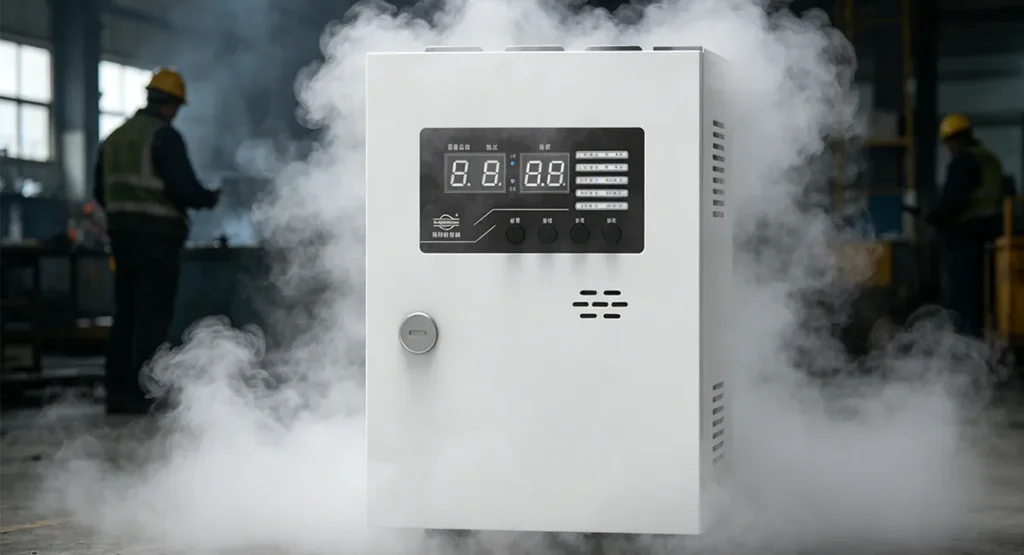
An industrial контроллер газовой сигнализации (also known as a gas detection control panel) serves as the centralized intelligence hub of a comprehensive facility safety system. While individual gas detectors act as the frontline sensory organs, the controller operates as the command center, continuously aggregating, processing, and interpreting analog (4-20mA) or digital (RS485 Modbus/HART) signals transmitted from remote sensor networks.
By analyzing real-time atmospheric data, these controllers automatically trigger multi-stage safety protocols when pre-set hazard thresholds are breached. Beyond displaying live gas concentrations across multiple channels simultaneously, a gas alarm controller executes critical localized mitigation strategies—such as activating industrial ventilation fans, shutting down main gas process valves, tripping electrical relays, and broadcasting high-decibel audible and visual site alerts. It bridges the gap between field-level detection and automated emergency response to protect both personnel and capital assets.
2. Overcoming Harsh Industrial Environments: 3 Traditional Challenges & Modern Solutions
In heavy industrial environments—such as petrochemical refineries, offshore drilling platforms, and chemical synthesis plants—gas alarm controllers are frequently installed in control rooms or specialized field enclosures that must withstand rigorous operational stress. Below are the three primary challenges faced by traditional control panels, along with the precise engineering mechanisms modern units employ to defeat them.
Challenge 1: Signal Degradation and Electromagnetic Interference (EMI) over Long Distances
-
Проблема: Large-scale industrial plants require remote gas detectors to be installed kilometers away from the central control room. Legacy controllers attempting to process weak analog signals over these extended distances suffer from severe voltage drops and are highly vulnerable to electromagnetic interference (EMI) generated by nearby high-voltage motors, variable frequency drives (VFDs), and heavy switchgear. This results in false alarms or delayed hazard responses.
-
Решение: Modern gas alarm controllers incorporate isolated digital communication networks utilizing robust RS485 Modbus RTU or highway addressable remote transducer (HART) protocols. Advanced units feature built-in optoelectronic isolators and shielded differential signaling layers that reject high-frequency EMI. By employing intelligent digital filtering algorithms, modern controllers maintain absolute data integrity and sub-second signal refresh rates even across cable runs exceeding 1,200 meters.
Challenge 2: Control Loop Blindness during Peak Emergency Power Fluctuations
-
Проблема: During a catastrophic plant event (such as an explosion, lightning strike, or main grid failure), localized power surges or sudden dropouts commonly occur. Traditional controllers lacking robust power management systems can brown out, reset, or freeze exactly when active gas monitoring is most critical, leaving the facility entirely blind to migrating gas plumes.
-
Решение: Industrial-grade control panels are engineered with redundant, hot-swappable dual-power supply architectures (e.g., simultaneous 85-265V AC and 24V DC inputs) linked to intelligent battery management modules. If primary AC power fails, the controller executes a seamless microsecond switchover to back-up uninterruptible power supply (UPS) systems without interrupting sensor excitation voltage or data logging loops, guaranteeing 100% operational uptime.
Challenge 3: Relay Contact Arcing and Enclosure Vulnerability in Hazardous Atmospheres
-
Проблема: When a gas leak occurs, a controller must trip physical relays to activate exhaust fans or isolate valves. In legacy designs, the electrical arcing generated inside standard mechanical relays poses an ignition risk if the controller itself is installed near a classified hazardous area. Furthermore, ambient corrosive gases (like chlorine or hydrogen sulfide) degrade internal circuitry over time.
-
Решение: Modern controllers solve this by deploying hermetically sealed, explosion-proof components or solid-state relays (SSRs) with high galvanic isolation that eliminate physical sparking entirely. To protect against atmospheric corrosion, the internal printed circuit boards (PCBs) are treated with military-grade conformal coatings. The entire unit is housed within heavy-duty, corrosion-resistant cast aluminum or stainless steel enclosures rated to IP65/IP66 or certified explosion-proof (Ex d).
3. International Parameters, Certifications, and Industry-Specific Requirements
To satisfy strict global industrial asset protection standards, gas alarm controllers must match precise performance metrics and carry verified localized compliance marks.
Part A: Core Standard Parameters (Base Specifications)
| Parameter Type | Standard Baseline Range / Specification | Interface & Processing Technology |
| Channel Capacity | Modular Expansion: 1 to 64+ Channels | Dynamic Bus Topology / Split-Card Architecture |
| Signal Input Types | 3-Wire / 4-Wire 4-20mA (Analog) & RS485 Modbus (Digital) | Universal Configuration with Line-Fault Detection |
| Релейные выходы | Multiple Programmable Form C Relays (SPDT, 5A/250VAC) | Software-Assignable (Low, High, Fault, Over-range) |
| Display Interface | High-Definition Matrix TFT LCD or LED Segment Display | Real-Time Bar Graph, Concentration Unit, & Channel Status |
| Data Logging Capacity | $\≥$ 10,000 Alarm, Fault, and Calibration Events | Non-Volatile Flash Memory with USB Export Capabilities |
| System Latency | Response Processing Time $\не превышает $ 1 second | High-Speed ARM Cortex Microprocessor |
Part B: Segmented Industry Applications & Specific Certifications
| Target Industry Vertical | Critical Functional Focus & Relay Configuration | Mandatory International Certifications |
| Oil & Gas / Refining |
• High-current ESD (Emergency Shutdown) validation
• Vote-logic configuration capability (e.g., 2oo3 logic)
• Fail-safe relay loops for fire/gas system integration |
• SIL 2 / SIL 3 Functional Safety (IEC 61508)
• ATEX Zone 1 / Zone 2 (Ex d [ia Ga] IIC T6 Gb)
• IECEx Certified Control Integrity |
| Химическая обработка |
• High concentration math-averaging across zones
• Multi-point ventilation interlocking arrays
• Intrinsic safety barriers for toxic zone isolation |
• Class I, Division 1 or 2, Groups B, C, D (UL/CSA)
• CE Compliance & EN 50271 (Sil 1 Software verification) |
| Commercial HVAC & Parking |
• Carbon Monoxide ($CO$) and $NO_x$ cycle-ventilation controls
• Cost-effective daisy-chain digital bus loop architecture
• Smart building BMS interface compatibility |
• UL 2075 / UL 2017 Control Unit Standards
• BACnet / Modbus TCP interface capability |
4. Instrava: Navigating Global Distribution and Regional Challenges as a Chinese Supplier
As a premier Chinese B2B brand specializing in industrial instrumentation, Instrava focuses on delivering high-performance, compliant engineering solutions to international markets. Exporting safety-critical gas alarm controllers requires strict alignment with localized regulations to overcome cross-border deployment barriers.
Regional Market Barriers & Regulatory Frameworks
-
The European Market: Beyond basic CE markings, European operators require gas alarm controllers used in safety-related systems to conform to the ATEX Directive 2014/34/EU и EN 50271 / EN 60079-29-1 for gas detection performance. Instrava handles this by certifying its panels through recognized European Notified Bodies, ensuring seamless custom clearance and structural compliance.
-
The North American Market: In the US and Canada, controllers must be approved as industrial control panels under UL 508A or certified for hazardous locations via UL 913 / CSA C22.2. This requires integrating specific, isolated intrinsic safety barriers inside the controller to prevent energy transfer to hazardous zone field sensors.
-
Global Harmonization: For developing industrial corridors across the Middle East, Southeast Asia, and South America, localized certifications like PESO (India), INMETRO (Brazil), или NEPSI (China) are often required. Securing baseline IECEx test reports accelerates the localized conversion process in these territories.
Operational Readiness Checklist for Global Deployment
To guarantee uncompromised system integration overseas, procurement agents and engineering teams must verify three core compliance factors before dispatch:
-
System Voltage and Electrical Grid Adaptation: Industrial grid configurations vary across regions (e.g., 110V AC @ 60Hz in North America vs. 230V AC @ 50Hz in Europe and Asia). Instrava configures its controllers with wide-range switching power supplies to natively handle global grid fluctuations without stress.
-
Functional Safety (SIL) Documentation: Modern B2B procurement mandates strict Risk Assessment compliance. Suppliers must provide comprehensive Safety Manuals, Failure Modes, Effects, and Diagnostic Analysis (FMEDA) data sheets to verify that the controller satisfies the required Safety Integrity Level (SIL 2/3) targets within the client’s local Safety Instrumented Systems (SIS).
HMI Localization and Software Hierarchy Architecture: Field technicians must be able to configure alarm matrix systems accurately during emergencies. Providing multi-language firmware options (including English, Spanish, French, and Arabic) alongside clear wiring schematics ensures smooth local commissioning and prevents critical human errors during setup.