
Gasoline And Propane Dual Fuel Quiet Inverter Generator Supplier in China
Unlimited energy, giving you freedom
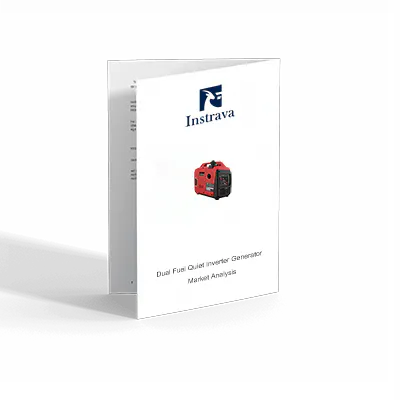
Who we are
Your trusted sourcing partner for Dual Fuel Quiet Inverter Generators in China — reliable quality generators at competitive factory prices.
Are you overwhelmed by too many inconsistent generator quotes and unstable product quality?
Are you worried about factory production capacity, engine emissions, and strict acoustic standards, while tight project deadlines and bulk procurement tasks leave you no time to verify suppliers?
Are you wasting time screening numerous generator manufacturers who claim superior performance, which delays your purchasing and shipping schedule?
We are here to solve your dual fuel quiet inverter generator procurement challenges in China.
When sourcing generator solutions for RV & camper off-grid power, outdoor & emergency backup, home energy security (works with hybrid inverter), or customized OEM bulk orders for global distributors, you know your project’s application requirements best, while we know Chinese generator factories, stable quality, and transparent pricing best.
In Home Off-Grid & Emergency Power Systems, the Dual Fuel Quiet Inverter Generator serves as the critical backup energy guardian. It seamlessly provides clean, pure sine wave power when solar generation is unavailable or batteries run low. Operating on both gasoline and long-shelf-life propane (LPG), it delivers whisper-quiet performance (<60dB) without disrupting residential or campsite environments, ensuring uninterrupted power for sensitive electronics, appliances, and essential loads.
Let’s collaborate for mutual success. With customer-centric bulk procurement, customized OEM service, and strict quality control, we are your trusted inverter generator sourcing partner in China.
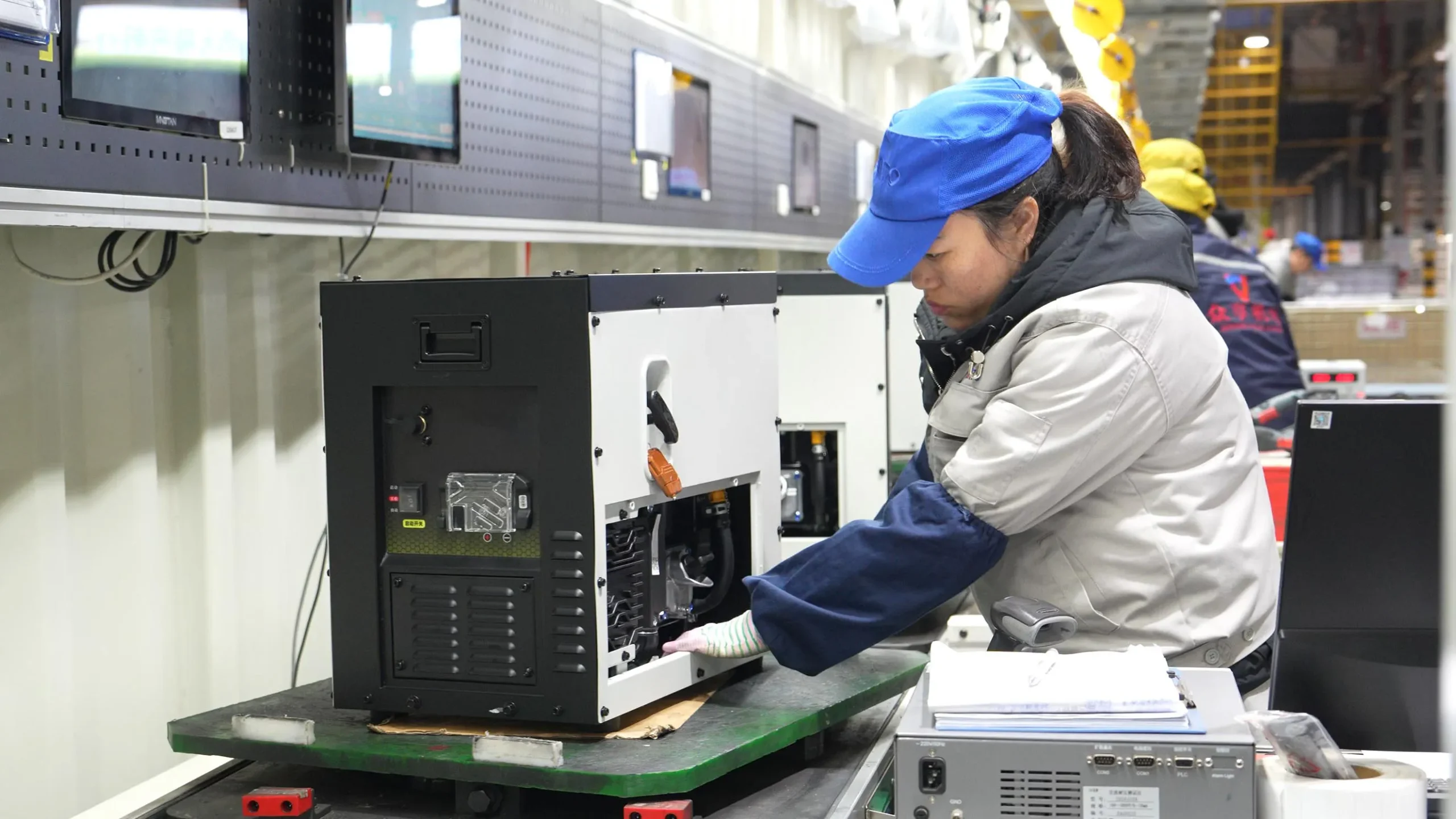
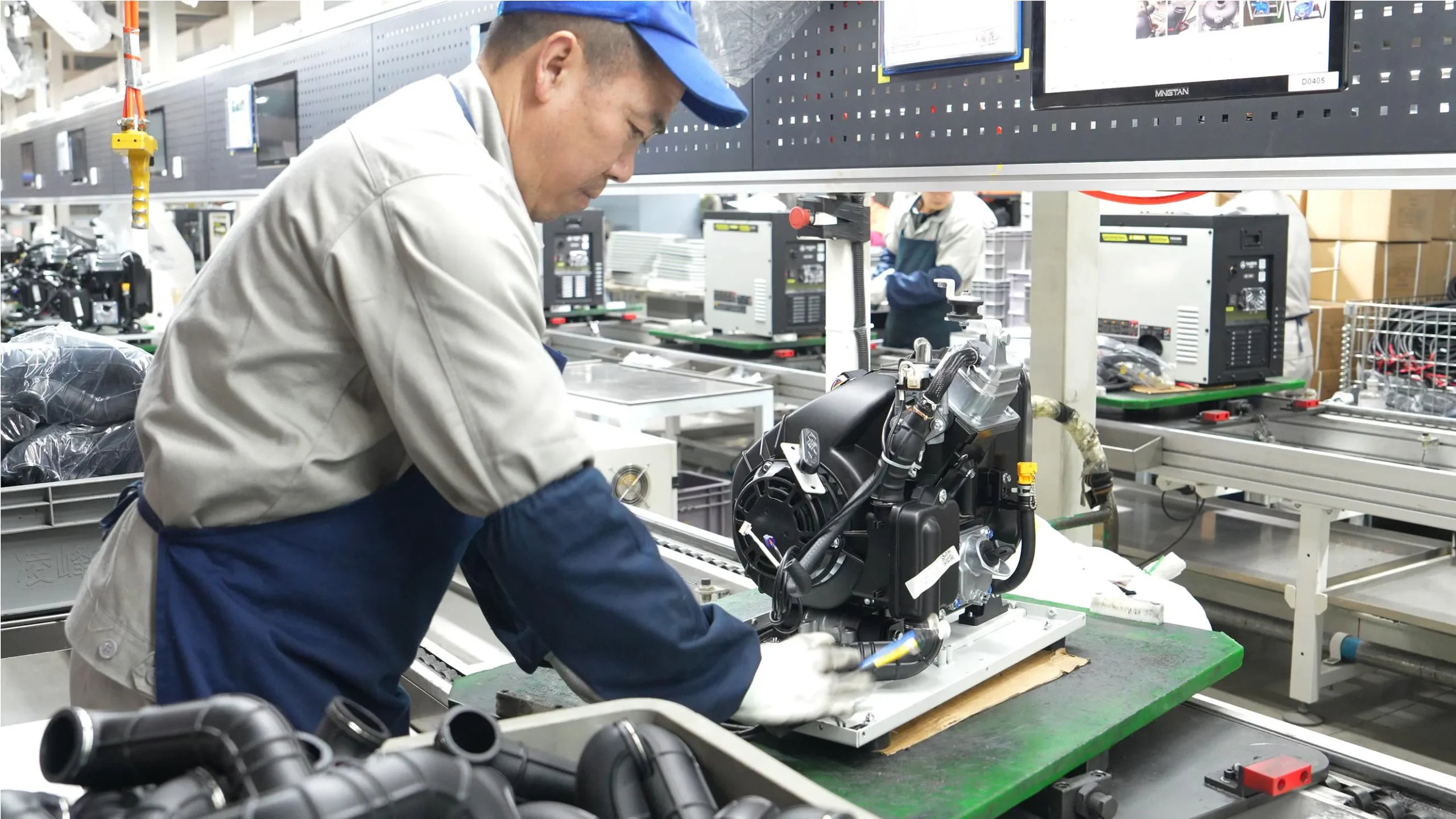
Our Manufacturing Partners
Long before you share your specific technical requirements, our supplier vetting system is already active—continuously mapping industry capacity and monitoring supply chain dynamics to serve you with speed and precision.
We rigorously audit and benchmark portable inverter generator manufacturers across 9 core dimensions: Production Capacity, OEM/ODM Customization, Quality Control, Emissions & Safety Certifications, Field Project Track Record, Engineering Documentation, On-Time Delivery Rate, Export Compliance, and After-Sales Technical Support.
In today’s market, Chinese custom inverter generator manufacturers strictly divide into three technical tiers based on engine thermal design, inverter module topology, acoustic enclosure engineering, and dual-fuel carburetor stability. Leveraging this mapping, we benchmark quotes across all tiers to precisely match your technical specs—whether for rugged RVs & camper vans, marine yachts & off-grid campsites, residential emergency backup (integrating with energy storage), or commercial field operations—while optimizing your total landed cost.
Our premier manufacturing partners combine up to 30 years of power machinery and power electronics expertise. Built with pure sine wave inverter modules (THD < 3%), multi-stage muffler systems, dual-fuel automatic pressure regulators, and robust anti-vibration structures, their units thrive in extreme outdoor, mobile, and residential environments. Furthermore, the product lines hold comprehensive global certifications—including US EPA, CARB (California), UL 2201 / ANSI/PGMA G300 (CO shutoff), EU Euro V emission standards, CE (LVD/EMC), and ISO 8528—ensuring seamless environmental compliance and swift customs clearance worldwide.
Whether you need a small-volume trial shipment for RV retail, camping gear distribution, or residential energy projects, or are a global distributor, OEM/ODM brand owner, or purchasing manager requiring bulk orders with customized branding, parallel capability, remote start features, or ATS (Auto Transfer Switch) integration, we streamline your procurement from spec matching to final delivery.
Your successful procurement is not just our goal—it is the core driving force behind everything we do.
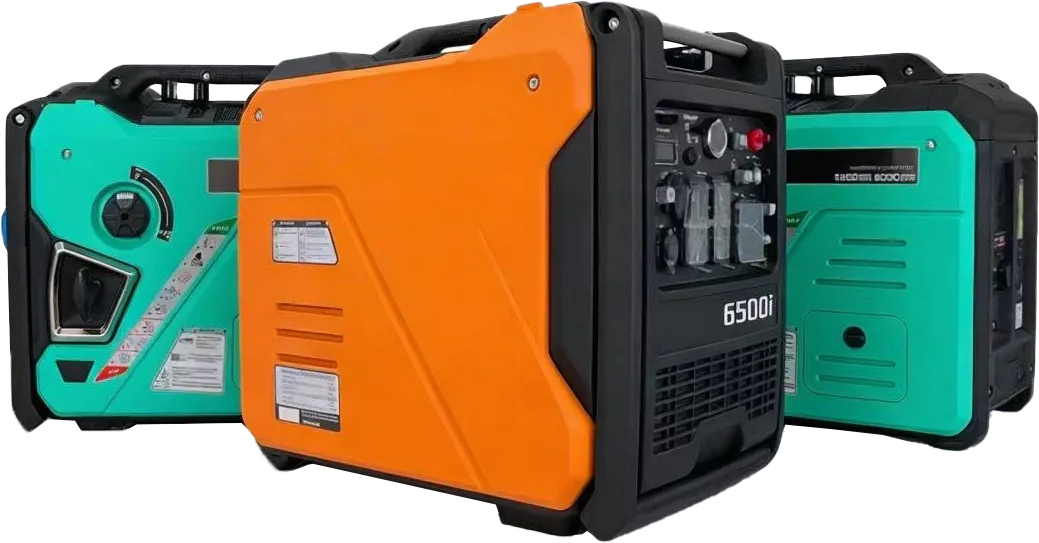
Core Features
Dual Fuel Quiet Inverter Generators utilize gasoline or propane (LPG) as versatile energy sources. Delivering clean, pure sine wave power and seamlessly integrating with hybrid inverters, they are the ideal primary and backup power solution for RVs, marine yachts, outdoor camping, and residential emergency use.
-
Dual Fuel Capability (Gasoline & Propane)
Flexibly switch between gasoline and propane (LPG).
(Note: Power output on propane is typically 10%–15%
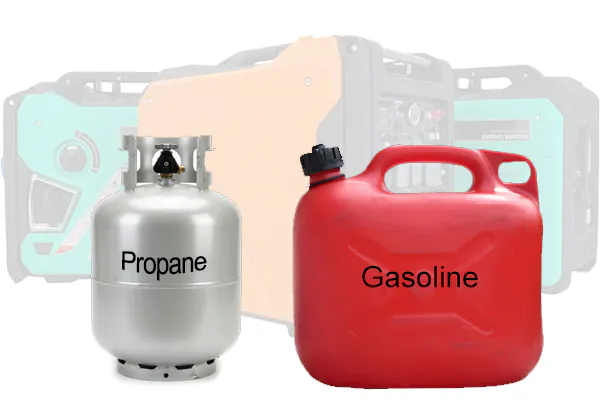 Why Does Power Output Decrease on Propane?
The primary reason lies in the differences in energy density and engine volumetric efficiency:
Energy Density (Calorific Value) Disparity: Gasoline has a higher volumetric energy density than propane. Liquid propane releases less total energy than an equivalent volume of gasoline during combustion.
Intake Volume Displacement (Gaseous vs. Liquid Phase): Gasoline is injected into the engine cylinders as a mist of fine liquid droplets, occupying minimal cylinder volume. In contrast, propane enters the cylinders fully in a gaseous state, directly displacing a portion of the intake air (oxygen). This reduces volumetric efficiency and overall oxygen intake, resulting in a lower maximum power output.
lower than on gasoline, or 10%–20% on select small-capacity models).
Why Does Power Output Decrease on Propane?
The primary reason lies in the differences in energy density and engine volumetric efficiency:
Energy Density (Calorific Value) Disparity: Gasoline has a higher volumetric energy density than propane. Liquid propane releases less total energy than an equivalent volume of gasoline during combustion.
Intake Volume Displacement (Gaseous vs. Liquid Phase): Gasoline is injected into the engine cylinders as a mist of fine liquid droplets, occupying minimal cylinder volume. In contrast, propane enters the cylinders fully in a gaseous state, directly displacing a portion of the intake air (oxygen). This reduces volumetric efficiency and overall oxygen intake, resulting in a lower maximum power output.
lower than on gasoline, or 10%–20% on select small-capacity models). -
Clean Power Supply (THD < 3%
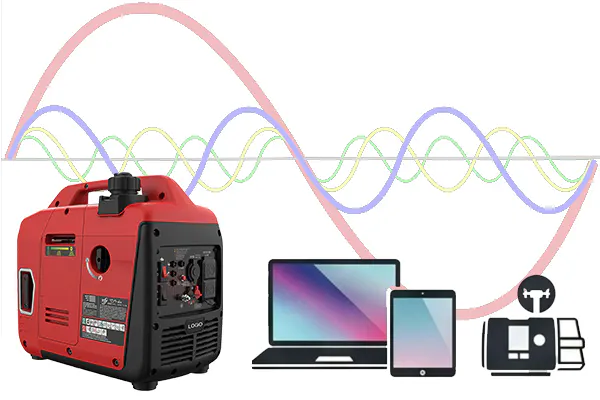 Total Harmonic Distortion under 3% (THD < 3%) is a critical technical benchmark for generators, inverters, and power equipment delivering Pure Sine Wave AC power.
In Alternating Current (AC), the ideal voltage and current waveforms are smooth, flawless sine waves. In practical circuits, however, electrical noise and system interference cause waveform distortion, generating unwanted high-frequency noise known as harmonics.
The lower the THD, the closer the waveform is to a perfect sine wave, ensuring higher power quality(THD < 3%: Represents high-grade pure sine wave power—matching or surpassing utility grid standards (which typically range from 3% to 5%).
Core Benefits & Advantages of THD < 3%
Protects Sensitive Electronics (Prevents Damage & System Crashes)
Reduces Heat and Noise in Inductive Loads (Motors, Fans, & Compressors)
Eliminated Audio/Video Interference & Hum
Enhances Load Compatibility & Startup Success Rates
)
Total Harmonic Distortion under 3% (THD < 3%) is a critical technical benchmark for generators, inverters, and power equipment delivering Pure Sine Wave AC power.
In Alternating Current (AC), the ideal voltage and current waveforms are smooth, flawless sine waves. In practical circuits, however, electrical noise and system interference cause waveform distortion, generating unwanted high-frequency noise known as harmonics.
The lower the THD, the closer the waveform is to a perfect sine wave, ensuring higher power quality(THD < 3%: Represents high-grade pure sine wave power—matching or surpassing utility grid standards (which typically range from 3% to 5%).
Core Benefits & Advantages of THD < 3%
Protects Sensitive Electronics (Prevents Damage & System Crashes)
Reduces Heat and Noise in Inductive Loads (Motors, Fans, & Compressors)
Eliminated Audio/Video Interference & Hum
Enhances Load Compatibility & Startup Success Rates
)Produces high-quality pure sine wave power with Total Harmonic Distortion under 3%, making it 100% safe for sensitive electronics, hybrid inverters, and battery chargers.
-
Versatile Starting Systems
Features push-button electric start, wireless remote control start, and a 2-wire auto-start port for external integration.
-
Parallel Capable for Higher Capacity
Supports parallel operation to combine units and double your power output.
-
Built-in Carbon Monoxide (CO)
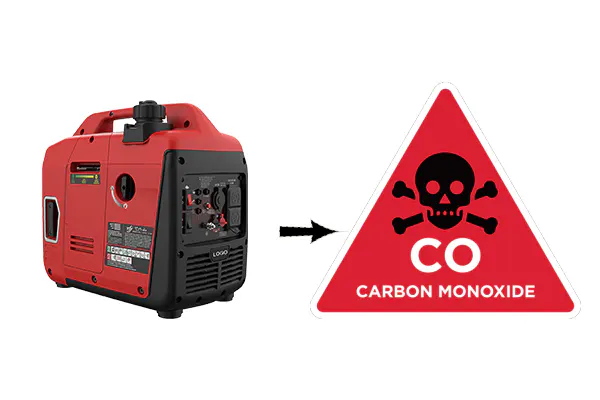 Specific factors leading to incomplete combustion
Insufficient Intake Oxygen: When a generator operates in a semi-enclosed or poorly ventilated space (such as a garage, tent, under eaves, or inside a shed), it rapidly depletes the surrounding oxygen. This environmental oxygen deficiency reduces cylinder air intake, triggering a vicious cycle that causes carbon monoxide (CO) emissions to surge exponentially.
Overly Rich Air-Fuel Mixture: Occurs when the choke remains engaged, the air filter is clogged, or the carburetor/fuel injector is calibrated to deliver a fuel-rich mixture.
Cold Engine Starts or Overload Operation: During cold startup, low combustion chamber temperatures hinder fuel atomization; similarly, operating under overloaded conditions prevents complete fuel-air mixing and combustion.
Harm
Undetectable by Human Senses: Carbon monoxide (CO) is completely colorless and odorless. Victims can unknowingly inhale massive quantities of CO—even while asleep—depriving the bloodstream of its oxygen-carrying capacity. This can induce loss of consciousness within minutes, rapidly progressing to irreversible brain death.
Safety Sensor
Specific factors leading to incomplete combustion
Insufficient Intake Oxygen: When a generator operates in a semi-enclosed or poorly ventilated space (such as a garage, tent, under eaves, or inside a shed), it rapidly depletes the surrounding oxygen. This environmental oxygen deficiency reduces cylinder air intake, triggering a vicious cycle that causes carbon monoxide (CO) emissions to surge exponentially.
Overly Rich Air-Fuel Mixture: Occurs when the choke remains engaged, the air filter is clogged, or the carburetor/fuel injector is calibrated to deliver a fuel-rich mixture.
Cold Engine Starts or Overload Operation: During cold startup, low combustion chamber temperatures hinder fuel atomization; similarly, operating under overloaded conditions prevents complete fuel-air mixing and combustion.
Harm
Undetectable by Human Senses: Carbon monoxide (CO) is completely colorless and odorless. Victims can unknowingly inhale massive quantities of CO—even while asleep—depriving the bloodstream of its oxygen-carrying capacity. This can induce loss of consciousness within minutes, rapidly progressing to irreversible brain death.
Safety SensorEquipped with an advanced CO detector that automatically shuts down the engine when dangerous carbon monoxide levels are detected nearby.
Specifications
Lightweight and Medium-Duty Portable Models (1.2 kW – 4.5 kW)
| (Specifications) | 1.2 kW | 1.8 kW | 2.5 kW | 3.0 kW | 3.5 kW | 4.0 kW | 4.5 kW |
| Частота | 50Hz / 60Hz | 50Hz / 60Hz | 50Hz / 60Hz | 50Hz / 60Hz | 50Hz / 60Hz | 50Hz / 60Hz | 50Hz / 60Hz |
| Rated Power (Gas / LPG) | 1.0 kW / 0.9 kW | 1.6 kW / 1.4 kW | 2.2 kW / 2.0 kW | 2.8 kW / 2.5 kW | 3.2 kW / 2.9 kW | 3.5 kW / 3.2 kW | 4.0 kW / 3.6 kW |
| Max Power (Gas / LPG) | 1.2 kW / 1.0 kW | 1.8 kW / 1.6 kW | 2.5 kW / 2.2 kW | 3.0 kW / 2.7 kW | 3.5 kW / 3.2 kW | 4.0 kW / 3.6 kW | 4.5 kW / 4.0 kW |
| AC Voltage | 120V / 230V / 240V | 120V / 230V / 240V | 120V / 230V / 240V | 120V / 230V / 240V | 120V / 230V / 240V | 120V / 230V / 240V | 120V / 230V / 240V |
| Phase | Single Phase | Single Phase | Single Phase | Single Phase | Single Phase | Single Phase | Single Phase |
| Fuel Tank Capacity (L) | 2.6 L | 4.0 L | 4.2 L | 6.0 L | 7.5 L | 10.5 L | 12.0 L |
| Runtime @ 50% Load (Hrs) | ~4.5 Hrs | ~5.5 Hrs | ~6.0 Hrs | ~6.5 Hrs | ~7.0 Hrs | ~8.0 Hrs | ~8.5 Hrs |
| Engine Model | 4-Stroke OHV (57cc) | 4-Stroke OHV (80cc) | 4-Stroke OHV (120cc) | 4-Stroke OHV (145cc) | 4-Stroke OHV (192cc) | 4-Stroke OHV (212cc) | 4-Stroke OHV (223cc) |
| Engine Speed | Variable RPM | Variable RPM | Variable RPM | Variable RPM | Variable RPM | Variable RPM | Variable RPM |
| Starting System | Recoil Start | Recoil Start | Recoil Start | Recoil + Electric | Recoil + Electric | Recoil + Electric | Recoil + Electric |
| Noise Level @7m [dB(A)] | 52 dB(A) | 54 dB(A) | 56 dB(A) | 58 dB(A) | 59 dB(A) | 60 dB(A) | 61 dB(A) |
| Parallel Capable | Да | Да | Да | Да | Да | Да | Да |
| Overall Dimension (mm) | 450 × 260 × 390 | 480 × 290 × 440 | 520 × 320 × 460 | 540 × 350 × 500 | 590 × 420 × 520 | 610 × 450 × 530 | 630 × 470 × 550 |
| Net Weight (KG) | 12 kg | 18 kg | 21 kg | 26 kg | 34 kg | 40 kg | 45 kg |
| 20GP Loading Qty (PCS) | ~650 PCS | ~520 PCS | ~400 PCS | ~320 PCS | ~260 PCS | ~220 PCS | ~180 PCS |
Heavy-Duty and High-Power Backup Models (5.5 kW – 12.0 kW)
| (Specifications) | 5.5 kW | 6.0 kW | 8.2 kW | 8.6 kW | 9.5 kW | 10.0 kW | 12.0 kW |
| Частота | 50Hz / 60Hz | 50Hz / 60Hz | 50Hz / 60Hz | 50Hz / 60Hz | 50Hz / 60Hz | 50Hz / 60Hz | 50Hz / 60Hz |
| Rated Power (Gas / LPG) | 5.0 kW / 4.5 kW | 5.5 kW / 5.0 kW | 7.5 kW / 6.8 kW | 8.0 kW / 7.2 kW | 8.5 kW / 7.8 kW | 9.0 kW / 8.1 kW | 10.0 kW / 9.0 kW |
| Max Power (Gas / LPG) | 5.5 kW / 5.0 kW | 6.0 kW / 5.5 kW | 8.2 kW / 7.5 kW | 8.6 kW / 7.8 kW | 9.5 kW / 8.5 kW | 10.0 kW / 9.0 kW | 12.0 kW / 10.8 kW |
| AC Voltage | 120V / 230V / 240V | 120V / 230V / 240V | 120/240V Dual | 120/240V Dual | 120/240V Dual | 120/240V Dual | 120/240V Dual |
| Phase | Single Phase | Single Phase | Single Phase | Single Phase | Single Phase | Single Phase | Single Phase |
| Fuel Tank Capacity (L) | 13.5 L | 15.0 L | 22.0 L | 25.0 L | 26.0 L | 28.0 L | 30.0 L |
| Runtime @ 50% Load (Hrs) | ~8.0 Hrs | ~8.5 Hrs | ~9.0 Hrs | ~9.5 Hrs | ~10.0 Hrs | ~10.5 Hrs | ~11.0 Hrs |
| Engine Model | 4-Stroke OHV (274cc) | 4-Stroke OHV (301cc) | 4-Stroke OHV (420cc) | 4-Stroke OHV (439cc) | 4-Stroke OHV (457cc) | 4-Stroke OHV (457cc) | 4-Stroke OHV (457cc) |
| Engine Speed | Variable RPM | Variable RPM | Variable RPM | Variable RPM | Variable RPM | Variable RPM | Variable RPM |
| Starting System | Recoil + Electric | Recoil + Electric | Recoil + Electric | Recoil + Electric | Recoil + Electric | Recoil + Electric | Recoil + Electric |
| Noise Level @7m [dB(A)] | 62 dB(A) | 63 dB(A) | 65 dB(A) | 66 dB(A) | 67 dB(A) | 68 dB(A) | 68 dB(A) |
| Parallel Capable | Да | Да | Yes (Special Kit) | No / Optional | No / Optional | No / Optional | Да |
| Overall Dimension (mm) | 650 × 480 × 570 | 690 × 520 × 600 | 780 × 570 × 650 | 800 × 590 × 670 | 810 × 600 × 680 | 820 × 610 × 700 | 850 × 630 × 720 |
| Net Weight (KG) | 52 kg | 58 kg | 78 kg | 85 kg | 92 kg | 98 kg | 105 kg |
| 20GP Loading Qty (PCS) | ~160 PCS | ~136 PCS | ~108 PCS | ~96 PCS | ~88 PCS | ~80 PCS | ~72 PCS |
Reference Scenarios for Selecting Dual-Fuel Inverter Generators
Using Dual Fuel Inverter Generators with Hybrid Inverters in RVs
1. Standard Sizing Formula
Standard Ratio: Generator Rated Power = 70%–80% of Hybrid Inverter Continuous Power.
Top RV Choice: Pure Sine Wave Dual-Fuel Quiet Inverter Generators supporting Dry Contact Auto-Start/Stop to integrate seamlessly with the inverter.
2. Power Derating & Sizing Logic
Propane (LPG) output is 0% to 15% lower than gasoline:
Propane Mode: Power output generally drops by 8%–15% (derating becomes more severe in colder climates or at higher altitudes; drops by only 0%–5% under ambient sea-level conditions).
Gasoline Mode: Delivers 100% full rated power with zero output loss.
Crucial Rule for RV Sizing:
Since RV users frequently alternate between both fuels, generator sizing must be calculated based on the lower power limit under propane mode. This prevents overload and inverter low-voltage tripping when starting heavy loads like air conditioners.
Sizing Formula:
$$\text{Generator Gasoline Rated Power} \times 0.85 \ge \text{Inverter Continuous Power} \times 0.7$$Simplified Practical Rule:
Use the minimum propane output power as your baseline calculation (70% of inverter power), while leveraging the excess gasoline power as peak margin for starting AC compressors.
Example Setup: 5kW 51.2V Hybrid Inverter + 4000W Dual Fuel Quiet Inverter Generator
Propane Mode: Ideal for daily standby charging—quiet, safe, and fully compliant with campsite rules.
Gasoline Mode: Switch to gasoline when high power is needed for heavy cooking or AC unit startup to fulfill peak demand.
Inverter PowerAssist: The inverter supplements battery energy to further smooth out propane power limitations.
3. Sizing Guide Based on User Habits
Scenario 1: Primary Propane Usage / Occasional Gasoline (Priority: Safety, Low Noise, Campsite Compliance)
Sizing Tip: Upsize by one grade to reserve sufficient derating margin.
Пример: В паре с 5kW inverter $\rightarrow$ Choose a 4000W generator directly instead of 3500W.
Scenario 2: Remote Camping / Easy Refueling / Occasional Propane
Sizing Tip: A standard 3500W generator paired with a 5kW inverter works well.
Usage: Run primarily on gasoline; use propane only for low-current battery topping on cloudy days without heavy appliances.
Scenario 3: Severe Winters (Nordics/Canada) or High Altitudes (>1000m)
Sizing Tip: Expect power derating up to 15%–20%; upsizing the generator by one grade is mandatory.
4. Pro Tips to Compensate for Propane Power Limitations
Stagger High-Power Loads and Battery Charging:
When running on propane, use the generator only to charge the battery bank rather than running induction cooktops and AC units simultaneously. Power appliances via the battery once charged, or switch to gasoline for heavy loads.
Leverage Inverter PowerAssist Function:
Allow the battery to instantly release peak current to fill the power gap when the gas generator starts the AC compressor, preventing voltage drops.
Set Lower AC Temperatures in Winter:
Reduces frequent compressor cycling and lowers instantaneous surge power demands.
With a 15% reserve margin allowed for the minimum gas output degradation, both fuel systems can operate stably.
| RV Hybrid Inverter Continuous Power | Recommended Dual Fuel Generator (Gasoline Rated Power) | Available Propane Output Power (-15% Derating) | Compatibility & Application Notes |
| 2500W | 2800W | 2380W | Underpowered: Only suitable for solo travelers with minimal AC usage. Not recommended for long-term off-grid living. |
| 3000W | 3200W / 3500W | 2720W / 2975W | Safe Choice for Small RVs: Propane mode smoothly powers basic household loads while handling intermittent air conditioner use. |
| 4000W | 3500W (Not Recommended) | 2975W | Insufficient Propane Power: Propane mode lacks power margin, making AC compressor startup prone to failure. |
| 5000W | 4000W (Top Choice) | 3400W | Golden Combo: Propane mode effortlessly handles daily battery charging, refrigeration, and lighting. Switching to gasoline releases full capacity to easily drive air conditioners and kitchen appliances simultaneously. |
| 5000W | 3500W (Barely Adequate) | 2975W | Marginal Setup: Only usable under mild temperatures and light loads. Exercise caution in severe cold or high-altitude environments. |
| 6000W | 4500W – 5000W | 3825W – 4250W | Heavy-Duty Setup: Designed for large fifth-wheels, travel trailers, and dual air conditioner RVs. |
Using Dual Fuel Inverter Generators with Hybrid Inverters in Home
Part 1: Model Sizing & Power Matching Guide
In a home “PV-Diesel/Gas-Storage” (Microgrid) system, the generator serves to recharge the battery bank and handle heavy peak loads when solar power is unavailable. When selecting generator capacity, always size it based on the Hybrid Inverter’s continuous rating и fuel derating factors, rather than just general household load.
1. The Golden Sizing Formula
2. System Matching Reference Table
| Hybrid Inverter Power | Battery Bank (LiFePO4) | Recommended Generator Gasoline Rated Power | Propane (LPG) Actual Output | Recommended Application Scenarios |
| 3.6kW / 5kW (48V/51.2V) | 5kWh – 10kWh | 3.5kW – 4.5kW | ~3.0kW – 3.8kW | Basic home emergency (Lighting, fridge, TV, Wi-Fi, light heating) |
| 8kW (48V/51.2V) | 10kWh – 20kWh | 6.0kW – 8.6kW | ~5.2kW – 7.5kW | Mid-to-full home backup (Inverter AC, water pumps, kitchen appliances) |
| 10kW – 12kW (Single/3-Phase) | 20kWh – 40kWh+ | 9.5kW – 12.0kW (Open-frame / Heavy-duty) | ~8.5kW – 10.5kW | Whole-home high-power backup (Central AC, water heaters, dryers, induction stoves) |
💡 Key Sizing Tips:
Account for Propane Derating: If you plan to rely primarily on propane (LPG) for long-term standby, upsize the generator by 10%–15%.
High-Altitude / Cold Climate Factor: At altitudes above 1,000m (3,300 ft) or in severe winter conditions, engines experience an additional 10%–20% power loss. Always upsize the generator by one grade.
3. Optimization Tips: Generator + Hybrid Inverter Integration
Enable Dry Contact Auto Start/Stop:
Connect the generator’s 2-Wire Auto-Start Port to the inverter’s Signal Relay. Set the inverter to automatically start the generator when battery SOC < 20% (without PV input) and shut it off once battery SOC reaches 80%–85%.
Limit AC Charging Current:
Generators operate with maximum fuel efficiency and lowest noise at 50%–80% load. Limit the inverter’s max generator charging power to ~70% of the generator’s propane rating (e.g., set a 4000W generator’s charging limit to 2300W–2500W on propane) to reserve headroom for sudden domestic loads.
Leverage Inverter PowerAssist (Grid-Shaving):
When heavy household appliances start up simultaneously and exceed generator capacity, the hybrid inverter instantly draws battery power to supplement output alongside the generator, preventing breaker trips.
Part 2: Safety Installation & Operation Guide
Because generators involve fuel/high-pressure gas, high-voltage AC electricity, and deadly Carbon Monoxide (CO), strict safety compliance is mandatory for residential applications:
1. Carbon Monoxide (CO) Poisoning Prevention
NEVER Run Indoors: NEVER operate a generator inside a home, garage, basement, or enclosed porch—even with open windows.
Outdoor Placement: Position the generator on flat ground outdoors at least 6 meters (20 feet) away from any house doors, windows, or vents, with the exhaust pointed away from the dwelling.
CO Protection: Ensure the generator features built-in CO Shield / CO Shutoff protection, and install battery-operated CO alarms in all sleeping areas.
2. Electrical Safety & Backfeeding Prevention
NEVER Use “Suicide Cords”: Do not connect a generator directly to a standard wall outlet using a male-to-male extension cord. This causes dangerous “backfeeding” into the utility grid, which can kill utility line workers and permanently damage the generator.
Standard Connection Methods:
Option A (Recommended): Connect the generator’s AC output to the Generator Input (AC Input) port of the hybrid inverter using an outdoor-rated inlet. The inverter’s internal transfer switch ensures physical isolation.
Option B (Whole-Home Direct Feed): Install a Manual Transfer Switch or a mechanical Interlock Kit on the main breaker panel to guarantee 100% physical isolation from the utility grid.
3. Dual-Fuel (Gasoline / Propane) Safety Protocols
Gas Cylinder Placement: Keep propane (LPG) tanks at least 1.5 meters (5 feet) away from the generator’s exhaust/muffler. Never position gas tanks directly behind heat sources.
Fuel Switching Procedure: Do not turn the fuel selector switch while the generator is running under heavy AC load. Always disconnect the AC load first, let the generator idle, switch the fuel source, and then re-engage the AC load.
Long-Term Standby Maintenance:
For emergency standby use, running primarily on propane (LPG) is highly recommended as it does not spoil over time.
If using gasoline, turn off the fuel valve before shutting down and allow the engine to run the carburetor dry to prevent fuel gunking and clogging.
Direct Powering of RVs with Dual Fuel Inverter Generators: Sizing & Safety Guide
When connecting a Тихий инверторный генератор с двойным источником топлива directly to a Recreational Vehicle (RV) without passing through a hybrid inverter, choosing the correct size and observing proper safety protocols are essential.
Below is a comprehensive guide on model selection, system compatibility, and safe operation for direct RV power setup.
1. Model Sizing & Capacity Guide (Direct-Connect)
In a direct-connection setup, the generator must directly handle all surge (startup) currents and continuous appliance loads inside the RV.
Key Selection Rules:
Look for “RV-Ready” Outlets: Choose models equipped with a dedicated TT-30R (120V 30A) RV receptacle for plug-and-play convenience without adapter hassles.
Require Pure Sine Wave Output: RV electronics, smart refrigerators, televisions, microwave panels, and AC control boards require clean power with Total Harmonic Distortion (THD) < 3%.
Factor in Propane Derating: Propane (LPG) output is typically 10%–15% lower than gasoline. If relying on propane for extended periods, always size your setup based on the propane rated power.
Direct-Connect RV Sizing Table
| RV Type / Power Need | RV Plug Spec | Recommended Gasoline Rated Power | Propane Actual Output (-15% Derated) | Typical Appliances Powered |
| Small RV / Camper Van / Class B (No AC or small microwave only) | 15A / 20A | 1800W – 2500W | ~1500W – 2100W | Tumblers, laptops, 12V/120V fridge, LED lighting, slow cookers |
| Standard Class C / Travel Trailer (Single 13,500 BTU Air Conditioner) | 30A (TT-30R) | 3500W – 4000W (Golden Standard) | ~2900W – 3400W | Propane Mode: Easily starts 1 AC unit + basic lighting. Gasoline Mode: Powers AC + microwave simultaneously. |
| Large Dual-AC Trailer / Class A / Fifth-Wheel | 50A (120V/240V) | 4500W – 6500W+ (or 2x 3500W parallel connection) | ~3800W – 5500W | Starts 2 rooftop AC units, high-power induction cooktops, and electric water heaters. |
2. Direct-Connect Safety & Operation Rules
Operating a generator safely involves preventing Carbon Monoxide (CO) poisoning, electrical surges, and gas hazards:
1. Carbon Monoxide (CO) Poisoning Prevention (Most Critical)
Safe Placement Distance: Operate the generator on flat ground outdoors at least 4 to 6 meters (15 to 20 feet) away from the RV. Ensure the exhaust is directed away from RV doors, windows, and air intakes.
NEVER Operate in Enclosed Spaces: Never run a generator inside an RV toy hauler garage, under awnings, underneath the vehicle, or in semi-enclosed spaces.
Safety Features: Purchase generators with built-in CO Shield / CO Shutoff protection and regularly test the internal battery-operated CO detectors inside your RV.
2. Electrical Connection & Handling
Proper RV Connection:
30A RV Cable: Plug directly into the generator’s TT-30R receptacle.
50A RV Cable: Use a standard 50A-to-30A Dogbone Adapter, keeping total power consumption within the generator’s rated capacity.
Avoid Hot Plugging: Turn off the RV’s main breaker before starting or stopping the generator. Allow the generator engine to stabilize before switching the main breaker back on to protect sensitive RV appliances from voltage spikes.
Use an EMS / Surge Protector: Connect an Electrical Management System (EMS) or surge protector between the generator and the RV power cable to monitor voltage/frequency stability and guard against ground faults.
3. Dual-Fuel (Gasoline / Propane) Best Practices
Gas Cylinder Safety Distance: Keep propane (LPG) tanks at least 1.5 meters (5 feet) away from the generator’s hot exhaust pipe.
Install an AC Soft Starter: If using a 3000W–3500W generator, install a Soft Starter on the RV rooftop air conditioner. It reduces compressor startup surge current by 60%–70%, allowing the generator to start the AC smoothly even in propane mode.
Transit & Storage Maintenance: Close the propane tank valve when towing or during long-term storage. If gasoline was used, turn off the fuel valve and run the carburetor dry before shutting down to prevent fuel varnish and clogging.
Direct Home Powering with Dual Fuel Inverter Generators: Sizing & Safety Guide
When connecting a Тихий инверторный генератор с двойным источником топлива directly to a home power system or individual household appliances—without passing through a hybrid inverter or battery storage—selecting the correct size and observing safety compliance are paramount.
Below is a comprehensive guide on model selection, power matching, and safe operation for direct home power applications.
1. Model Sizing & Capacity Guide (Direct Home Power)
Direct home connection is generally divided into two modes:
Transfer Switch Mode (Whole-Home / Sub-Panel Feed): Powers essential household circuits via a Manual Transfer Switch.
Extension Cord Mode (Emergency Appliance Feed): Runs heavy-duty extension cords directly to standalone appliances like refrigerators, lights, and computers.
Key Selection Rules:
Require Pure Sine Wave Output: Total Harmonic Distortion must be THD < 3% to prevent damage to sensitive household electronics (e.g., smart fridges, HVAC control boards, desktop PCs, and TVs).
Factor in Propane Derating: Propane (LPG) can be stored for years without spoiling, making it the ideal home emergency fuel. However, propane output is 10%–15% lower than gasoline. Always use the propane rated running watts as your power baseline.
Reserve Surge/Peak Wattage Margin: Motor-driven appliances (refrigerators, air conditioners, sump pumps) require 2 to 3 times their rated running watts during initial startup.
Direct Home Connection Sizing Table
| Home Backup Power Level | Recommended Connection Method | Recommended Gasoline Rated Power | Propane Actual Output (-15% Derated) | Typical Household Appliances Powered |
| Basic Emergency Essential | Direct Heavy-Duty Extension Cords | 2500W – 3500W | ~2100W – 2900W | 1 French-door fridge + Wi-Fi router + LED lighting + phone/laptop charging + gas boiler/furnace ignition. |
| Comfort Home Emergency (Most Popular Choice) | 30A Manual Transfer Switch | 4000W – 5500W | ~3400W – 4600W | Propane Mode: Basic essentials + 1 inverter air conditioner (or fans) + kitchen appliances (microwave/cooker used alternately). |
| Whole-Home High-Capacity Backup | 50A Manual Transfer Switch | 8000W – 12000W (Heavy-Duty Open-Frame Inverter) | ~6800W – 10000W | Central AC / multiple split ACs + electric oven + water pump + clothes dryer (seamlessly powers almost all home circuits). |
2. Direct Home Power Connection & Safety Protocols
Using a generator for residential power involves preventing Carbon Monoxide (CO) poisoning, electrical backfeeding hazards, and gas safety risks:
1. Carbon Monoxide (CO) Poisoning Prevention (Life Safety Rule #1)
NEVER Run Indoors: NEVER operate a generator inside a home, garage, basement, crawl space, or on an enclosed porch or under awnings. Invisible, odorless CO gas can build up rapidly even with open doors and windows.
Safe Placement Distance: Place the generator outdoors on flat ground at least 6 meters (20 feet) away from home doors, windows, and vents, with the exhaust pointed downwind and away from the building.
Mandatory Safety Features: Select generators with built-in CO Shield / CO Shutoff protection, and install battery-operated CO detectors in bedrooms and living rooms inside the home.
2. Electrical Safety: NEVER “Backfeed” the Grid
When connecting a generator directly to a home breaker panel, NEVER use a “Suicide Cord” (male-to-male extension cord) to plug into a wall outlet. This sends electricity backward into the utility grid, posing a fatal threat to utility line workers and risking severe fire or generator destruction when utility power restores.
Standard Connection Methods:
Option A: Manual Transfer Switch (Recommended)
Install an independent Transfer Switch next to the main electrical panel. During an outage, manually flip the switch to “Generator,” which physically disconnects the home from the utility grid and routes generator power only to pre-selected emergency circuits.
Option B: Panel Interlock Kit
Install a mechanical Interlock Kit between the main breaker and the generator inlet breaker. This mechanically prevents both the main grid breaker and generator breaker from being turned on simultaneously.
Option C: Standalone Extension Cords (No Panel Modification)
Run heavy-duty, outdoor-rated extension cords (e.g., 10 AWG or 12 AWG) directly from the generator outlets into the house to power individual appliances.
3. Dual-Fuel (Gasoline / Propane) Operation Best Practices
Gas Cylinder Safety Distance: Maintain a safety distance of at least 1.5 meters (5 feet) between the propane (LPG) tank and the hot engine exhaust/muffler.
Disconnect AC Loads Before Powering On/Off: Always turn off or disconnect all AC loads before starting or stopping the generator. Let the engine run smoothly for 1–2 minutes before engaging breakers to protect home electronics from voltage surges.
Long-Term Standby Maintenance:
Prioritize Propane for Standby: Propane does not degrade over time and will not gum up the carburetor, making it ideal for unexpected home emergencies.
Drain Gasoline Before Storage: If gasoline was used, turn off the fuel valve and run the carburetor dry before long-term storage to prevent fuel varnish and line clogging.
Dual Fuel Inverter Generator Specification Matrix
Configure your dual-fuel quiet inverter generator technical parameters below to generate a real-time ordering model code and request an official wholesale quotation.
FAQ
In a dual-fuel inverter generator, what are the respective advantages of gasoline and propane (LPG)?
Both fuels offer distinct benefits depending on your operating environment and power needs:
Key Advantages of Propane (LPG):
Infinite Shelf Life & Clean Storage: Propane does not degrade, gum up, or spoil over time like gasoline. It can be stored indefinitely in tanks, making it the ideal maintenance-free option for emergency standby.
Carburetor Protection: Because propane is a clean-burning gaseous fuel, it leaves zero carbon deposits or fuel varnish, eliminating carburetor clogs even after long periods of disuse.
Campsite & Environmental Compliance: Propane burns significantly cleaner, emitting fewer carbon emissions and far less odor, making it widely compliant with strict national park, campsite, and residential acoustic/environmental regulations.
Longer Run Times: Connecting to a standard 20 lb or 40 lb residential propane tank provides significantly longer continuous run times than a built-in gasoline tank.
Key Advantages of Gasoline:
Maximum Power Output: Gasoline provides higher energy density, allowing the generator to deliver 100% of its rated peak and running capacity (whereas propane typically experiences a 10%–15% output derating).
Universal Availability on the Road: Gasoline is easily accessible at any gas station, making it highly convenient during long-distance RV road trips or remote overland travels.
Better Cold-Weather & High-Altitude Performance: Gasoline performs more reliably in freezing winter temperatures and high-altitude mountain environments without suffering severe fuel pressure drops.
Is pairing a dual-fuel inverter generator with a hybrid inverter the best setup?
Yes, absolutely. Pairing a dual-fuel quiet inverter generator with a hybrid inverter (and battery bank) represents the most efficient, reliable, and advanced “Solar + Fuel + Storage” microgrid architecture for both RVs and off-grid/backup residential applications.
Here is why this combination is considered the ultimate power solution:
1. Fuel Efficiency & Engine Longevity:
Generators consume fuel inefficiently when running at light loads. With a hybrid inverter, the generator operates only at its optimal efficiency curve (50%–80% load) to rapidly bulk-charge the battery bank, then automatically shuts off. This drastically reduces overall fuel consumption and engine wear.
2. 24/7 Silent Power & Intelligent Automation:
Instead of running a noisy generator continuously, the hybrid inverter silently powers household or RV loads from the battery bank. When battery SOC (State of Charge) drops below a set threshold, the inverter triggers the generator’s 2-Wire Auto-Start port to recharge the batteries automatically.
3. Seamless Peak-Shaving (PowerAssist Technology):
If heavy appliances (like air conditioners or induction stoves) exceed the generator’s propane output capacity, the hybrid inverter instantly draws surge power from the battery bank to supplement the output. This prevents generator overload trips and compensates for propane’s power derating.
FAQ For Purchasing Dual Fuel Quiet Inverter Generator
What is the process for purchasing dual fuel quiet inverter generator from Instrava supplier ?
1. Запрос (Мы ответим на ваш запрос в течение 24 часов, чтобы уточнить технические характеристики и начать процесс.)
2. Расчет стоимости (Сроки подготовки расчета стоимости зависят от типа проекта и ваших конкретных требований. Расчет стоимости стандартных товаров, имеющихся в наличии, производится в течение одного дня, тогда как для специальных заказов требуется три дня или срок, согласованный обеими сторонами.)
3. Выбор продукции (Мы представим на ваше одобрение 3–5 вариантов продукции с указанием цен. На этом этапе мы проверяем производственные возможности изготовителя и наличие соответствующих национальных сертификатов.)
4. Договор, предоплата и производство (Для запуска производства на сертифицированном предприятии требуется предоплата по формуле 40%. В случае наличия товара на складе мы оперативно организуем его тестирование и упаковку.)
5. Промежуточный платеж (после успешного завершения производства и проверки качества подлежит уплате следующая часть общей суммы в размере 50%. Для товаров, имеющихся в наличии, этот платеж производится после завершения упаковки. Если сумма сделки не превышает $50 000, выплачивается оставшаяся сумма в размере 60%.)
6. Доставка (Вы можете самостоятельно выбрать экспедитора, либо мы можем организовать доставку для вас.)
7. Получение товара (Наша гарантия качества: когда совокупная сумма вашего заказа достигнет $50 000, оставшуюся сумму в размере 10% вы оплачиваете только после получения товара и проверки его качества. Наше качество говорит само за себя.)
8. Послепродажное обслуживание (Мы активно рассматриваем и решаем вопросы как через онлайн-, так и через офлайн-каналы. Мы придаем большое значение послепродажной поддержке, поскольку она отражает нашу ответственность и репутацию — основу долгосрочного роста Instrava.)
В чём заключаются преимущества покупки товаров в Instrava?
Покупки у Instrava позволяют вам получить все лучшее из двух миров — цены напрямую от производителя в сочетании с профессиональным обслуживанием, широким ассортиментом продукции и минимизацией рисков, которые обеспечивает элитный партнер по поиску поставщиков. Вот как мы создаем ценность для вашего бизнеса:
Объективный отбор поставщиков на рынке (больший выбор и выгодные цены): в отличие от отдельных заводов, которые рекламируют исключительно свои производственные возможности, или традиционных торговых компаний, ограниченных кругом личных связей, мы проводим комплексную оценку всего производственного сектора Китая. Мы сравниваем предложения и выбираем поставщиков из числа множества проверенных заводов, чтобы обеспечить вам наиболее конкурентоспособные цены и точно соответствующие вашим требованиям технические характеристики продукции.
100% “Прозрачность” (ваш “мозг” в Китае): Мы никогда не скрываемся за фасадом «фиктивного производителя». Мы действуем как ваш прозрачный отдел закупок на месте. Вы всегда точно знаете, кто производит вашу продукцию, сколько она стоит и каковы реальные сроки изготовления.
Бескомпромиссное качество и минимизация рисков: Наша деятельность основана на долгосрочных партнерских отношениях, а не на разовых высокоприбыльных сделках. Перед отправкой мы проводим строгий независимый контроль качества с учетом ваших интересов, что защищает вас от дефектов, обнаруживающихся после покупки, и сбоев в коммуникации.
Оптимизированная коммуникация и обслуживание: больше не придется иметь дело с медленным, ориентированным на производство заводским обслуживанием. Мы предоставляем единый, оперативно реагирующий контактный центр, который управляет всей цепочкой поставок — от переговоров и проверок качества до логистики доставки, — что позволяет вам сэкономить время и избавиться от лишних хлопот.
Какие виды приборов для промышленной автоматизации можно приобрести в компании «Instrava»?
Level gauge, flowmeter, transmitter, level switch, gas alarm controllers, power transformer, energy storage battery pack, hybrid inverter, power system equipment etc.
Как обеспечить надежность приобретаемой продукции?
Наша философия, ориентированная на клиента, ставит во главу угла их потребности в сфере закупок.
1. В первую очередь определитесь с производителем, исходя из цены на продукцию, а также мощностей и квалификации производственного предприятия.
2. Провести проверку производственных помещений производителя с помощью видеозаписей и выездных инспекций с целью подтверждения соответствия всего процесса производства продукции установленным требованиям.
3. Обеспечить проведение испытаний продукции после производства и сохранить данные и видеозаписи, полученные в ходе процесса проверки (методы испытаний и проверки зависят от конкретного вида продукции).
Как компания «Инстрава» обеспечивает сохранность товара и физическую безопасность при трансграничной доставке?
Во-первых, мы согласовываем упаковку продукции с заводом (для разных видов продукции требуются разные способы упаковки и отгрузки. Тяжелое оборудование и навалочные грузы надежно закрепляются в морских контейнерах с помощью специально разработанных стальных каркасов, сверхпрочных многослойных деревянных ящиков и промышленных вакуумных антикоррозионных мешков. Прецизионные приборы защищаются от ударов и фиксируются в устойчивом положении; завод обладает обширным опытом в этой области. На внешнюю упаковку наклеиваются индивидуальные этикетки).
Во-вторых, мы поддерживаем связь с транспортной компанией, чтобы уточнить состояние груза, и рекомендуем ей с особой осторожностью подходить к процессам погрузки и разгрузки.
Какие условия гарантии и послепродажную техническую поддержку предлагает компания Instrava своим зарубежным клиентам?
1. Instrava separately provides comprehensive coverage for a period of 12 to 24 months (in addition to the manufacturer’s warranty period), covering all manufacturing and component defects.
2. При необходимости получения онлайн-поддержки клиенты могут связаться с инженерами завода в режиме онлайн. Предоставляются рекомендации в режиме реального времени по установке, калибровке на месте (для приборов) и вводу в эксплуатацию. Если требуется выезд инженера на объект, мы организуем его визит.
3. В случае возникновения проблем с компонентами мы отправим запасные части международной экспресс-доставкой (DHL/FedEx), чтобы свести к минимуму простои вашего проекта.
4. В договоре купли-продажи будет четко указано, требует ли товар замены или ремонта.
Почему стоит доверять Instrava?
Мы выбираем производителей, руководствуясь нейтральной и беспристрастной позицией, всегда ставя во главу угла ваши интересы.
Наше существование зависит от того, чтобы помочь вам найти товары, которые идеально соответствуют вашим потребностям.
Благодаря тому, что наша компания базируется в Китае, мы имеем возможность лично проводить проверки производственных объектов и качества продукции на месте.
Мы помогаем вам избежать контактов с посредниками, выдающими себя за заводы.
Мы обеспечиваем более бесперебойное послепродажное обслуживание, устраняя проблемы, связанные с разницей во времени, и задержки, которые часто возникают при непосредственном взаимодействии с заводами.
Наша многоязычная команда обеспечивает эффективное общение.
Для стартапа в сфере трейдинга каждое взаимодействие с клиентом — это ценная возможность, свидетельствующая о том, что вы готовы довериться нам и дать нам шанс проявить себя.
В эпоху цифровых технологий, несмотря на широкую доступность информации, заблуждения зачастую подрывают доверие между людьми.
«Инстрава» полностью опирается на доверие; это наша основная философия и основа нашего существования в обществе. Это фундаментальная основа нашего долгосрочного роста и нашей приверженности служению обществу.
Пожалуйста, доверьтесь нам.

Отправить запрос
Отправьте нам свои требования к производству, и наша команда свяжется с вами в течение 24 часов и предложит профессиональные решения.