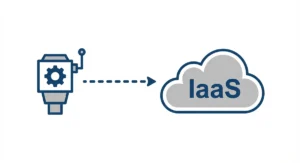
Industrial instrumentation is undergoing a fundamental transformation. Traditionally, instruments were typically deployed as standalone hardware devices—installed, calibrated, and maintained to provide measurement signals that quantify specific process parameters and render them actionable. Today, a brand-new paradigm is emerging: Instrument-as-a-Service (IaaS). This shift marks a transition in industrial architecture from a hardware-centric model toward a data-centric,…
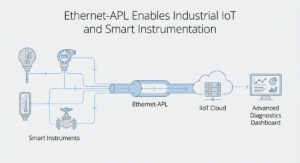
Industrial systems are rapidly evolving from isolated control environments into fully connected, data-driven ecosystems. At the center of this transformation is Industrial IoT (IIoT), which depends on seamless communication between field devices, control systems, and enterprise platforms. However, one long-standing challenge has limited this evolution: the inability to bring high-speed Ethernet communication directly to field-level…
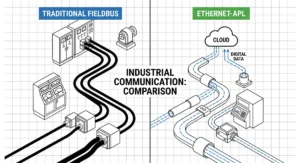
Industrial communication technologies have evolved significantly over the past decades. Traditional fieldbus systems such as PROFIBUS and Modbus have long been the backbone of industrial automation, providing reliable and deterministic communication for process control. However, as industries move toward digitalization, real-time analytics, and Industrial IoT integration, the limitations of legacy fieldbus technologies are becoming increasingly…
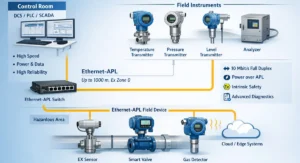
As industrial systems move toward digitalization and intelligent automation, traditional field communication technologies are increasingly unable to meet the demands of modern process industries. Ethernet-APL (Advanced Physical Layer) has emerged as a breakthrough solution, enabling Ethernet communication directly in hazardous and field-level environments. This technology bridges the long-standing gap between enterprise-level Ethernet systems and field…
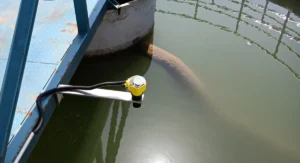
Level Ultrasonic Sensor Overview A level ultrasonic sensor is a non-contact device used to measure liquid or solid levels by transmitting ultrasonic waves and calculating the return time. It is widely applied in industrial environments where reliability, low maintenance, and safe operation are critical. We focus on industrial instrumentation selection and application optimization, helping…

Modern warfare has shifted from traditional battlefield confrontations to precision strikes targeting industrial infrastructure, energy systems, and supply chain nodes. As a result, key industries such as power generation, metallurgy, chemicals, and manufacturing are often the first to suffer catastrophic damage. In many conflict zones, destruction rates of core industrial facilities exceed 70%, while national…

When a conflict ends, rebuilding begins—not just cities, but systems. Energy, water, chemical production, and infrastructure must be restored quickly, safely, and efficiently.At the center of this recovery lies a critical but often overlooked layer: industrial instrumentation. Without reliable measurement and control, reconstruction efforts face delays, safety risks, and long-term inefficiencies. Why Measurement Becomes Critical…

Introduction: The Real Challenge Is Not Measurement—It’s Reliability Selecting a level gauge is often treated as a simple technical task. In reality, it is a critical engineering decision that directly affects system stability, safety, and long-term operational cost. Many failures in level measurement are not caused by inaccurate instruments, but by selecting technologies that cannot…
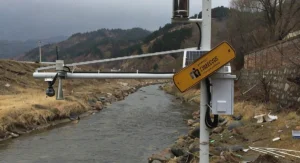
Introduction: The Wrong Choice Doesn’t Reduce Accuracy—It Breaks the System When selecting a level sensor, many users compare specifications like accuracy and range. However, in real industrial and environmental applications, the biggest problem is not measurement deviation—it is unreliable readings. Fluctuating signals, false alarms, and signal loss are far more critical than small accuracy differences….
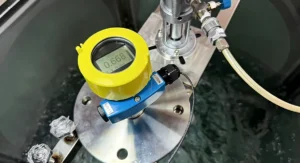
Introduction: Water Level Measurement Is Not Just About Accuracy Water level measurement is widely used in water treatment, environmental monitoring, and industrial systems. At first glance, selecting a water level sensor may seem straightforward—many users focus on accuracy as the primary indicator. However, in real industrial environments, accuracy is often not the most important factor….