
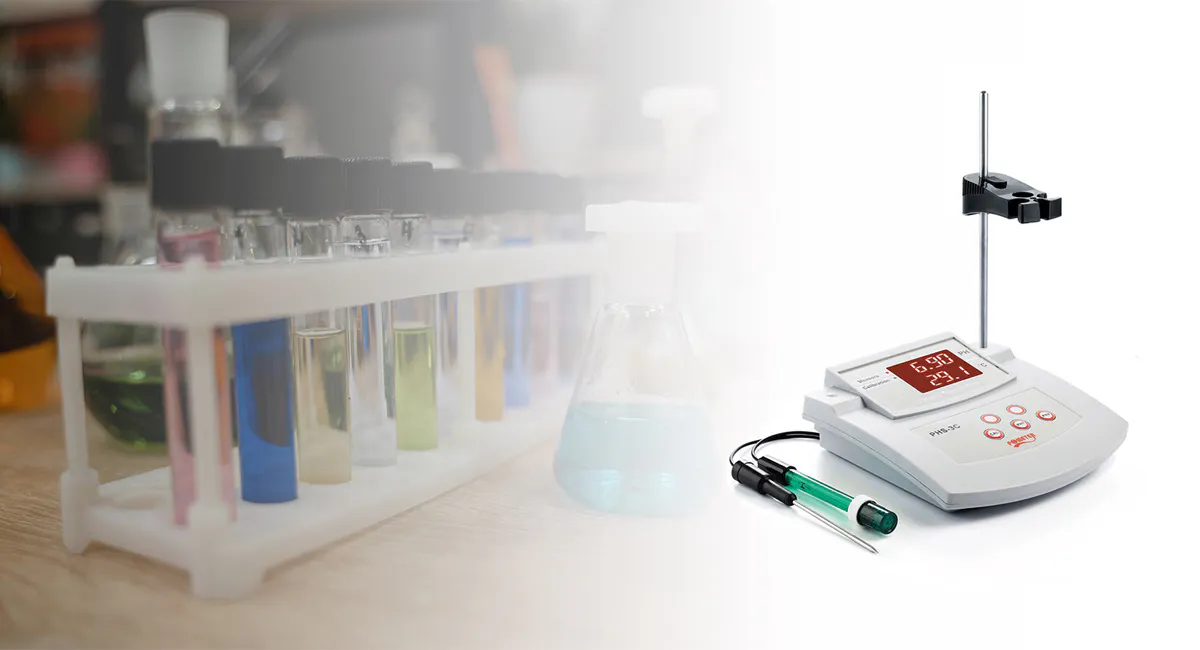
Conductivity Meter Selection in Liquid Analysis Solutions: From Pure Water to Industrial Fluids
In modern industrial environments, conductivity measurement plays a central role in liquid analysis solutions, especially in applications where water purity, chemical concentration, or contamination control are critical.
A conductivity meter in liquid analysis solutions is not just a measurement tool—it is a decision-making instrument that directly affects process efficiency, product quality, and operational safety. From ultra-pure water systems to highly conductive industrial fluids, selecting the right conductivity meter requires a deep understanding of application-specific requirements.
Why Conductivity Measurement Is Critical
Conductivity reflects the ionic content of a liquid, making it a key indicator of purity, contamination, and chemical concentration.
Accurate conductivity monitoring is essential for controlling both product quality and system efficiency.
Conductivity Range and Industrial Significance
| Conductivity Range (µS/cm) | Water Type | Typical Application | Risk if Uncontrolled |
|---|---|---|---|
| 0.05–1 | Ultra-pure water | Semiconductor, pharmaceuticals | Contamination sensitivity |
| 1–100 | Purified water | Boiler feedwater | Scaling, efficiency loss |
| 100–10,000 | Industrial water | Cooling systems | Fouling, corrosion |
| >10,000 | Wastewater / chemicals | Chemical processing | Process instability |
Different conductivity ranges represent fundamentally different process conditions. For example, ultra-pure water systems require extremely low conductivity to prevent contamination, while industrial processes rely on stable conductivity levels to maintain chemical balance.
Accuracy vs Range: A Key Selection Trade-off
Not all conductivity meters in liquid analysis solutions perform equally across different ranges.
Selecting a conductivity meter requires balancing measurement range with accuracy and stability.
Accuracy Performance Across Conductivity Ranges
| Range Type | Measurement Accuracy | Stability Over Time | Recommended Sensor Type |
|---|---|---|---|
| Ultra-low conductivity | ±0.5–1% | Medium | 2-electrode sensor |
| Medium range | ±1–2% | High | 4-electrode sensor |
| High conductivity | ±2–5% | High | Inductive (toroidal) sensor |
2-electrode sensors provide higher sensitivity for ultra-pure water, while inductive sensors offer durability in harsh, high-conductivity environments. Selecting the wrong type can result in inaccurate readings or frequent maintenance.
Industry-Specific Conductivity Requirements
Conductivity measurement requirements vary significantly across industries, depending on process conditions and regulatory standards.
Industry-specific conditions determine the optimal conductivity meter configuration.
Conductivity Applications by Industry
| Industry | Typical Conductivity Range | Key Requirement | Recommended Solution |
|---|---|---|---|
| Power & Energy | 1–20 µS/cm | High purity control | High-precision conductivity meter |
| Water & Wastewater | 100–5,000 µS/cm | Stability & durability | Industrial conductivity sensor |
| Chemical Processing | 1,000–50,000 µS/cm | Corrosion resistance | Inductive conductivity meter |
| Food & Beverage | 50–2,000 µS/cm | Hygiene & consistency | Hygienic conductivity meter |
Power plants require precise conductivity monitoring to prevent scaling and corrosion, while chemical industries demand robust sensors capable of handling aggressive fluids.
Maintenance and Fouling Considerations
In real industrial environments, conductivity meters are exposed to fouling, scaling, and chemical buildup.
Maintenance requirements significantly influence long-term performance and cost.
Maintenance Frequency vs Operational Impact
| Sensor Type | Maintenance Interval | Fouling Resistance | Lifetime (years) |
|---|---|---|---|
| 2-electrode | 1–3 months | Low | 3–5 |
| 4-electrode | 3–6 months | Medium | 5–8 |
| Inductive | 6–12 months | High | 8–10 |
Inductive sensors offer superior resistance to fouling and require less frequent maintenance, making them ideal for harsh industrial applications. However, they may not be suitable for ultra-low conductivity measurements.
Integration with Liquid Analysis Systems
Modern liquid analysis solutions require conductivity meters to integrate seamlessly with digital control systems.
Integration capability determines how effectively conductivity data can improve process control.
Integration Efficiency Comparison
| System Type | Response Time | Integration Level | Process Efficiency Gain (%) |
|---|---|---|---|
| Standalone meter | Manual | Low | 50–60% |
| Online analyzer | 5–10 s | Medium | 65–80% |
| Fully integrated system | 1–5 s | High | 80–95% |
Fully integrated systems enable real-time monitoring and automatic adjustments, such as chemical dosing or system flushing, significantly improving operational efficiency.
Customization and Application Flexibility
Standard conductivity meters may not meet all operational requirements, particularly in complex industrial systems.
Instrava is a partner focused on providing equipment, solutions, and services for industrial measurement and control instruments used in safety-critical and process control applications. By supporting OEM partners and industrial customers, Instrava provides customized conductivity meter solutions within liquid analysis solutions, ensuring compatibility with specific process conditions and long-term operational reliability.
Customization options include:
Sensor materials for corrosive environments
Wide measurement range configurations
Integration with PLC/SCADA systems
OEM/ODM production support
Conclusion
Selecting the right conductivity meter in liquid analysis solutions requires careful consideration of measurement range, accuracy, maintenance, and integration. Different industries and applications demand different configurations, and choosing the correct solution can significantly improve process efficiency and reduce operational risk.
By aligning conductivity measurement with system requirements and adopting reliable liquid analysis solutions, industries can achieve stable operations, better product quality, and long-term cost savings.