
- 1. Material Structure & Composition
- 2. Key Features & Advantages
- Prefabricated Dry Installation
- Waterproof, Moisture-Proof & Mold-Resistant
- Eco-Friendly & Low VOC (Formaldehyde-Free)
- Class B1 Fire Retardancy
- Acoustic & Thermal Insulation
- 3. Product Categories & Formats
- 4. Bamboo-Wood Fiber Wall Panels vs. Traditional Wall Finishing Methods
- 4.1. Multi-Dimensional Comparative Matrix
- 4.2. Key Competitive Advantages (Why Choose Bamboo WPC?)
- 5. Key Considerations for B2B Sourcing & Quality Inspection
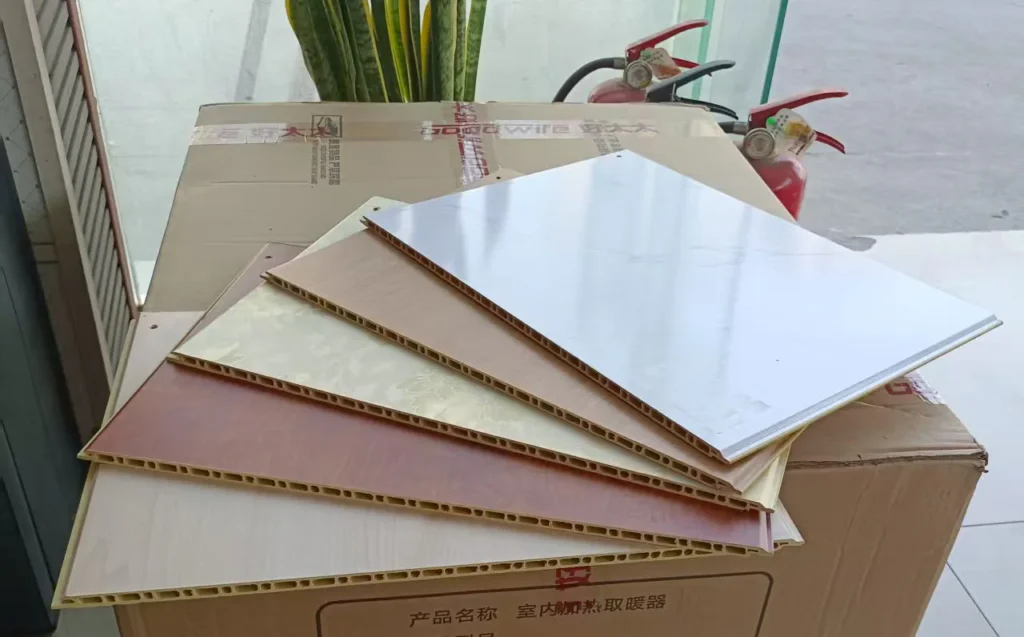
Bamboo-wood fiber wall panels (often referred to as integrated bamboo-wood fiber wall panels or Bamboo WPC Wall Panels) are composite interior decoration materials manufactured through high-temperature extrusion, using bamboo powder, wood powder, PVC resin, and polymer processing aids as their primary raw materials. Their surfaces can feature a variety of finishes—such as wood grain or stone patterns—making them suitable for both whole-home fit-outs and partial renovations; they offer quick installation and are relatively eco-friendly.
They represent a prime example of WPC (Wood-Plastic Composite) technology applied to prefabricated interior finishing, designed specifically to replace traditional materials like paint, wallpaper, wood veneers, and ceramic tiles.
1. Material Structure & Composition
| Layer | Material Composition & Function |
| 1. Substrate Core |
Bamboo/Wood Flour (30%–40%) + PVC Resin (40%–50%) + Calcium Carbonate ($\text{CaCO}_3$) + Functional Additives
Extruded via rigid micro-foaming (Celuka process) to form a hollow or solid core that delivers structural strength, waterproofing, and flame retardancy.
|
| 2. Adhesive Layer |
PUR Hot-Melt Adhesive (Polyurethane)
Applied via thermal encapsulation; solvent-free, eco-friendly, and highly resistant to delamination in humid or high-temperature environments.
|
| 3. Surface Film |
PVC Decorative Film / PET Film / Fabric Backing
Provides aesthetic surface finishes, including wood grains, marble/stone textures, leather tones, textile weaves, and soft-touch solid colors.
|
| 4. Protective Layer |
Wear-Resistant & Anti-UV Coating
Enhances surface scratch resistance, prevents fading, and improves ease of cleaning.
|
Choose Instrava Wood-Plastic Composite (WPC) Wall Panels
2. Key Features & Advantages
-
Prefabricated Dry Installation
-
Profiles feature engineered Tongue-and-Groove Systems that lock together using concealed metal clips or direct adhesive bonding on stud walls or battens.
-
Eliminates wall scraping or plastering, significantly reducing installation timelines with dust-free on-site assembly(How to Install Bamboo-Wood Fiber Wall Panels).
-
-
Waterproof, Moisture-Proof & Mold-Resistant
-
Encapsulation of plant fibers by PVC resin ensures extremely low water absorption, preventing warping, rotting, or mold growth common to real wood in high-humidity areas (e.g., basements or coastal regions).
-
-
Eco-Friendly & Low VOC (Formaldehyde-Free)
-
Formed through high-temperature extrusion without added urea-formaldehyde glues, easily meeting stringent E0 / ENF low-emission standards for immediate occupancy after installation.
-
-
Class B1 Fire Retardancy
-
Formulated with inorganic flame retardants (such as aluminum/magnesium hydroxide) to achieve self-extinguishing properties that fulfill commercial and public building fire codes.
-
-
Acoustic & Thermal Insulation
-
Internal Hollow Fluted Structures reduce deadweight (lowering shipping costs) while serving as effective sound and thermal insulation buffers.
-
Custom Instrava Wood-Plastic Composite (WPC) Wall Panels
3. Product Categories & Formats
-
Flat Panels: Standard widths of 300 mm, 400 mm, 600 mm, or 1220 mm with smooth surfaces; ideal for high-end marble or natural timber finishes.
-
Fluted / Slatted Panels: Feature continuous concave-convex wave or box-ribbed profiles, widely specified in modern minimalist interior designs.
-
Acoustic Slat Panels: Bamboo-wood fluted slats bonded to a high-density polyester fiber felt backing, combining acoustic absorption with visual depth.
4. Bamboo-Wood Fiber Wall Panels vs. Traditional Wall Finishing Methods
4.1. Multi-Dimensional Comparative Matrix
| Feature / Dimension | Bamboo-Wood Fiber Wall Panels(Bamboo WPC Wall Panels) | Latex Paint(Wall Paint) | Wallpaper / Wallcloth | Natural Wood Veneer | Ceramic Tiles / Slabs |
| Installation Speed & Method |
Ultra-Fast
Prefabricated dry assembly (Tongue-and-Groove / Adhesive)
|
Slow
Requires multi-stage puttying, sanding, priming, and drying
|
Moderate
Requires smooth base, putty, primer, and paste wallpapering
|
Slow
Requires timber framing, on-site cutting, trim fitting, and caulking
|
Slow
Wet mounting (cement mortar/adhesive), curing, and grouting required
|
| Base Wall Requirements |
Low
Can be installed directly over raw masonry or uneven walls via battens
|
Extremely High
Must be completely smooth, dry, and dust-free
|
High
Must be flat, smooth, dry, and dust-free
|
High
Requires flat walls; typically needs underlying plywood backing
|
High
Wall must be flat with sufficient load-bearing capacity
|
| Eco-Friendliness & Move-in Time |
Immediate Occupancy (E0/ENF Grade)
Thermal extrusion with zero added hazardous glues
|
Requires Ventilation (1–3 Months)
Emits trace amounts of VOCs and free formaldehyde
|
Requires Ventilation (1–2 Months)
Varies by adhesive quality (potential formaldehyde risk)
|
Depends on Glues/Finishes
Multi-layer substrates emit higher adhesive emissions
|
Immediate Occupancy
Zero formaldehyde emissions
|
| Waterproof & Moisture Resistance |
Excellent
PVC encapsulation prevents water absorption, swelling, and mold
|
Poor
Prone to mold, peeling, and flaking in humid conditions
|
Poor
Prone to damp warping, blackening, and edge detachment
|
Poor
Prone to moisture absorption, swelling, warping, and cracking
|
Excellent
100% waterproof
|
| Fire Retardancy Rating |
Class B1
Self-extinguishing; meets commercial building fire codes
|
Non-Combustible / Flame-Retardant
Varies by coat thickness and substrate
|
Combustible / Flame-Retardant
Most standard wallpapers are flammable
|
Class B2/C (Flammable)
Requires additional fire-retardant coating
|
Class A1 (Incombustible)
Highest fire safety rating
|
| Durability & Maintenance |
20+ Years
Scratch and wear-resistant; washable with a damp cloth
|
5–8 Years
Easily soiled; prone to denting; repainting causes color variation
|
3–5 Years
Prone to damage, seam cracking, and hard-to-clean stains
|
10–15 Years
Requires regular maintenance; easily scratched
|
30+ Years
Hard, wear-resistant, very easy to clean, but feels cold
|
| Total Turnkey Cost |
Moderate (Lowest Overall Installed Cost)
Moderate material cost; massive savings in labor and project time
|
Low Initial Material Cost
Cheap materials, but high labor and prep costs
|
Moderate
Wide material price range; higher waste during cutting
|
Extremely High
Expensive materials; requires highly skilled carpentry labor
|
High
High material and skilled mason labor costs
|
4.2. Key Competitive Advantages (Why Choose Bamboo WPC?)
-
Dry Assembly Eliminates Wet Work, Drastically Reducing Labor & Time Costs
-
The Pain Point: In international markets across Europe, North America, and the Middle East, skilled mason and painter labor costs frequently exceed material expenses.
-
The Solution: Bamboo WPC panels utilize engineered Tongue-and-Groove locking systems, enabling general installers to complete assembly quickly. This increases installation efficiency by over $300\%$ and cuts field labor costs by up to $50\%$.
-
-
Solves High-Humidity & Damp Substrate Challenges
-
The Pain Point: Traditional latex paint and wallpaper predictably suffer from mold, edge curling, and peeling within 1–2 years when applied in basements, coastal regions, or tropical climates.
-
The Solution: High-density micro-foamed WPC core substrates feature near-zero water absorption, isolating moisture completely—making them the ideal cladding choice for basement build-outs, hotel corridors, and commercial renovations.
-
-
Green Environmental Standards & Fast Commercial Turnarounds
-
The Pain Point: Hotels, office spaces, and retail outlets face substantial revenue losses during extended closure periods required for painting and curing.
-
The Solution: Manufactured using solvent-free PUR hot-melt lamination, these panels are non-toxic and odor-free. Dust-free and quiet on-site assembly allows for “overnight renovation, immediate next-day opening.”
-
5. Key Considerations for B2B Sourcing & Quality Inspection
-
Core Density & Flexural Toughness: Check cross-sectional cellular uniformity; excessive calcium carbonate filler reduces cost but results in brittle, heavy panels.
-
Lamination Adhesion (PUR vs. Cold-Glue): Verify the use of hot-melt PUR lamination rather than water-based cold glues, which tend to peel or bubble along edges in hot or humid climates.
-
Milling Profile Tolerances: Tight extrusion and tongue-and-groove tolerances are vital to guarantee tight, seamless jointing across large-scale wall installations.