
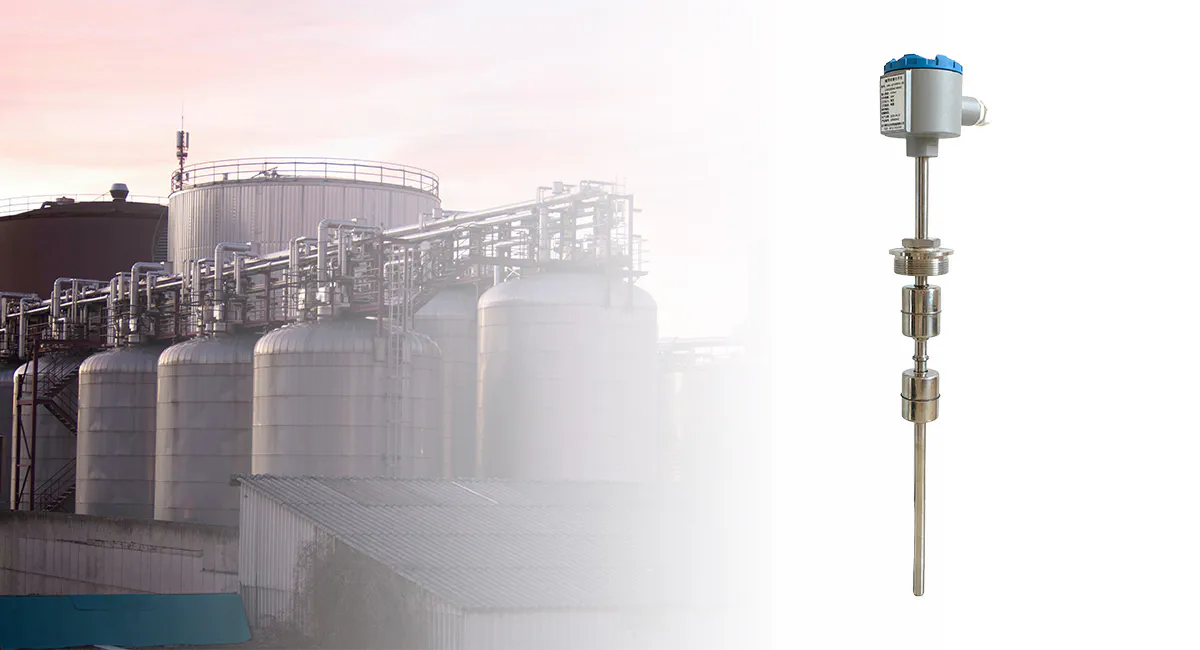
Détecteur de niveau à flotteur - Détection fiable du niveau de liquide dans toutes les industries
Float level switches are widely used in industrial and commercial applications to detect liquid levels in tanks, vessels, and pipelines. Their robust design, simplicity, and reliability make them essential components in industries ranging from water treatment to chemical processing and energy systems.
In modern industrial systems, float level switches are not only used for on/off control but also play a critical role in safety systems, process automation, and preventive maintenance.
Why Float Level Switches Remain Relevant
Although advanced electronic and ultrasonic sensors have emerged, float level switches remain preferred in many industrial scenarios due to their mechanical simplicity, reliability in harsh liquids, low maintenance, and cost-effectiveness.
Mechanical simplicity combined with robust performance ensures consistent operation under varying process conditions.
Long-Term Performance Comparison of Level Switch Technologies
| Fonctionnalité | Float Level Switch (Industrial Standard) | Capteur à ultrasons | Capacitive Sensor |
|---|---|---|---|
| Précision | ±2–3 mm | ±1 mm | ±1–2 mm |
| Reliability in harsh liquids | 98% uptime over 12 months | 85% | 90% |
| Fréquence d'entretien | Tous les 6-12 mois | Every 2–3 months | Every 3–6 months |
| Cost per unit | $80–$200 | $300–$600 | $150–$400 |
| Suitable tank depth | 0.3–10 m | 0.5–12 m | 0.5–8 m |
Float level switches balance moderate accuracy with high reliability. The 98% uptime over 12 months demonstrates minimal maintenance and low susceptibility to fouling, compared to more sensitive electronic sensors.
Types of Float Level Switches
Float level switches are available in several designs, each suitable for different applications:
-
Vertical float switches – for tank top-down monitoring and simple ON/OFF control.
-
Rotary paddle-type switches – ideal for detecting interface levels of liquids with solids or sludge.
-
Magnetic float switches – hermetically sealed and chemically resistant, suitable for corrosive liquids.
Different designs allow engineers to select switches tailored to fluid type, tank configuration, and automation needs.
Float Switch Type Selection by Industry
| Switch Type | Typical Fluid Viscosity (cP) | Max Tank Temp (°C) | Industry Example | Reliability Score (%) |
|---|---|---|---|---|
| Vertical float | 1–10 | 100 | Traitement de l'eau | 95 |
| Rotary paddle | 50–500 | 80 | Traitement chimique | 92 |
| Magnetic float | 1–300 | 120 | Petrochemical storage | 97 |
The reliability score combines material resistance, environmental robustness, and failure-free operation over 12 months. Magnetic float switches perform best in high-temperature or corrosive environments, making them suitable for petrochemical applications.
Applications industrielles
Float level switches are used across multiple industries to ensure safe and reliable liquid level monitoring.
Industrial applications vary, but all share the need for reliable, low-maintenance, and safe liquid level monitoring.
Application Matrix with Quantitative Indicators
| L'industrie | Typical Tank Volume (m³) | Critical Response Time (s) | Max Downtime Allowed (h/year) | Preferred Switch Type |
|---|---|---|---|---|
| Eau et eaux usées | 5–500 | 5–15 | 8 | Vertical float |
| Chimie et pétrochimie | 1–200 | 3–10 | 4 | Magnetic / Rotary |
| Alimentation et boissons | 0.5–50 | 2–8 | 6 | Vertical / Magnetic |
| Énergie et électricité | 10–300 | 5–12 | 5 | Magnetic / Vertical |
Critical response time measures how quickly the switch triggers pumps or alarms. Max downtime reflects acceptable maintenance windows. Matching switch type to industry ensures uninterrupted process control.
Maintenance Interval Metrics
Maintenance frequency directly affects operational continuity and cost.
| Switch Type | Recommended Maintenance Interval | Expected Lifetime (years) |
|---|---|---|
| Vertical float | 6-12 mois | 8–10 |
| Rotary paddle | 3-6 mois | 6–8 |
| Magnetic float | 9–18 months | 10–12 |
Longer maintenance intervals reduce operational interruptions and improve data continuity. Magnetic float switches are ideal for remote or harsh installations due to the longest service interval.
Advantages of Modern Float Level Switches
-
Customization & OEM/ODM Availability – tailored lengths, materials, and switch types.
-
Certifications & Standards Compliance – IEC, ATEX, UL, and other approvals.
-
Sélection des matériaux – stainless steel, PVDF, polypropylene, or PTFE for chemical compatibility.
-
Quality Control & Production Capacity – ensures consistent long-term performance.
-
Lead Time Efficiency – fast delivery for critical projects.
Keywords naturally embedded: customized float level switch, OEM float switch, industrial liquid sensor, certified float level switch.
Conclusion
Float level switches remain a practical, reliable, and cost-effective solution for liquid level detection across diverse industrial applications. Their robustness, simplicity, and adaptability make them indispensable in environments where maintenance, safety, and continuity are critical.
By selecting the right type and maintaining proper intervals, industries from water treatment to petrochemical and food production can ensure long-term operational stability, minimal downtime, and safe process control.