
Accueil » Technologie » OPC UA Gateway: Bridging Legacy Industrial Systems with Industry 4.0
OPC UA Gateway: Bridging Legacy Industrial Systems with Industry 4.0
Introduction: Why OPC UA Gateways Matter
Modern factories are filled with machines and industrial devices from different generations, vendors, and communication standards.
A single production line may include:
- Siemens PLCs using S7 protocol
- Modbus RTU energy meters
- EtherNet/IP controllers
- PROFIBUS field devices
- Legacy OPC DA servers
- Smart IIoT sensors
The problem is simple:
Most industrial devices do not speak the same communication language.
This fragmentation creates major challenges for:
- Systèmes SCADA
- MES platforms
- ERP integration
- Analyse en nuage
- Industrial IoT deployments
That is why OPC UA Gateway technology has become a critical building block for Industry 4.0.
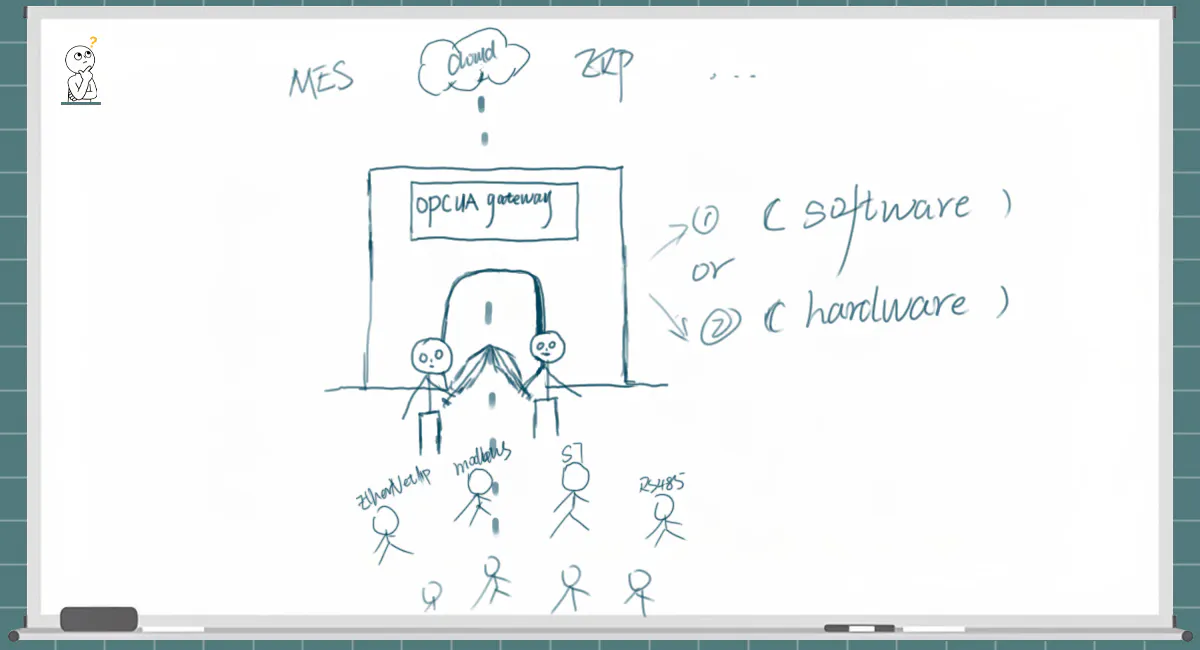
An OPC UA Gateway acts as a universal industrial translator and communication bridge. It converts heterogeneous industrial protocols into standardized OPC UA communication, enabling seamless interoperability between OT devices and modern IT systems.
What Is an OPC UA Gateway?
An OPC UA Gateway is either a software platform or an industrial hardware appliance that connects multiple industrial communication protocols and exposes them through a unified OPC UA interface.
Its core purpose is to:
- Translate industrial protocols
- Aggregate data sources
- Simplify system integration
- Improve cybersecurity
- Enable IT/OT convergence
In practical terms, the gateway sits between field devices and higher-level applications.
Southbound Communication (OT Layer)
The gateway communicates with industrial devices using native industrial protocols such as:
- Modbus RTU/TCP
- PROFIBUS
- PROFINET
- EtherNet/IP
- Siemens S7
- BACnet
- CAN bus
- Serial RS-485 communication
Northbound Communication (IT Layer)
The gateway then converts all collected data into standardized OPC UA information models for:
- Systèmes SCADA
- MES platforms
- ERP systems
- Industrial cloud platforms
- AI analytics systems
- Digital twin applications
This architecture dramatically reduces integration complexity inside modern factories.
Why OPC UA Is Important for Industry 4.0
Fondation OPC defines OPC UA (Open Platform Communications Unified Architecture) as a secure, platform-independent, service-oriented industrial communication framework.
OPC UA has become one of the core communication standards for:
- Industrie 4.0
- Fabrication intelligente
- IoT industriel (IIoT)
- Digital transformation
- RAMI 4.0 architectures
Unlike traditional industrial protocols, OPC UA provides:
- Interopérabilité multiplateforme
- Sécurité intégrée
- Data modeling capabilities
- Architecture évolutive
- Vendor neutrality
According to RAMI 4.0 (Reference Architecture Model Industry 4.0), OPC UA is considered one of the primary communication frameworks for future industrial systems.
However, most existing industrial infrastructure still relies on proprietary legacy protocols.
This is exactly where OPC UA Gateways become essential.
Core Functions of an OPC UA Gateway
1. Protocol Translation
Protocol conversion is the most common and important function of an OPC UA Gateway.
Factories often contain devices using completely different industrial communication standards.
Without a gateway, upper-layer systems would need to support every individual protocol separately, creating massive engineering complexity.
An OPC UA Gateway solves this problem by:
- Communicating downward using native industrial protocols
- Exposing upward communication through standardized OPC UA
This allows heterogeneous industrial devices to appear as part of one unified communication architecture.
Typical protocol conversions include:
| Legacy Protocol | OPC UA Integration |
|---|---|
| Modbus RTU/TCP | OPC UA |
| Siemens S7 | OPC UA |
| EtherNet/IP | OPC UA |
| PROFIBUS | OPC UA |
| Serial RS-485 | OPC UA |
This creates a unified industrial data environment across different vendors and generations of equipment.
2. Migration from Classic OPC to OPC UA
Before OPC UA, the industrial world heavily relied on Classic OPC technologies such as:
- OPC DA
- OPC HDA
- OPC AE
These standards were based on Microsoft COM/DCOM technology and suffered from several limitations:
- Windows-only operation
- Difficult firewall configuration
- Weak cybersecurity
- Poor scalability
An OPC UA Gateway can function as a:
- Wrapper
- Proxy
- OPC tunneling bridge
allowing legacy OPC systems to communicate securely with modern OPC UA infrastructures.
This is especially valuable for factories running long-established SCADA or HMI systems that cannot be easily replaced.
3. Data Aggregation and Unified Address Space
Large industrial facilities may contain:
- Hundreds of PLCs
- Thousands of sensors
- Multiple production lines
- Distributed control systems
Directly connecting SCADA or MES platforms to every device individually can overload the network and dramatically increase maintenance complexity.
An OPC UA Gateway acts as a centralized aggregator.
It combines multiple industrial data sources into:
A single unified OPC UA address space.
En conséquence :
- Upper-layer systems only need one connection
- Network traffic becomes easier to manage
- Device abstraction improves scalability
- Integration engineering effort decreases
This centralized architecture is especially important in large-scale industrial environments.
4. Security Isolation and Firewall Traversal
Industrial cybersecurity has become one of the biggest concerns in modern manufacturing.
Production networks are usually separated into multiple security zones, including:
- Machine networks
- Control networks
- Enterprise IT networks
- External cloud connections
OPC UA Gateways are often deployed inside:
- DMZ zones
- Industrial firewalls
- Secure edge architectures
Because OPC UA includes built-in security mechanisms such as:
- X.509 certificate encryption
- User authentication
- Message signing
- Secure session management
the gateway can safely expose industrial data to upper-layer systems without exposing native industrial protocols directly to external networks.
Some advanced gateways also support:
- Reverse Connect
- Secure tunneling
- Encrypted remote access
which further improves industrial cybersecurity.
5. Industrial IoT and Cloud Integration
Modern OPC UA Gateways increasingly support cloud-oriented protocols such as:
- MQTT
- AMQP
- API REST
This allows industrial data to be pushed directly into cloud ecosystems including:
As a result, OPC UA Gateways are becoming important edge computing components for:
- Maintenance prédictive
- Analyse de l'IA
- Gestion de l'énergie
- Jumeaux numériques
- Smart factory dashboards
Hardware OPC UA Gateway vs Software OPC UA Gateway
OPC UA Gateways are typically deployed in two forms.
Software OPC UA Gateway
Software gateways run on industrial PCs or servers.
Les exemples les plus courants sont les suivants :
Les avantages sont les suivants
- Broad protocol support
- High scalability
- Strong computing performance
- Flexible deployment
Software gateways are ideal for:
- Central control rooms
- Large SCADA systems
- Enterprise integration projects
Hardware OPC UA Gateway
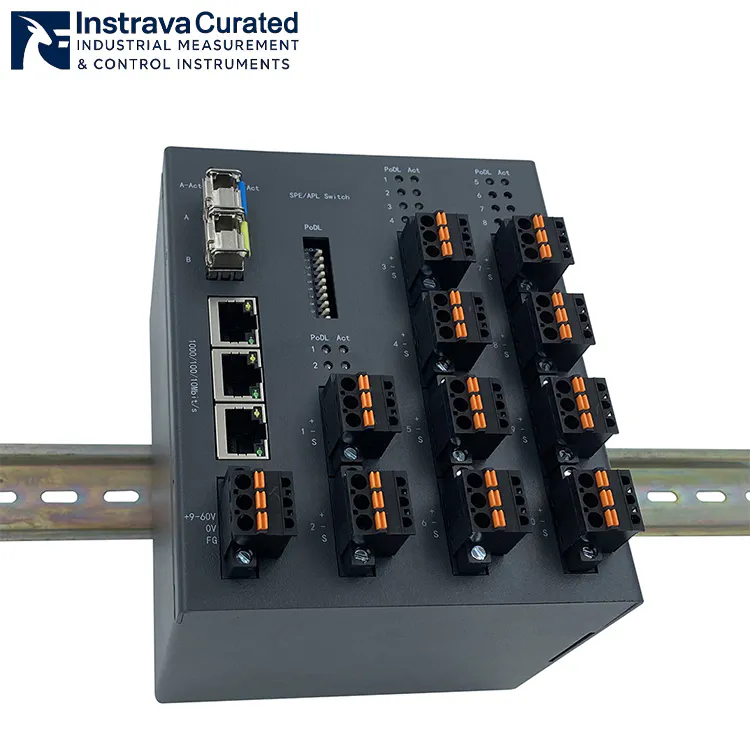
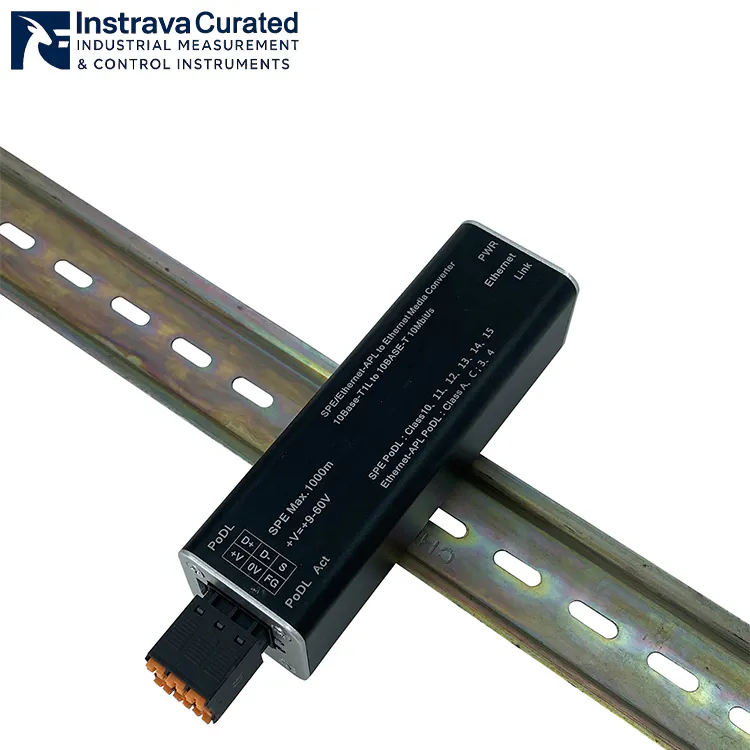
Hardware gateways are compact industrial embedded devices typically installed directly inside control cabinets.
Manufacturers include:
Les avantages sont les suivants
- DIN-rail installation
- Industrial-grade reliability
- Plug-and-play deployment
- Harsh environment resistance
- Lower power consumption
Hardware gateways are commonly used for:
- Edge connectivity
- Local protocol conversion
- Brownfield modernization projects
OPC UA Gateway and Brownfield Industrial Modernization
One of the biggest challenges in Industry 4.0 is modernizing legacy factories.
Most industrial facilities cannot simply replace all existing PLCs and controllers.
This is known as:
Brownfield industrial transformation.
OPC UA Gateways play a crucial role in this process because they allow:
- Legacy devices to remain operational
- Existing control systems to stay intact
- Modern IT systems to access old equipment data
In many cases, deploying an OPC UA Gateway becomes the first step toward factory digitalization.
OPC UA Gateway and the Future of Industrial Communication
Industrial communication is evolving rapidly.
Many modern PLCs and smart devices now include native OPC UA server functionality directly inside the hardware.
Examples include newer controllers from:
At the same time, industrial networking is moving toward:
- OPC UA PubSub
- TSN (Time-Sensitive Networking)
- Architectures "edge-native
- Real-time deterministic Ethernet
However, despite these advancements, OPC UA Gateways remain essential because the global installed base of legacy industrial equipment is enormous.
For many manufacturers, gateways provide the fastest and most cost-effective path toward Industry 4.0 integration.
Research and Future Directions
Recent academic research highlights the growing importance of OPC UA interoperability frameworks.
One study on integrating OPC UA with heterogeneous communication systems proposed:
- Platform-independent type systems
- Communication primitives
- Intermediate abstraction layers
to simplify interoperability across industrial protocols.
Another research paper titled:
“General Methodology for Building OPC UA Gateways”
presented a generalized design methodology for building efficient and reliable OPC UA gateways for various communication systems.
The study demonstrated that standardized gateway architectures can:
- Reduce integration complexity
- Improve protocol interoperability
- Lower engineering costs
- Enable smaller manufacturers to adopt OPC UA technology
This shows that OPC UA Gateway technology is not only commercially important but also a major research focus in industrial digitalization.
Conclusion
OPC UA Gateway technology serves as a critical bridge between legacy industrial systems and modern Industry 4.0 architectures.
En permettant :
- Conversion de protocole
- Data aggregation
- Secure industrial communication
- Connectivité dans le nuage
- IT/OT integration
OPC UA Gateways allow manufacturers to modernize existing infrastructure without completely replacing operational equipment.
As industrial automation continues evolving toward smart factories, AI-driven manufacturing, and real-time Industrial IoT systems, OPC UA Gateways will remain one of the most practical and important technologies for industrial digital transformation.
What is an OPC UA Gateway?
An OPC UA Gateway is a hardware or software solution that converts industrial communication protocols into standardized OPC UA communication for interoperability and Industry 4.0 integration.
What protocols can OPC UA Gateways support?
Most OPC UA Gateways support industrial protocols such as Modbus, Siemens S7, EtherNet/IP, PROFIBUS, BACnet, CAN bus, and legacy OPC DA systems.
Why are OPC UA Gateways important for Industry 4.0?
They enable legacy industrial devices to connect with modern IT systems, cloud platforms, and Industrial IoT architectures without replacing existing equipment.
What is the difference between OPC DA and OPC UA?
OPC DA relies on Microsoft COM/DCOM technology and mainly works on Windows systems, while OPC UA is platform-independent, secure, scalable, and designed for modern industrial networking.
What is the difference between a hardware and software OPC UA Gateway?
Software gateways offer broader protocol support and higher scalability, while hardware gateways provide compact industrial-grade deployment for edge connectivity and field installations.
Can OPC UA Gateways connect to cloud platforms?
Yes. Many modern gateways support MQTT, AMQP, and REST APIs for direct integration with cloud platforms such as Azure IoT and AWS IoT.
Pourquoi choisir Instrava ?
Construit sur la cohérence, pas sur les revendications
Axé sur les applications industrielles
Nous sommes spécialisés dans l'analyse et la détection industrielles, avec une compréhension claire des environnements d'exploitation et des exigences du monde réel.
Critères stricts de sélection des produits
Chaque instrument est évalué en fonction de ses performances, de sa stabilité et de son adéquation à l'application, et non pas seulement en fonction de ses spécifications ou de son prix.
Approvisionnement fiable et constance de la qualité
Nous travaillons avec des fabricants de confiance pour garantir un approvisionnement stable, une qualité constante et une livraison fiable.
Un soutien pratique et basé sur l'expérience
Nos recommandations sont fondées sur la compréhension des applications, ce qui permet aux clients d'éviter les problèmes courants et d'obtenir des résultats fiables.
Instrava est conçu pour réduire l'incertitude, afin que chaque décision que vous prenez soit plus claire, plus sûre et plus fiable.