
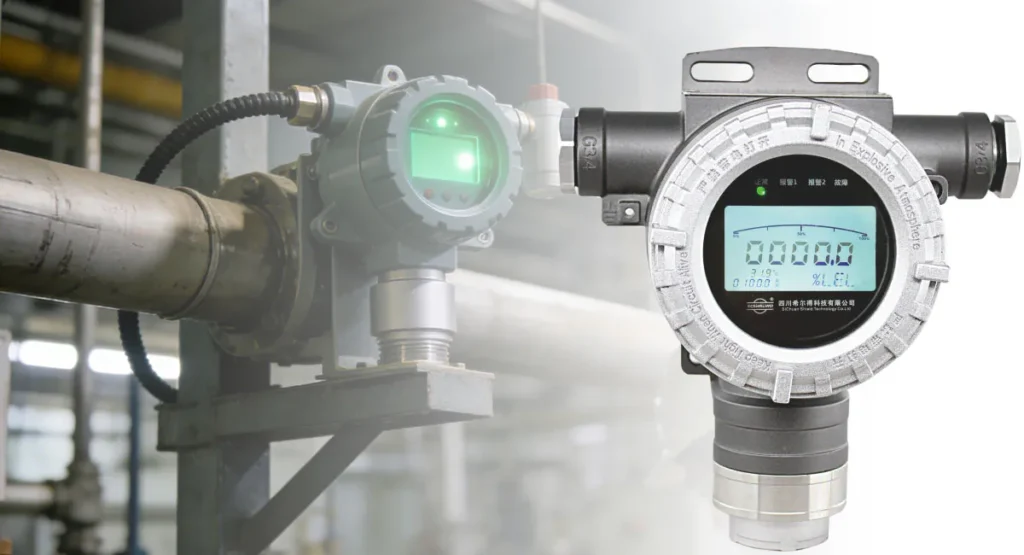
Volatile Organic Compounds (VOCs) are a broad class of chemicals widely used in industrial processes, including chemical manufacturing, petroleum refining, and pharmaceutical production. While VOCs are essential to many operations, they can be highly toxic, flammable, or environmentally hazardous if not monitored properly.
Using VOC toxic gas detectors ensures early detection of leaks, minimizes exposure risks, and maintains compliance with safety and environmental regulations.
Instrava provides reliable VOC gas detection solutions designed for industrial applications, helping facilities monitor toxic gases, protect personnel, and optimize operational processes.
1. Industrial Applications of VOC Toxic Gas Detectors
VOC toxic gas detectors are widely used in industries where chemical handling or processing occurs:
| Industry | Typical VOC Hazard | Detector Type | Application Example |
|---|---|---|---|
| Chemical Plants | Benzene, toluene, xylene | Fixed electrochemical / PID detectors | Reactor rooms, storage tanks |
| Oil & Gas | VOC emissions from crude handling | IR hydrocarbon detectors | Pipeline corridors, tank farms |
| Pharmaceutical Manufacturing | Solvent vapors | PID / electrochemical sensors | Coating, drying, or formulation rooms |
| Paint & Coatings Industry | Organic solvents | PID / IR detectors | Spray booths, mixing areas |
Insight: Combining fixed detectors for continuous monitoring and portable detectors for maintenance personnel provides full-spectrum protection against VOC hazards.
2. How VOC Toxic Gas Detectors Work
VOC detectors rely on sensor technologies optimized for industrial environments:
| Sensor Type | Function | Response Time | Typical Industrial Use |
|---|---|---|---|
| PID (Photoionization Detector) | Detects low ppm VOCs | <10 s | Solvent and chemical monitoring |
| Electrochemical Sensors | Detect specific toxic gases | 15–30 s | Benzene, formaldehyde, hydrogen sulfide |
| Infrared (IR) | Detects hydrocarbon vapors | <20 s | Oil, gas, and petrochemical facilities |
Instrava’s VOC detectors integrate multiple sensor technologies when required, ensuring both accuracy and durability in industrial conditions.
3. Installation and Deployment Guidelines
Proper placement of VOC detectors ensures early detection and reduces false alarms:
-
Height Consideration: VOCs vary in density; light VOCs rise while heavier VOCs may settle near the floor.
-
Ventilation Awareness: Avoid installing detectors directly in strong air currents or ventilation outputs.
-
Dead Zones: Identify corners, pits, and storage areas where VOCs can accumulate.
-
Alarm Visibility: Ensure alarms are clearly visible and audible throughout the monitored area.
Example Table: Recommended Placement for VOC Detectors
| Location | Gas Type | Detector Type | Instrava Product Example |
|---|---|---|---|
| Reactor Room | Benzene | PID | VOC Detector V200 |
| Solvent Storage | Toluene | Electrochemical | VOC Detector E150 |
| Spray Booth | Organic Solvents | PID | VOC Portable Monitor P50 |
| Pipeline Corridor | Hydrocarbons | IR | VOC Fixed IR Detector X300 |
4. Alarm Response and Safety Procedures
| Alarm Type | Trigger | Recommended Action |
|---|---|---|
| Area Alarm | Fixed VOC detector | Evacuate personnel, activate ventilation, notify control room |
| Personal Alarm | Portable VOC detector | Immediate evacuation, report to supervisor |
| Combined Alarm | Fixed + Portable | Initiate shutdown, call emergency response team |
VOC detectors from Instrava can be integrated with SCADA or building management systems for automated ventilation control and safety notifications.
5. Maintenance and Calibration
| Task | Device | Frequency | Purpose |
|---|---|---|---|
| Bump Test | Fixed & Portable | Weekly / Before use | Verify alarm and sensor response |
| Calibration | Fixed & Portable | Every 6–12 months | Maintain measurement accuracy |
| Sensor Replacement | Fixed & Portable | Manufacturer guidance | Ensure long-term reliability |
| Data Logging | Integrated System | Continuous | Compliance and incident analysis |
Best Practices:
-
Keep digital logs for audits
-
Cross-check readings of fixed and portable detectors
-
Schedule predictive maintenance based on sensor usage
6. Regulatory Compliance
-
OSHA: Workplace VOC exposure limits
-
EPA / Local Environmental Standards: Emission monitoring and reporting
-
EN 50271 / EN 60079: Explosive and flammable gas equipment standards
-
ISO 9001 / ISO 14001: Quality and environmental compliance
Using Instrava’s VOC toxic gas detectors, facilities can maintain regulatory compliance while protecting personnel and reducing environmental risk.
7. Case Study Example
Scenario: Pharmaceutical manufacturing facility with VOC solvent exposure.
-
Instrava fixed VOC detectors: Installed near storage tanks and mixing rooms
-
Instrava portable VOC monitors: Used by maintenance personnel during inspection
-
Integration: Alarms connected to SCADA and ventilation systems
-
Outcome: Early detection of VOC leaks, improved employee safety, and regulatory compliance
Data Point: Facilities implementing Instrava VOC monitoring solutions reduced near-miss exposure events by up to 70% in two years.
8. Conclusion
VOC toxic gas detectors are critical for maintaining industrial safety in chemical, oil & gas, and pharmaceutical facilities. By combining fixed and portable detectors, Instrava provides reliable, accurate, and durable solutions to protect personnel, ensure compliance, and optimize industrial processes.