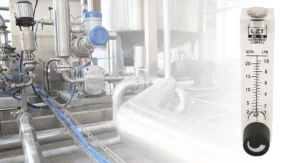
In industrial flow measurement, innovation often moves toward higher precision, digitalization, and connectivity. Coriolis, ultrasonic, electromagnetic, and vortex flow meters dominate discussions about accuracy and advanced diagnostics. Yet, despite these developments, the rotameter continues to be specified, installed, and trusted across industries. This raises an important question: why does a simple mechanical instrument still compete…

A rotameter is one of the most widely used instruments for visual flow measurement in industrial processes. Despite the rapid development of digital and electronic flow technologies, it remains relevant due to its simplicity, reliability, and direct readability. In many industrial applications, engineers and operators still rely on a rotameter for fast flow indication, stable…

From Measuring Level to Managing Signal Behavior In real industrial environments, level measurement is rarely limited by sensing capability. The true challenge lies in signal behavior over time. Drift, noise accumulation, false reflections, and changing process conditions all affect how measurement data behaves long after commissioning. For this reason, the guided wave radar level transmitter…
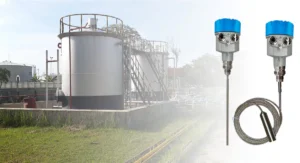
In industrial measurement, technology adoption often follows trends. Non-contact solutions, digital diagnostics, and advanced signal processing dominate marketing narratives. Yet when it comes to high-risk applications—where measurement failure directly impacts safety, compliance, or production continuity—guided wave radar remains a preferred choice. This persistence is not accidental. It reflects a deeper alignment between guided wave radar…

When industrial users compare level measurement technologies, the discussion often starts with specifications and ends with price. However, in real process environments, the decisive factor is rarely accuracy on paper. Instead, it is measurement certainty—the confidence that the reading reflects reality under all operating conditions. This is where the comparison between guided wave radar level…
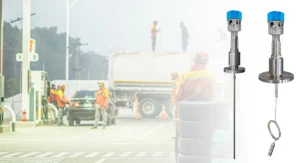
Measurement Accuracy Is Not the Real Challenge In industrial level measurement, accuracy is often treated as the ultimate benchmark. In reality, measurement certainty matters far more. Operators and engineers rarely struggle with knowing how precise a measurement is; they struggle with knowing whether the measurement can be trusted when conditions change. This is where the…
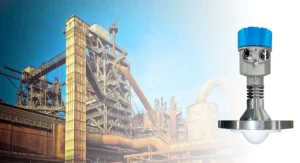
In harsh industrial environments, radar level transmitter technology is often selected with high expectations. On paper, radar instruments promise non-contact measurement, resistance to pressure, and suitability for extreme temperatures. Yet in real-world applications—especially in oil & gas, petrochemical, and large-scale storage facilities—measurement failures still occur. Understanding why radar level transmitter systems fail under harsh conditions…
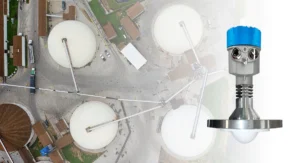
In industrial level measurement, radar technology is often presented as a single category. Datasheets list ranges, accuracy figures, beam angles, and operating temperatures, giving the impression that all radar instruments behave similarly. In reality, the internal measurement philosophy of a radar level transmitter fundamentally determines how it performs in real process environments. The most debated…
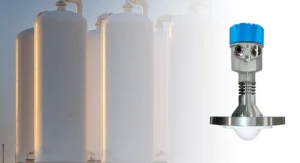
In industrial level measurement, radar technology has become a dominant solution for applications involving extreme temperatures, pressure, vapor, or challenging process conditions. At the center of this technology is the radar level transmitter, and more specifically, the widespread adoption of FMCW radar rather than time-based pulse radar. A common question arises during technical evaluations: why…
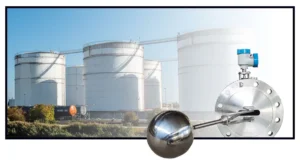
Accurate and stable level measurement is essential for maintaining safety, efficiency, and process continuity in industrial systems. Among various level sensing technologies, the float level transmitter remains one of the most widely adopted solutions due to its mechanical reliability, simple structure, and long-term performance in demanding environments. A float level transmitter provides continuous level measurement…