
In modern industrial environments, maintaining stable and efficient processes depends heavily on accurate and continuous liquid monitoring. Liquid analysis solutions play a central role in ensuring water quality, optimizing chemical processes, and preventing system failures across industries such as water treatment, chemical processing, food production, and energy generation. Liquid analysis solutions refer to integrated systems…

Float level switches are widely used in industrial and commercial applications to detect liquid levels in tanks, vessels, and pipelines. Their robust design, simplicity, and reliability make them essential components in industries ranging from water treatment to chemical processing and energy systems. In modern industrial systems, float level switches are not only used for on/off…
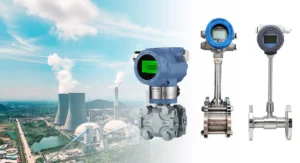
Selecting a flow meter is rarely about accuracy alone. In industrial applications, the real challenges include: Variable flow rates Pressure loss constraints Maintenance limitations Fluid type (gas, steam, liquid) Installation space Thermal, vortex, and differential pressure flow meters each solve different engineering problems. The key is understanding where each technology performs best — and where…

Industrial level switch failures are rarely isolated incidents.They follow identifiable patterns linked to material behavior, installation conditions, and sensing limitations. Understanding these patterns allows engineers to move from reactive troubleshooting to predictive prevention. This guide provides a structured failure analysis framework used in real industrial environments. 1. Classification of Level Switch Failures Industrial level switch…

False level switch alarms are rarely random. They are usually the result of: Sensor contamination Incorrect technology selection Material property variation Installation positioning errors Environmental interference Preventing false alarms requires understanding the root cause—not just adjusting sensitivity. What Causes False Level Switch Alarms? Across industrial facilities, the most common triggers include: Material buildup on the…
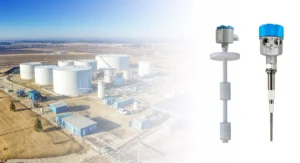
Selecting the best level switch for sticky materials is rarely straightforward. Sticky materials behave unpredictably: They coat sensor surfaces They retain moisture They leave residue after discharge Their dielectric properties vary over time Because of this, many conventional level switches begin to fail—not immediately, but progressively. The best solution depends on how the material interacts…

Capacitive level switches are widely used because of their simplicity and cost efficiency.However, in certain industrial environments, their sensing principle becomes a limitation rather than an advantage. The key question is not which technology is “better,” but when RF admittance becomes the more reliable engineering choice. This decision is typically driven by material behavior, environmental…

In level detection, many failures are not caused by harsh environments, but by changing electrical properties of the material itself.This is especially true in applications involving coating, moisture variation, or unstable dielectric constants—where conventional capacitive level switches often struggle. RF admittance level switches were developed to address exactly this challenge: distinguishing real material contact from…

Capacitive level switches often fail in sticky material applications not because the technology is defective, but because its sensing principle conflicts with how sticky materials behave in real process conditions. In theory, capacitive detection appears flexible and sensitive. In practice, sticky and coating-prone materials gradually turn sensitivity into instability—creating false alarms, missed detection, and growing…
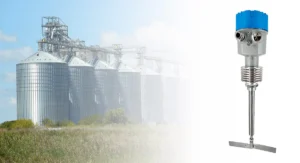
Bulk solid level detection often fails not because of the sensor itself, but because the wrong technology is selected for the material behavior. In powder and bulk solid applications, level switches are frequently exposed to dust, buildup, variable bulk density, and unpredictable flow patterns. When these realities are ignored during selection, even a technically sound…