In industrial process control, level measurement challenges rarely come from “normal conditions”. They come from density fluctuation, foam, turbulence, coating, temperature drift, and media change.This is where the tuning fork level switch becomes strategically relevant—not as a product category, but as a signal-stability decision. This article analyzes the tuning fork level switch from a process…

From Simple Alarm Device to Process Safety Trigger In industrial plants, level switches are often perceived as simple on/off devices.In reality, they play a far more critical role—acting as last-line safety triggers, process interlocks, and equipment protection mechanisms. As industrial systems move toward higher automation and tighter safety standards, the level switch is no longer…
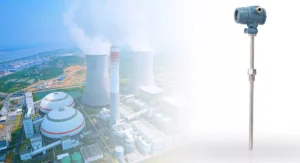
From Local Measurement to Predictive Process Stability Temperature is one of the most fundamental variables in industrial processes.Yet in modern automated plants, temperature measurement is no longer a local indicator—it is a critical control signal that influences safety, efficiency, and long-term asset reliability. Temperature transmitters sit at the center of this shift. They convert raw…

From Indicator Value to Process Intelligence Conductivity and Total Dissolved Solids (TDS) are among the most frequently measured parameters in industrial liquid systems.However, in modern process environments, these measurements are no longer treated as simple indicators of water quality. Instead, conductivity and TDS sensors are increasingly used as process intelligence tools—providing continuous insight into chemical…

From Compliance Monitoring to Disinfection Process Control Residual chlorine and chlorine dioxide are no longer measured solely for regulatory reporting.In modern industrial water systems, they function as active control variables that determine disinfection efficiency, process safety, and downstream equipment protection. As water reuse, closed-loop systems, and automated dosing strategies become standard, the residual chlorine sensor…
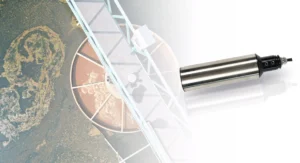
From Visual Indicator to Process Control Variable In industrial water systems, turbidity is no longer treated as a simple visual indicator. It has become a process-critical variable that directly affects filtration efficiency, chemical dosing accuracy, equipment protection, and regulatory compliance. As production processes become more automated and water reuse standards tighten, the role of the…
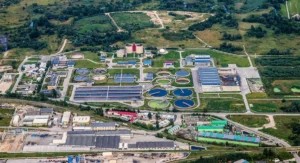
How to Select the Right Approach for Reliable Process Control Why Sludge Concentration Measurement Matters Sludge concentration is a critical parameter in wastewater treatment, industrial process water, and environmental protection systems. Accurate measurement directly affects process efficiency, energy consumption, chemical dosing, and compliance with discharge regulations. Unlike simple water quality parameters, sludge concentration reflects both…

Long-term dissolved oxygen monitoring is fundamentally different from short-term measurement. While many dissolved oxygen sensors can deliver acceptable accuracy at the moment of installation, only a small number remain reliable after months or years of continuous operation. As monitoring systems move toward automation, remote supervision, and data-driven decision-making, optical dissolved oxygen sensors have increasingly become…
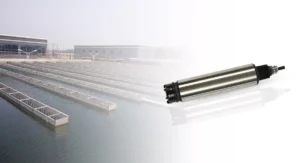
Dissolved oxygen (DO) measurement is a critical parameter in water treatment, aquaculture, environmental monitoring, and industrial processes. Among available technologies, optical dissolved oxygen sensors and electrochemical dissolved oxygen sensors are the two most widely used options. Although both measure the same parameter, their working principles, maintenance requirements, and long-term performance differ significantly. Understanding these differences…
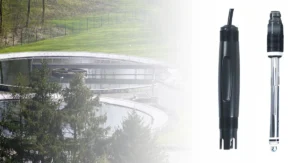
How Measurement Data Becomes a Decision Variable in Modern Industrial Systems From Field Measurement to Process Decision In traditional process control architectures, pH ORP sensors were treated as isolated field instruments. Their role was limited to providing a real-time value that operators or controllers reacted to locally. However, modern industrial systems have shifted toward digitally…