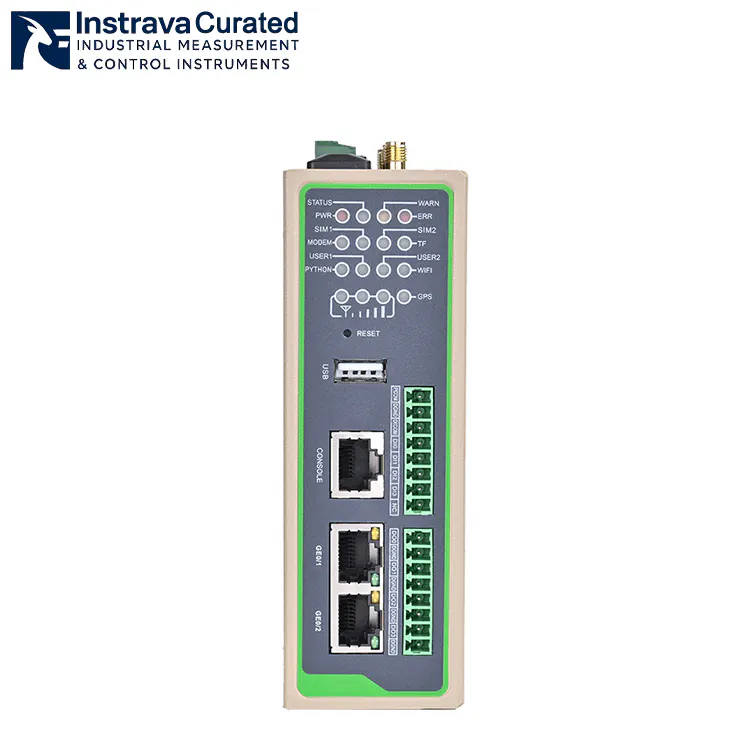

Home » Products » Edge Gateway » Edge Gateway – 5G Industrial Intelligent Edge Gateway
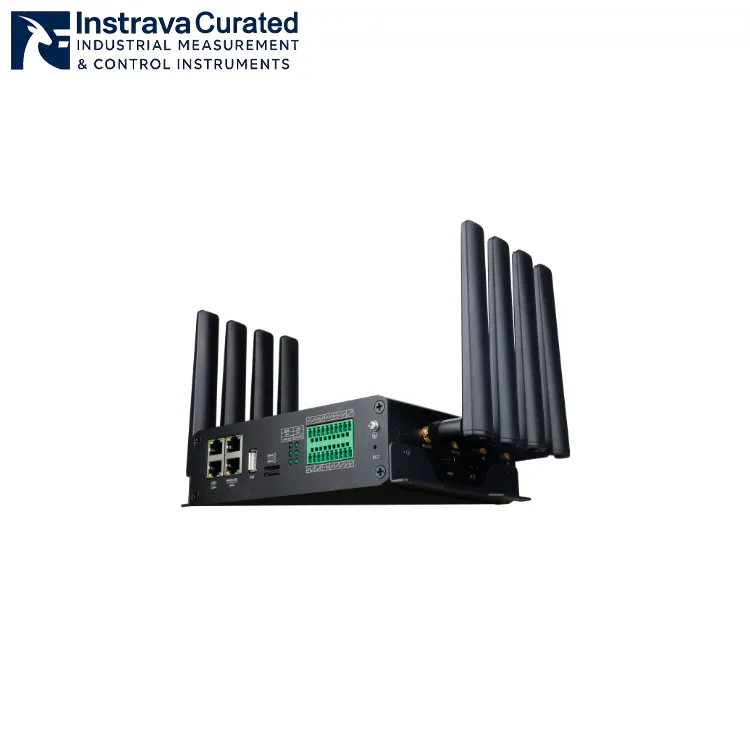
Edge Gateway – 5G Industrial Intelligent Edge Gateway
Instrava Curated Instruments: Industrial Edge Gateway Built for the Connected Future
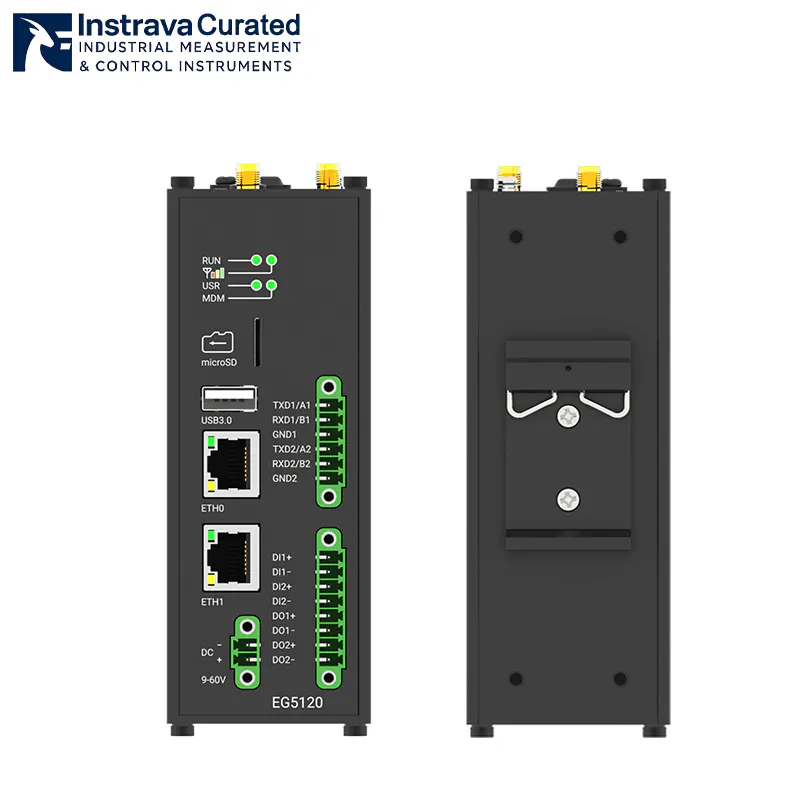
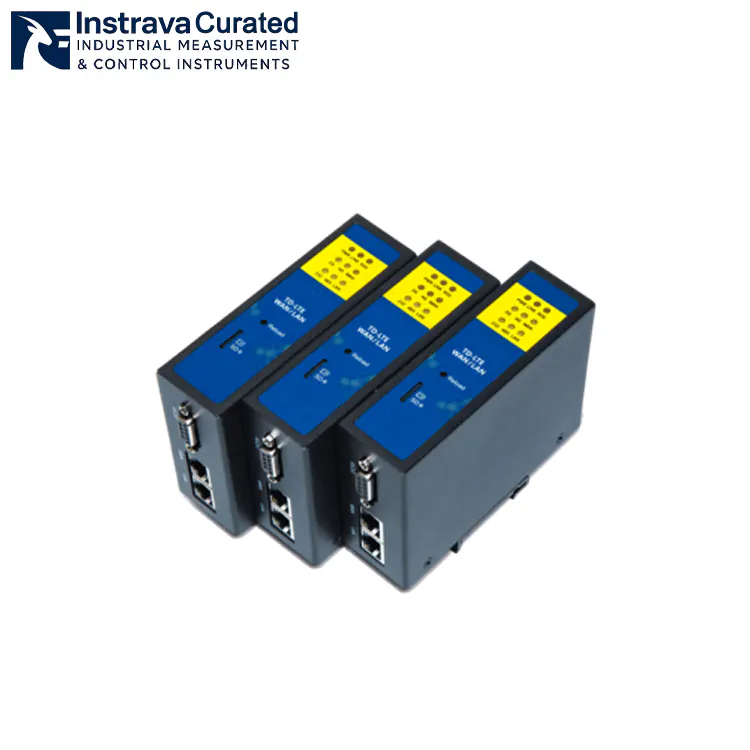
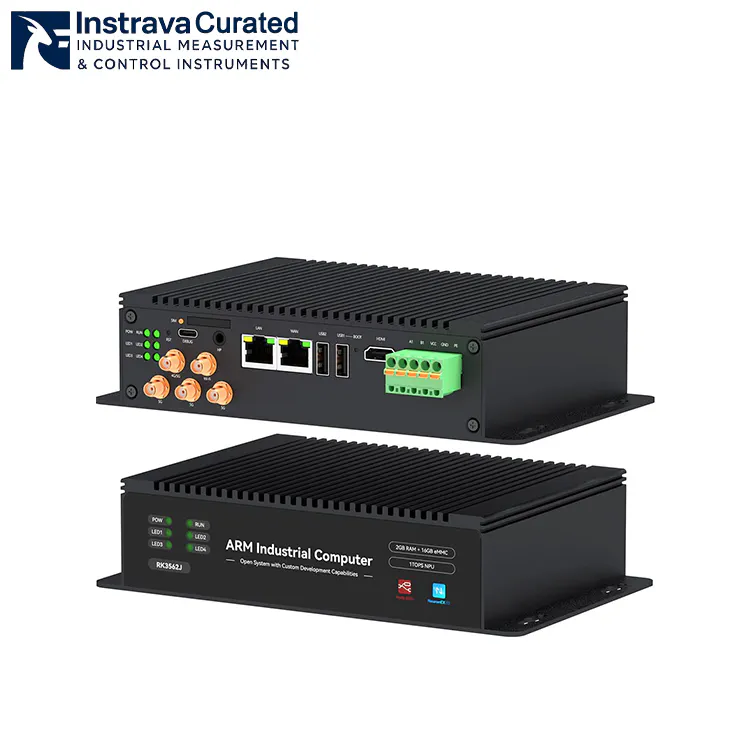
Instrava Curated Instruments presents a next-generation Edge Gateway engineered to bridge industrial assets with modern digital infrastructure. Designed for high-performance edge connectivity, this 5G industrial edge gateway combines ultra-reliable communications, edge computing intelligence, and seamless protocol interoperability in one rugged platform.
Built on a domestic industrial-grade architecture, this intelligent gateway supports 5G dual-mode connectivity, Wi-Fi 6, Gigabit Ethernet, LoRa, Bluetooth 5.2, RedCap, and optional GPS/BeiDou positioning, enabling secure and resilient connectivity across diverse industrial environments. Whether deployed for industrial automation, smart manufacturing, AGV fleets, robotic inspection, or smart healthcare, it delivers the speed, reliability, and flexibility required for real-time operations.
With built-in support for OPC UA, MQTT, Modbus TCP/RTU, SQL, IEC 61850, and multiple PLC/CNC protocols, this industrial IoT edge gateway acts as a powerful bridge between legacy equipment and cloud-based analytics platforms. It transforms isolated field devices into connected, intelligent assets—accelerating digital transformation while preserving existing infrastructure investments.
Edge Gateway Description
Why Choose This Industrial Edge Gateway?
Ultra-Reliable Connectivity for Mission-Critical Applications
This 5G edge gateway for industrial IoT is designed to maintain uninterrupted communications in demanding environments. With support for dual-transmit selective-receive technology, it achieves network reliability of ≥99.99% and ultra-low latency of ≤12ms, making it ideal for real-time control, remote monitoring, and autonomous systems.
Key communication advantages include:
- 5G NR with support for Release 16 and Release 17 features
- Dual-band Wi-Fi 6 (2.4GHz / 5.8GHz) for high-density wireless environments
- Optional LoRa, Bluetooth 5.2, StarFlash, and RedCap connectivity
- Gigabit Ethernet with flexible WAN/LAN configuration
- Optional GPS/BeiDou positioning for mobile and remote deployments
This combination ensures continuous, high-speed data transmission across fixed, mobile, and distributed industrial networks.
Edge Intelligence for Industrial Digital Transformation
More than a communication device, this industrial edge computing gateway enables local data processing, intelligent decision-making, and seamless cloud integration.
Advanced Edge Computing Capabilities
- Quad-core ARM Cortex-A55 processor (≥1.8GHz)
- Integrated 1 TOPS NPU for AI-enabled edge analytics
- Supports Docker containers for flexible application deployment
- Local real-time data analysis and event processing
- Breakpoint resume for reliable data continuity during network interruptions
Broad Industrial Protocol Compatibility
Southbound connectivity supports data acquisition from:
- PLCs
- CNC machines
- Energy meters
- Sensors and field instruments
Northbound connectivity supports integration with:
- MQTT brokers and cloud platforms
- OPC UA servers
- SQL Server and MySQL databases
- Modbus TCP systems
- SCADA, MES, and enterprise platforms
This makes it an ideal OPC UA edge gateway, Modbus gateway, and industrial protocol converter for modern smart factories and process automation systems.
Edge Gateway Parameter
| CPU | Quad ARM Cortex-A55 2.0GHz |
| GPU | Mali G52 2EE, OpenGL ES 1.1/2.0/3.2, OpenCL 2.0 & Vulkan 1.1 |
| NPU | 1 TOPS for lightweight AI |
| Memory | 2GB |
| Built-in storage | 8GB |
| Cellular Interface | |
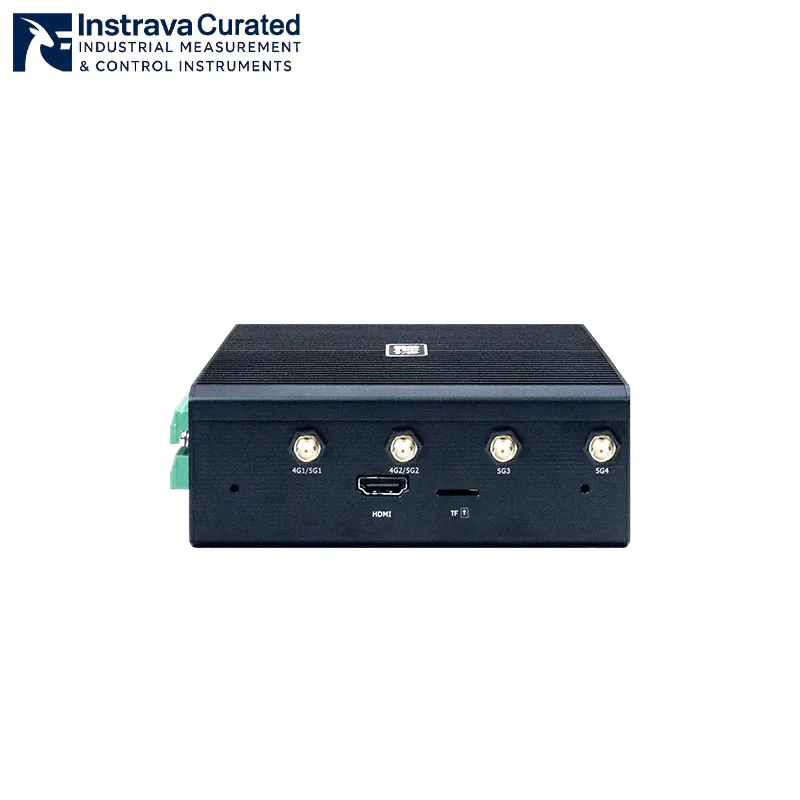
| Modem | 1 × LTE Cat4 or 1/2 × 5G NR SA/NSA |
| Number of Antennas | 2 (LTE version) or 4/8 (NR version) |
| Connector | SMA-K |
| SIM | 2 |
| Wireless Interface | |
| Standards | 802.11b/g/n/ac/ax, AP or station modes |
| Frequency Bands | 2.4 GHz & 5 GHz |
| Speed | 583Mbps |
| Security | WEP, WPA, WPA2 |
| Encryption | 64/128 AES, TKIP |
| Antennas | 2 |
| Connector | SMA-K |
| Star Flash | Support |
| Lora | Support |
| GNSS Interface | |
| Number of Antennas | 1 |
| Connector | SMA-K |
| Peripheral Interface | |
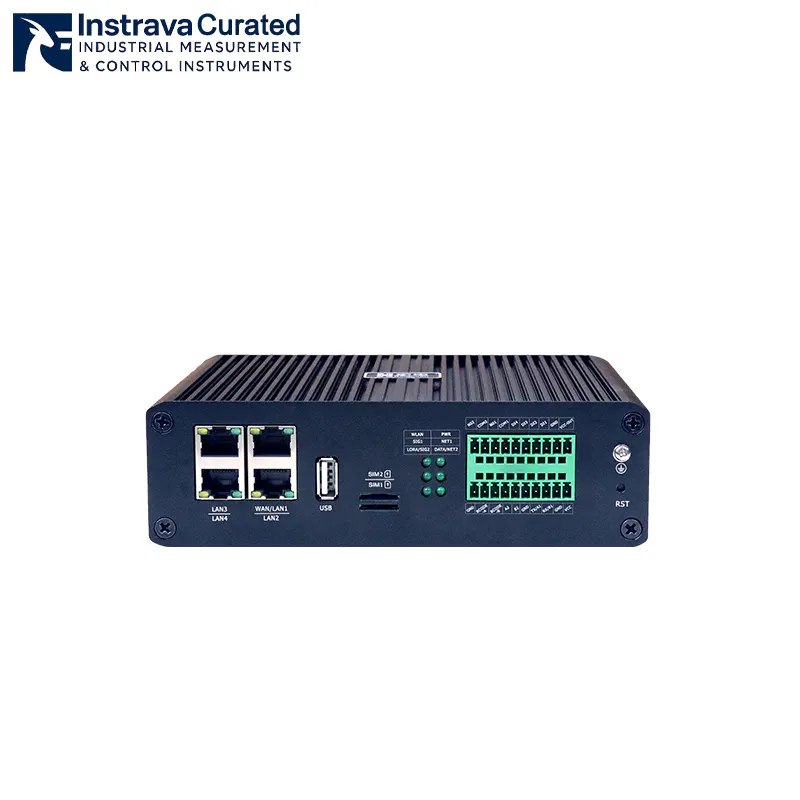
| Ethernet | 4 x RJ45 10/100/1000Mbps adaptive (1 of which supports WAN, LAN switching) |
| Serial | 1 × RS-232/RS-232 + 1 × RS-485 serial port |
| USB | 1 x USB2.0 |
| TF Card | 1 |
| HDMI | 1 |
| Extension interface | Extendable interface module Z4-EXT |
| Software | |
| Auto Fail-over | Between: 2 Cellulars, Cellular and WAN, Cellular and Wi-Fi (station mode), WAN and Wi-Fi (station mode) |
| Network Protocols | PPP, PPPoE, TCP, UDP, DHCP, ICMP, NAT, HTTP, HTTPs, DNS, ARP, NTP, SMTP, Telnet, SSH, DDNS, etc. |
| Network | APN, VPDN, VLAN, QoS |
| Routing | Static Routing, Policy routing, RIP, OSPF and BGP, etc |
| Firewall | NAT, PAT, DMZ, Port Forword, IP/Domain/MAC Filter, Access Control List |
| Attack Prevention | DDOS prevention, Anti port scanning |
| VPN | PPTP/L2TP/GRE/IPSec/OpenVPN/DMVPN/WireGuard |
| Ipsec Encryption | DES, 3DES, AES128, AES192, AES256 |
| OpenVPN Encryption | BF-CBC, DES-CBC, RC2-CBC, DES-EDE-CBC, DES-EDE3-CBC, DESX-CBC, RC2-40-CBC, CAST5-CBC, RC2-64-CBC, AES-128-CBC,AES-192-CBC, AES-256-CBC, SEED-CBC |
| Remote Management | HTTP, Telnet, SSH, SMS, SNMP V1/V2/V3, SNMP TRAP, Hongdian Wedora Cloud Platform |
| Serial Ports Function | Transparent, Modbus RTU, etc |
| Industrial Protocol | |
| Common Protocols | OPC-UA Client&Server, BACNet/IP Client&Server, Modbus RTU/TCP/ASCII, Modbus Master, BACnet/IP, Ethernet/IP,IEC101/104, IEC61850-modbus, etc. |
| Cloud Integration | MQTT, HTTPS, Hongdian HMP, TCP/UDP, etc |
| Configuration Tool | HDGatewayManager |
| Power Supply and Consumption | |
| Connector | 2 pin socket |
| Voltage Input | +9V~+48V DC |
| Power Consumption | Idle: 400mA@12V DC, Data transceiving: 1.5A@12V DC |
| Others | |
| Reset Button | Yes |
| Hardware Watchdog | Yes |
| LED Indicators | 6 indicators for PWR, WLAN, NET1, SIG1, DATA/NET2, LORA/SIG2 |
| Physical Characteristics | |
| Ingress Protection | IP30 |
| Housing & Weight | Metal, 1060g |
| Dimension | 170 × 136.2× 51mm |
| Installations | Desktop, wall mounting and DIN rail mounting |
| Operating Temperature | -35 ~ +75℃ |
| Storage Temperature | -40 ~ +85℃ |
| Relative Humidity | 95% |
Z4-ExBox Expansion Box
| Inputs/Outputs | |
| VCC-OUT | 1 voltage output, voltage source is the same as the input. |
| DI | 4 digital input channels (low-level input: 04.5V, high-level input: 636V). |
| Relay Outputs | 2 relay outputs (3A 250VAC/30VDC). |
| RS-485 | 6 RS-485 interfaces (default baud rate 115200bps). |
| AI | AI1、AI2(4~20mA),AI3、AI4(0~5V) |
| CAN | 1 CAN interface. |
| GPIO | 4 GPIO channels (output 0-3.3V). |
| Expansion Interface | 1 2×6pin 2.54mm pitch expansion module board interface. |
| Power Consumption | |
| Typical Power Consumption | 3.3V average current 40mA, 5V average current 86mA. |
| Operating Environment | |
| Operating Temperature | -30℃ to +75℃ |
| Storage Temperature | -40℃ to +85℃ |
| Constant Humidity | +45℃, 95% RH, 24h |
| Alternating Humidity | Temperature/Humidity: +25~+55℃ / 95% RH, 24 hours. |
| Physical Dimensions | |
| Dimensions | 136.2 × 170× 51mm |
| Weight | 950g. |
Instrava OEM/ODM
Tailored Sourcing & Customization: Getting You the Exact Product You Need
As your trusted supplier and sourcing partner, we bridge the gap between your custom requirements and China’s vast manufacturing capabilities.
Finding the right product in a massive supply chain can be challenging. That is where we step in.
As a curated industrial supplier, our core value is simple: we stand in your shoes to help you procure the most optimal products. Whether you are an EPC contractor needing specialized technical compliance, an OEM equipment manufacturer looking for custom branding, or an industrial distributor/trader seeking competitive edge, we customize and tailor products to fit your exact procurement needs.
How We Customize to Fit Your Procurement Needs
For EPC Contractors & Engineers: We custom-configure instruments and devices to match your precise datasheets—tailoring process connections, exotic materials, signal protocols, and managing third-party calibration and testing so you get project-ready solutions.
For OEM Equipment Manufacturers: We provide comprehensive OEM/ODM customization, including custom housing, labeling, branding (private labeling), and tailored technical specifications to seamlessly integrate with your machinery.
For Industrial Distributors & Traders: We offer flexible customization in packaging, product ranges, and technical parameters, helping you differentiate your portfolio and win more local bids.
Why Partner with Us for Custom Sourcing?
One-Stop Engineering Alignment: You don’t have to deal with multiple factories. We translate your technical requirements into precise manufacturer blueprints.
Strict Quality & Compliance Safeguard: We oversee the entire customization and production process in China, ensuring the final customized product meets your local standards and certifications.
Our Ultimate Value: We don’t just sell what’s on the shelf. We find, customize, and deliver the most suitable and cost-effective product for your unique application.

What is an Edge Gateway and why is it important in industrial IoT?
An Edge Gateway is a device that connects field instruments, PLCs, and legacy systems to cloud platforms. It processes data locally, reduces latency, and minimizes bandwidth usage. In industrial IoT (IIoT), it plays a critical role by enabling real-time decision-making, protocol conversion (e.g., Modbus, HART, OPC UA), and secure data transmission without replacing existing equipment.
Can an Edge Gateway connect legacy instruments to the cloud without replacing them?
Yes, one of the main advantages of an Edge Gateway is brownfield integration. It allows legacy instruments using protocols like 4–20mA, Modbus RTU, or HART to be digitized and connected to cloud systems. This avoids costly system replacement and enables gradual digital transformation with minimal downtime.
What protocols are typically supported by an industrial Edge Gateway?
Most industrial Edge Gateways support multiple protocols to ensure compatibility across devices. Common southbound protocols include Modbus RTU/TCP, HART, Profibus, and CAN. Northbound communication often includes MQTT, HTTP/HTTPS, OPC UA, and REST APIs. This multi-protocol capability ensures seamless data flow from field devices to cloud platforms.
How does an Edge Gateway improve data security in IIoT systems?
Edge Gateways enhance security by processing sensitive data locally and reducing direct exposure of field devices to the internet. They typically include features such as data encryption (TLS/SSL), firewall protection, VPN support, and device authentication. This layered security architecture helps prevent unauthorized access and cyber threats.
How many Edge Gateways are needed in a factory deployment?
The number of Edge Gateways depends on factors such as device count, communication protocols, data volume, and physical layout. A typical deployment may use one gateway per production line, per workshop, or per 50–200 devices. Network segmentation, redundancy requirements, and real-time processing needs also influence the final architecture.
What is the difference between an Edge Gateway and a standard IoT gateway?
While both connect devices to the cloud, an Edge Gateway provides advanced local computing capabilities such as data filtering, preprocessing, and analytics. Unlike basic IoT gateways, edge gateways can execute logic, reduce cloud dependency, and support real-time industrial control scenarios, making them more suitable for complex industrial environments.
Why Trust Instrava?
We select manufacturers from a neutral, impartial standpoint, always with your best interests in mind.
Our very existence depends on helping you source the products that are the perfect fit for your needs.
Based in China, we are able to conduct on-site inspections of production environments and product quality firsthand.
We help you avoid intermediaries posing as factories.
We facilitate smoother after-sales support, eliminating time zone issues and the delays often associated with dealing directly with factories.
Our multilingual team ensures effective communication.
For a trading startup, every interaction with a client is a precious opportunity—a sign that you are willing to place your trust in us and give us the chance to prove ourselves.
In the digital age, while information is easily accessible, misconceptions often cloud the trust between people.
Instrava relies entirely on trust; it is our core philosophy and the foundation of our existence in society. It is the fundamental basis for our long-term growth and our commitment to serving the community.
Please place your trust in us.