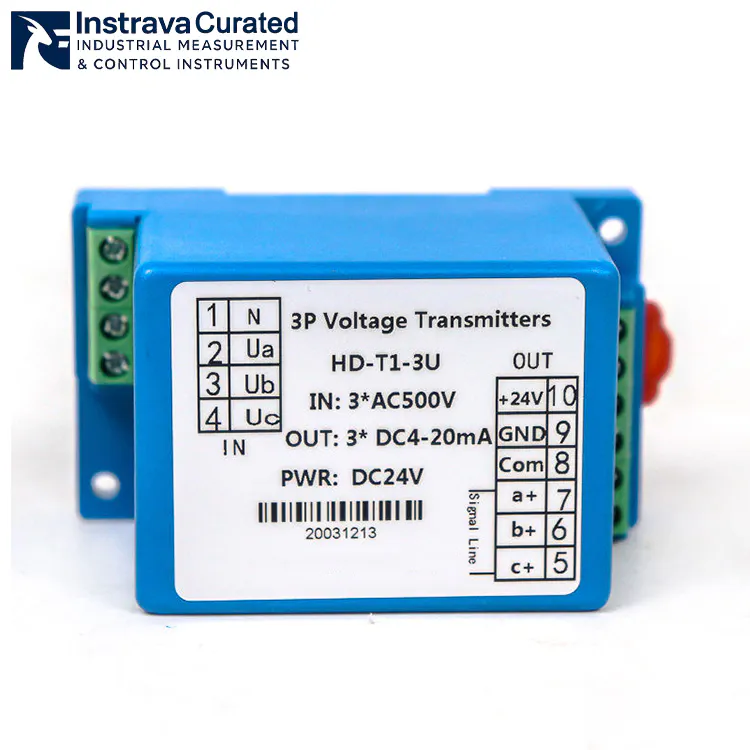

Home » Products » Power Monitoring Control » Smart Busbar Monitoring System for Data Centers & Industrial Power Safety
Smart Busbar Monitoring System for Data Centers & Industrial Power Safety
Although Instrava is not a manufacturer, we prioritize your interests as a supplier by helping you select the most suitable products and providing solutions for the procurement of customized Smart Busbar Monitoring Systems.
Leveraging China’s vast market resources, we carefully select high-quality manufacturers to provide you with either off-the-shelf products or solutions tailored to your project requirements.
Our products are marketed globally and comply with relevant international certification standards, such as CE, IECEx, UL, TUV, and EAC.
As these are comprehensive system-based product lines, the quotation timeframe depends on your specific product requirements.
Delivery schedules are to be determined through separate consultation.
Power Monitoring & Control Description
Deliver real-time power visibility, thermal safety, and intelligent energy management for modern electrical infrastructures
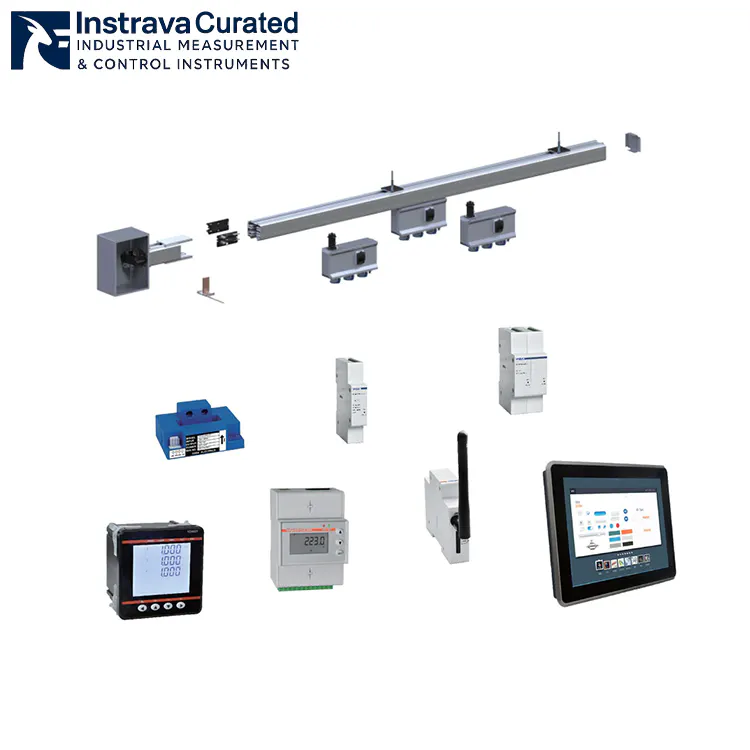
Busbar temperature monitoring system is an integrated solution that continuously measures temperature, current, voltage, and energy parameters within busway power distribution systems.
Engineered for data centers, industrial workshops, and critical power environments, this system combines busbar temperature monitoring, power quality analysis, and dual redundancy architecture to eliminate risks and ensure uninterrupted operation.
With advanced sensing and analytics, it enables real-time busbar monitoring system with RS485 Modbus communication, helping operators detect anomalies instantly, prevent failures, and optimize energy usage across complex power distribution networks.
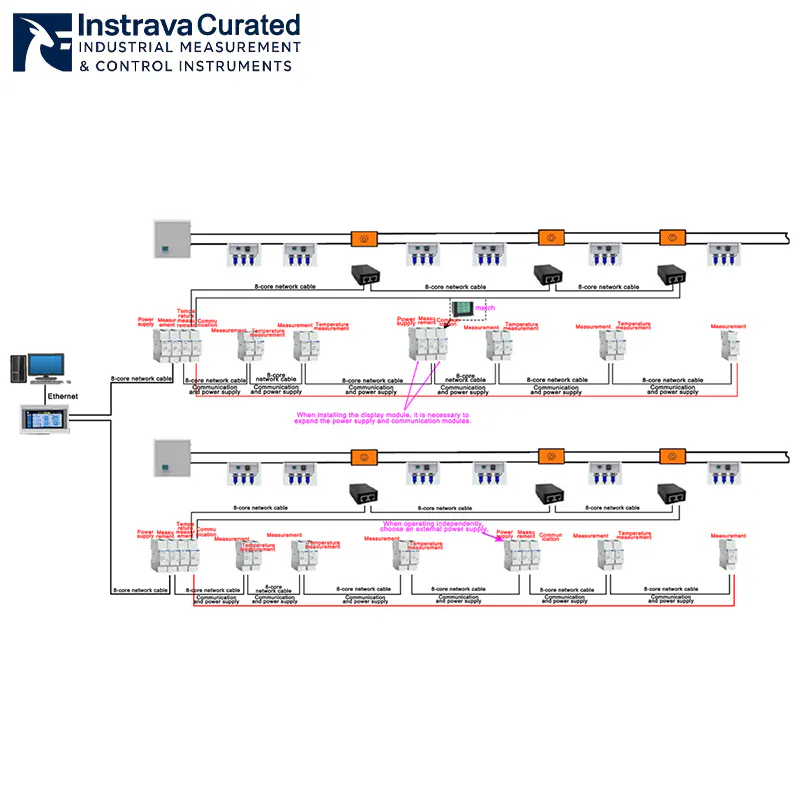
Real-Time Power & Thermal Monitoring for Predictive Safety
The system delivers comprehensive monitoring across electrical and thermal parameters, enabling proactive risk management.
Full Electrical Parameter Monitoring
Three-phase voltage, current, frequency, active power, energy
Power factor, harmonic content (1st–63rd harmonics)
Peak coefficient, imbalance degree, variation coefficient
Supports smart busbar power monitoring system for industrial energy management.
High-Precision Temperature Monitoring
Busbar joint temperature range: -20°C to 200°C
Real-time detection of overheating at cable connection points
Prevents fire hazards and insulation failure
Ideal for busbar temperature monitoring system for data centers.
Advanced Alarm & Remote Signaling
Overvoltage / undervoltage / phase loss / overload detection
Frequency deviation and power anomaly alerts
Two-level threshold alarm system with delay settings
Ensures real-time fault detection in busbar trunking systems.
Power Monitoring & Control Parameter
| Parameter | Description |
|---|---|
| Monitoring Type | Power + Temperature Monitoring |
| Voltage Input | Three-phase voltage |
| Current Input | Three-phase current |
| Measured Parameters | Power, energy, PF, frequency, harmonics (1–63) |
| Temperature Range | -20°C to 200°C |
| Alarm Function | Two-level threshold alarms with delay |
| Event Storage | 10,000 records |
| Data Retention | ≥100 days (alarm), ≥1 year (energy data) |
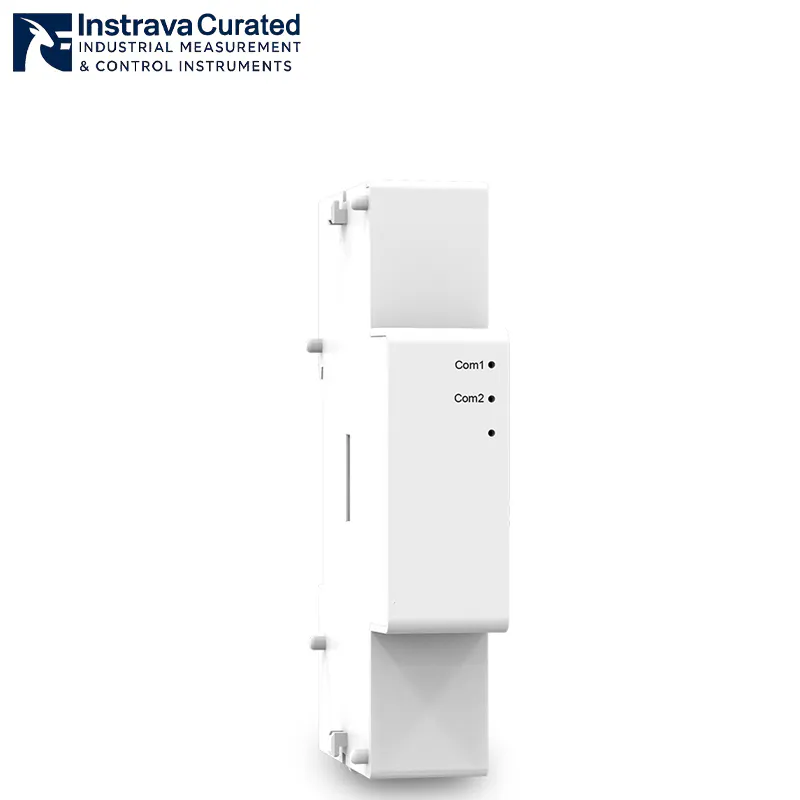
| Communication | Dual RS485 (Modbus RTU), ring network |
| Baud Rate | 1200–115200 bps |
| Redundancy | Dual power supply + dual communication |
| Installation | Busway / tap-off box integration |
| Energy Metering | Quadrant, multi-rate, long-term statistics |
| Demand Analysis | Sliding demand, max/min tracking |
| Custom Data | 750-character user-defined area |
| Application | Data centers, industrial plants, critical facilities |
|
System Component
|
Model Number
|
Key Specifications
|
Function
|
|
|
Local Monitoring HMI
|
INYD1031Kt
|
10.1-inch TFT LCD (1024*600); 3 RS485 ports
|
Real-time curve display + alarm notification + data export
|
|
|
Main Inlet Box Module
|
INYBM200M-AC-Q1
|
3×220V/380V; Current accuracy: 0.2 class
|
Power input monitoring + communication ring network establishment
|
|
|
Tap-off Box Module
|
INYBM200C-AC-Q1
|
3×100mA; Leakage current range: 0~1A
|
Branch busbar temperature/power monitoring
|
|
|
Power Supply Module
|
INYBM200B-AC-P12
|
AC100~265V; Output: DC24V;
Ripple <80mV
|
Stable power supply for all sub-modules
|
|
|
Busbar Joint Temperature Device
|
INYDT200-C2
|
4 channels; -20~200℃ (±2℃ error)
|
Real-time temperature detection of busbar joints
|
|
Environmental conditions
|
Modules
|
||||
|
Working temperature
|
-20℃~60℃
|
Storage temperature
|
-25℃~75℃
|
|
|
Relative humidity
|
5~95% without condensation
|
Working altitude
|
less than 2000 meters
|
|
|
Atmospheric pressure
|
70kPa~106kPa
|
|||
|
HMI
|
||||
|
Working temperature
|
0~45℃
|
Storage temperature
|
-10~60℃
|
|
|
Relative humidity
|
5~90% without condensation
|
Working altitude
|
less than 2000 meters
|
|
|
Atmospheric pressure
|
70kPa~106kPa
|
|||
|
Auxiliary power supply
|
AC100V~265V(50/60Hz)
|
AC100V~265V(50/60Hz)
|
||
|
Power
|
≤12W or 12VA
|
≤5W or 5VA
|
||
|
Ripple
|
Less than 80 mV
|
Less than 40 mV
|
||
|
Output
|
DC24V output
|
DC24V output
|
||
|
Module
|
Local monitoring system HMI (INYD1031Kt)
|
|||
|
Panel type
|
10.1 inch TFT LCD
|
Color display
|
24-bit color
|
|
|
Resolution ratio
|
1024*600
|
Brightness
|
300 cd/m2
|
|
|
Touch screen
|
Four-wire resistance type
|
Process monitor
|
4 core 800MHz CORTEX-A7
|
|
|
Power consumption
|
5W
|
Communication
|
COM1(RS232),COM2(RS485), COM3(RS485)
|
|
|
Ethermet
|
1*10/100M self adaptive
|
Event record
|
10000 lists
|
|
|
Electromagnetic compatibility
|
Industrial 3rd class
|
|||
|
Module
|
Main Inlet Box/Tap-off Box Monitoring Module
|
|||
|
Capacity
|
||||
|
Voltage overload capacity
|
1.2 times the rated current, continuous operation
|
|||
|
Current overload capacity
|
Starting box monitoring module: 0.51W; Junction box monitoring module: 0.34W
|
|||
|
Power consumption
|
Less than 400ms
|
|||
|
Measurement data refresh time Indicator light
|
Operation, communication, alarm, light flashes for 0.1 seconds
|
|||
|
Accuracy
|
||||
|
Parameter
|
Accuracy
|
Range
|
||
|
Current
|
0.2 class
|
AC0~100mA;
|
||
|
Pahse voltage
|
0.2 class
|
AC20~380V
|
||
|
Wire voltage
|
0.2 class
|
AC30~537V
|
||
|
Leakage current
|
1 class
|
AC0~1A
|
||
|
Frequency
|
0.1 class
|
45~65Hz
|
||
|
Active power
|
0.5 class
|
0~±1×10⁹
|
||
|
Power factor
|
0.5 class
|
0~±1.0
|
||
|
Active energy
|
0.5 class
|
0~±1×10¹⁰
|
||
|
Harmonic
|
A class
|
0~100%
|
||
|
Built-in RTC
|
The daily timing error is ≤ 0.5 seconds per day. The clock does not lose data even when power is lost. It also has temperature
compensation. |
|||
|
Module
|
Switch & Temperature Module (INYBM200B-0-T)
|
|||
|
Switch input
|
4 input terminals for passive nodes, built-in DC12V power supply in the instrument, with optical isolation
|
|||
|
Relay output
|
2-way relay output (can be set as either automatic control or remote control), contact capacity: 5A/250VAC or 5A/30VDC
|
|||
|
Temperature
|
8-channel NTC probe input, -20 to 200℃, error: ±2℃ (at 25℃)
|
|||
|
Power consumption
|
0.6W, without controlling relay 0.32W
|
|||
Communication Module
|
3-channel RS485
|
||||
|
Connection method
|
RJ45 interface
|
Communication rate
|
1200bps, 2400bps, 4800bps, 9600bps, 19200bps, 38400bps, 115200bps
|
|
|
Work method
|
Half-duplex
|
Check bit
|
None, Odd, Even
|
|
|
Communication protocol
|
Modbus-RTU,YD/T1363
|
Power consumption
|
0.10W
|
|
|
Module
|
Power Meter (INYBM200B-AC-D)
|
|||
|
Panel type
|
128*128 dot single-color TFT LCD
|
|||
|
Power consumption
|
0.5W
|
|||
|
Module
|
Busbar Joint Temperature Device (INYDT200-C2)
|
|||
|
Temperature
|
4 channels,-20~200℃, tolerance error:±2℃
|
|||
|
Power consumption
|
<1W
|
|||
|
Power supply
|
AC176~265V(self supply)
|
|||
|
Communication
|
RS485,Modbus-RTU
|
|||
Instrava OEM/ODM
Tailored Sourcing & Customization: Getting You the Exact Product You Need
As your trusted supplier and sourcing partner, we bridge the gap between your custom requirements and China’s vast manufacturing capabilities.
Finding the right product in a massive supply chain can be challenging. That is where we step in.
As a curated industrial supplier, our core value is simple: we stand in your shoes to help you procure the most optimal products. Whether you are an EPC contractor needing specialized technical compliance, an OEM equipment manufacturer looking for custom branding, or an industrial distributor/trader seeking competitive edge, we customize and tailor products to fit your exact procurement needs.
How We Customize to Fit Your Procurement Needs
For EPC Contractors & Engineers: We custom-configure instruments and devices to match your precise datasheets—tailoring process connections, exotic materials, signal protocols, and managing third-party calibration and testing so you get project-ready solutions.
For OEM Equipment Manufacturers: We provide comprehensive OEM/ODM customization, including custom housing, labeling, branding (private labeling), and tailored technical specifications to seamlessly integrate with your machinery.
For Industrial Distributors & Traders: We offer flexible customization in packaging, product ranges, and technical parameters, helping you differentiate your portfolio and win more local bids.
Why Partner with Us for Custom Sourcing?
One-Stop Engineering Alignment: You don’t have to deal with multiple factories. We translate your technical requirements into precise manufacturer blueprints.
Strict Quality & Compliance Safeguard: We oversee the entire customization and production process in China, ensuring the final customized product meets your local standards and certifications.
Our Ultimate Value: We don’t just sell what’s on the shelf. We find, customize, and deliver the most suitable and cost-effective product for your unique application.

What is the process for purchasing Smart Busbar Monitoring System from Instrava supplier ?
1. Inquiry (We will respond to your inquiry within 24 hours to confirm specifications and initiate the process.)
2. Quotation (Quotation timelines vary based on the project type and your specific requirements. Standard stock items are quoted within one day, while special orders require three days or a mutually agreed-upon timeframe.)
3. Product Selection (We will present 3–5 product options and pricing for your approval. During this stage, we verify the manufacturer’s production capabilities and relevant national certifications.)
4. Contract, Prepayment, and Production (A 40% prepayment is required to initiate production at a qualified facility. For stock items, we promptly arrange for product testing and packaging.)
5. Interim Payment (Upon successful completion of production and quality inspection, the next 50% of the total amount is due. For stock items, this payment is made after packaging is complete.If the transaction amount does not exceed $50,000, the remaining 60% is paid.)
6. Shipment (You may designate a freight forwarder, or we can arrange shipping for you.)
7. Receipt of Goods (Our Quality Guarantee: When your cumulative order value reaches $50,000, you pay the remaining 10% only after receiving and verifying the product quality. We let our quality do the talking.)
8. After-Sales Service (We actively address and resolve issues through both online and offline channels. We place great importance on after-sales support, as it reflects our responsibility and reputation—the foundation of Instrava’s long-term growth.)
What are the advantages of buying products from Instrava supplier ?
1. Compared to factories, we can more objectively and fairly evaluate the pros and cons of our products and compare them with products from different manufacturers.
2. We offer a wider selection of product types, ensuring you get the best value for your money (because we compare prices from numerous factories and understand the price range of products).
3. We charge a 3-5% service fee, saving you significant time in finding and comparing products.
What types of industrial products can you purchase from Instrava?
Power Monitoring & Control: Power Quality Analyzer, Smart Energy Meter, Current & Voltage Transmitter, Busbar Temperature Monitoring System, Insulation Monitoring Device, IDC / Al Data Center Monitoring System
Power Transformer:1OKV~220KV Oil-immersed Power Transformer, Below 35 kV Oil-immersed Power Transformer, Dry-type Transformer, Pole Mounted Transformer, Pad Mounted Transformer, UPS Isolation Transformer, Auto Transformer etc.
How to ensure the reliability of the purchased products?
Our customer-centric philosophy prioritizes their procurement needs.
1. Initially confirm the manufacturer based on product pricing and the strength and qualifications of the production factory.
2. Verify the manufacturer’s production environment through video and on-site inspections to check the compliance of the entire product manufacturing process.
3. Ensure post-production product testing and retain data and video evidence from the verification process(testing and verification methods vary depending on the product).
How does Instrava ensure product protection and physical safety during cross-border shipping?
Firstly, we confirm the packaged products with the factory (different products require different packaging and shipping methods. Heavy equipment and bulk shipments are securely secured within sea freight containers using custom-designed engineering steel frames, heavy-duty multi-layer wooden crates, and industrial-grade vacuum rust-proof bags. Precision instruments are protected against impacts and maintained in a stable position; the factory has extensive experience in this area. Custom labels are affixed to the outer packaging).
Secondly, we maintain communication with the freight company to confirm the condition of the goods and advise them to handle the loading and unloading processes with care.
What warranty policies and after-sales technical support does Instrava offer to international customers?
1. Instrava offers a comprehensive 12 to 24-month warranty (specific warranty period depends on the product line), covering all manufacturing and component defects.
2. When online technical support is needed, customers can connect with factory engineers online. Real-time guidance is provided for installation, on-site calibration (for instruments), and commissioning. When on-site engineer support is needed, we will arrange for an engineer to visit the site.
3. In the event of component issues, we will ship replacement parts via international express delivery (DHL/FedEx) to minimize your project downtime.
4. Whether a product requires replacement or repair will be clearly stated in the purchase contract.
Why Trust Instrava?
We select manufacturers from a neutral, impartial standpoint, always with your best interests in mind.
Our very existence depends on helping you source the products that are the perfect fit for your needs.
Based in China, we are able to conduct on-site inspections of production environments and product quality firsthand.
We help you avoid intermediaries posing as factories.
We facilitate smoother after-sales support, eliminating time zone issues and the delays often associated with dealing directly with factories.
Our multilingual team ensures effective communication.
For a trading startup, every interaction with a client is a precious opportunity—a sign that you are willing to place your trust in us and give us the chance to prove ourselves.
In the digital age, while information is easily accessible, misconceptions often cloud the trust between people.
Instrava relies entirely on trust; it is our core philosophy and the foundation of our existence in society. It is the fundamental basis for our long-term growth and our commitment to serving the community.
Please place your trust in us.